A journey creates a natural work interval
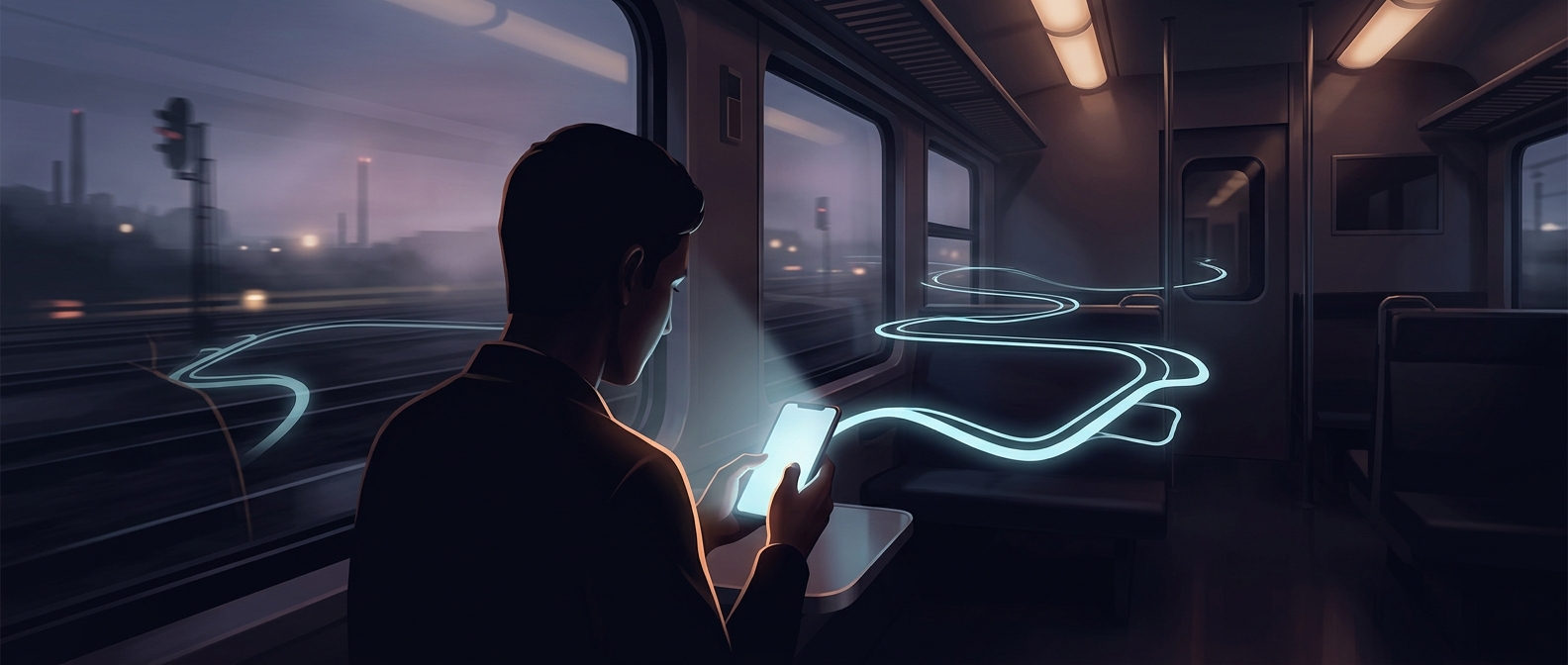
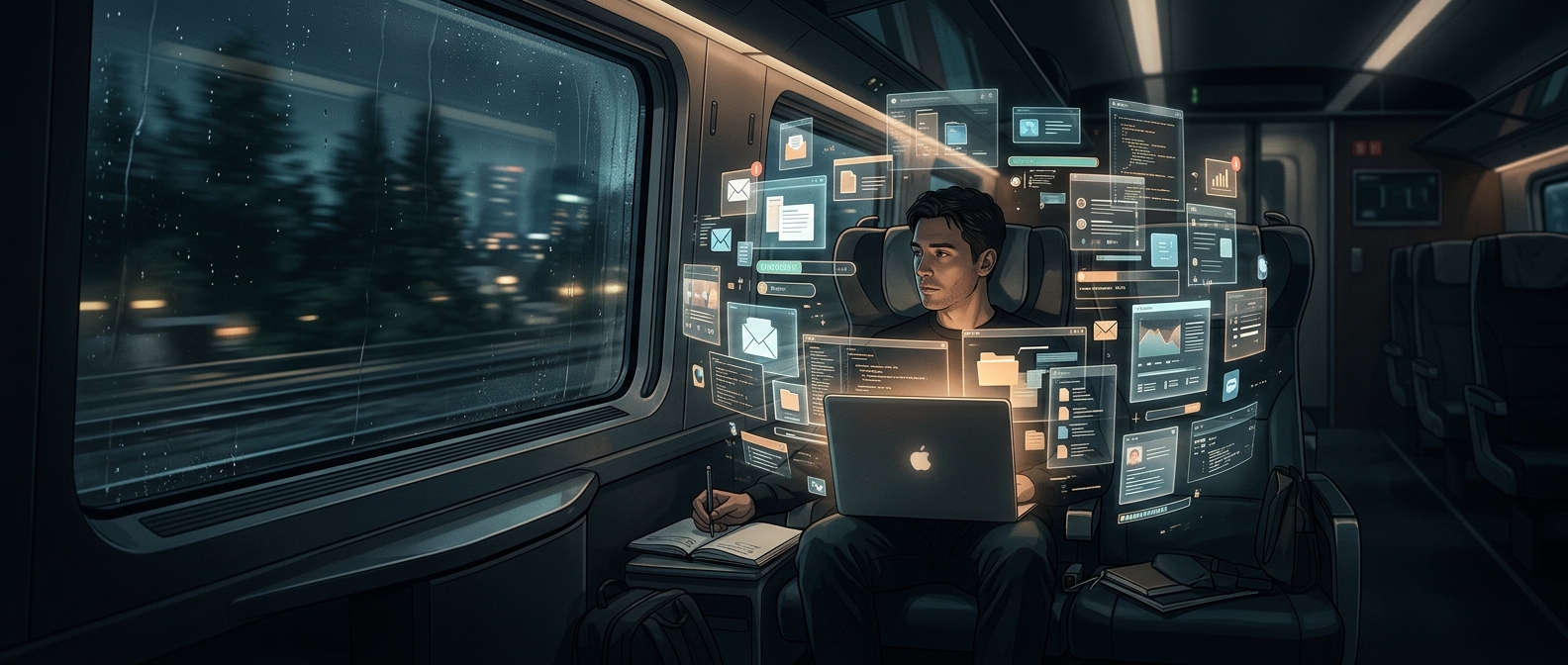
A train trip has a built-in boundary: departure starts the stretch of time, and arrival ends it. That makes it easier to choose a task that fits the ride—editing a document, sorting notes, or answering messages—rather than letting work sprawl across an open-ended day. The deadline is modest but concrete: make progress before the next stop or the destination.
Travel also removes some ordinary choices. There is no need to decide where to go next or when to leave for an appointment; the route is already set. With fewer decisions competing for attention, a passenger can give more of it to one task. The changing view can offer a mental break without requiring the full reset that comes with switching to another activity.
The same ride sets limits
Train work is not automatically focused work. Announcements, nearby conversations, crowded seats, and unreliable internet can interrupt a task, while motion can make reading or typing uncomfortable for some passengers. A laptop may be practical for drafting but awkward for work that needs multiple screens, frequent calls, or a stable setup.
That is why the setting tends to suit self-contained tasks that can tolerate interruption. The train’s value is less that it turns travel into a perfect office than that it gives otherwise fragmented time a defined purpose. A few pages revised before arrival can feel like a finished unit of work, not a task postponed until the day is over.