Why a Slow Walk Makes the Wait Feel Longer
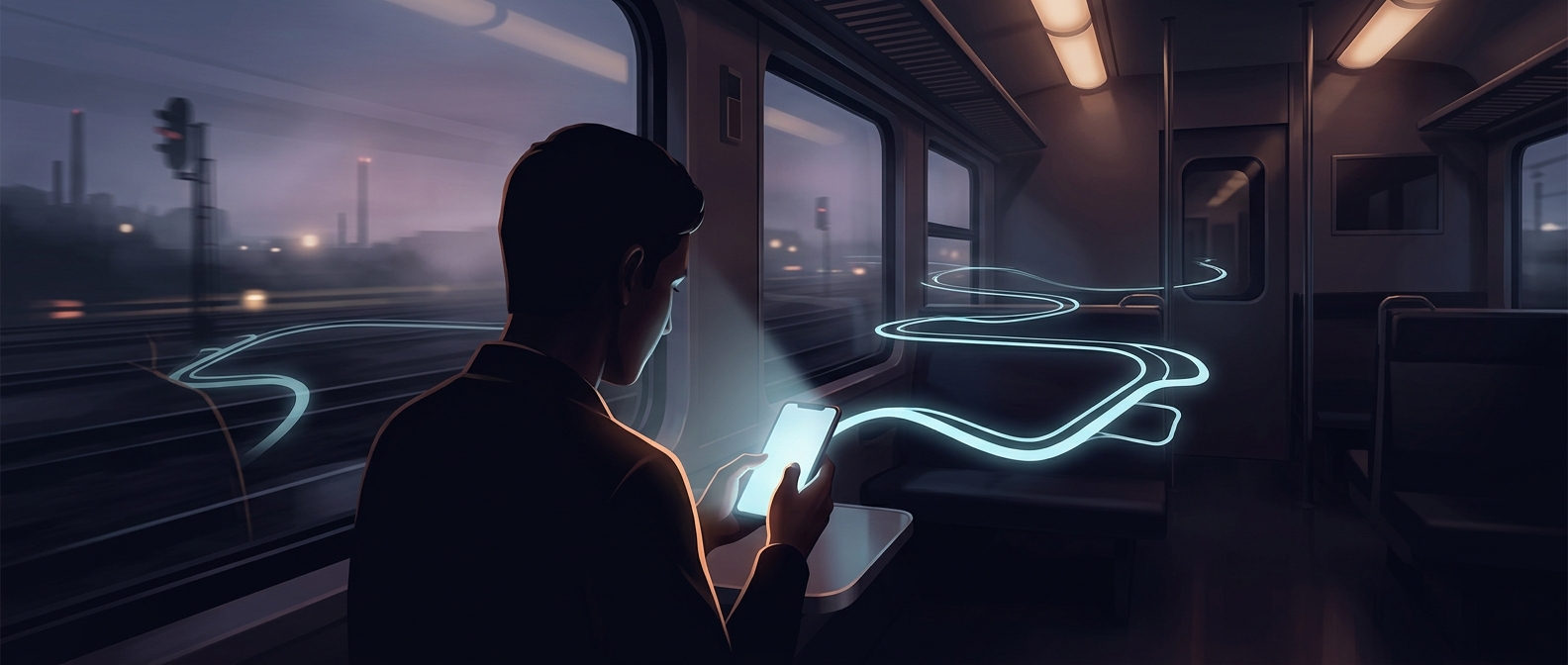
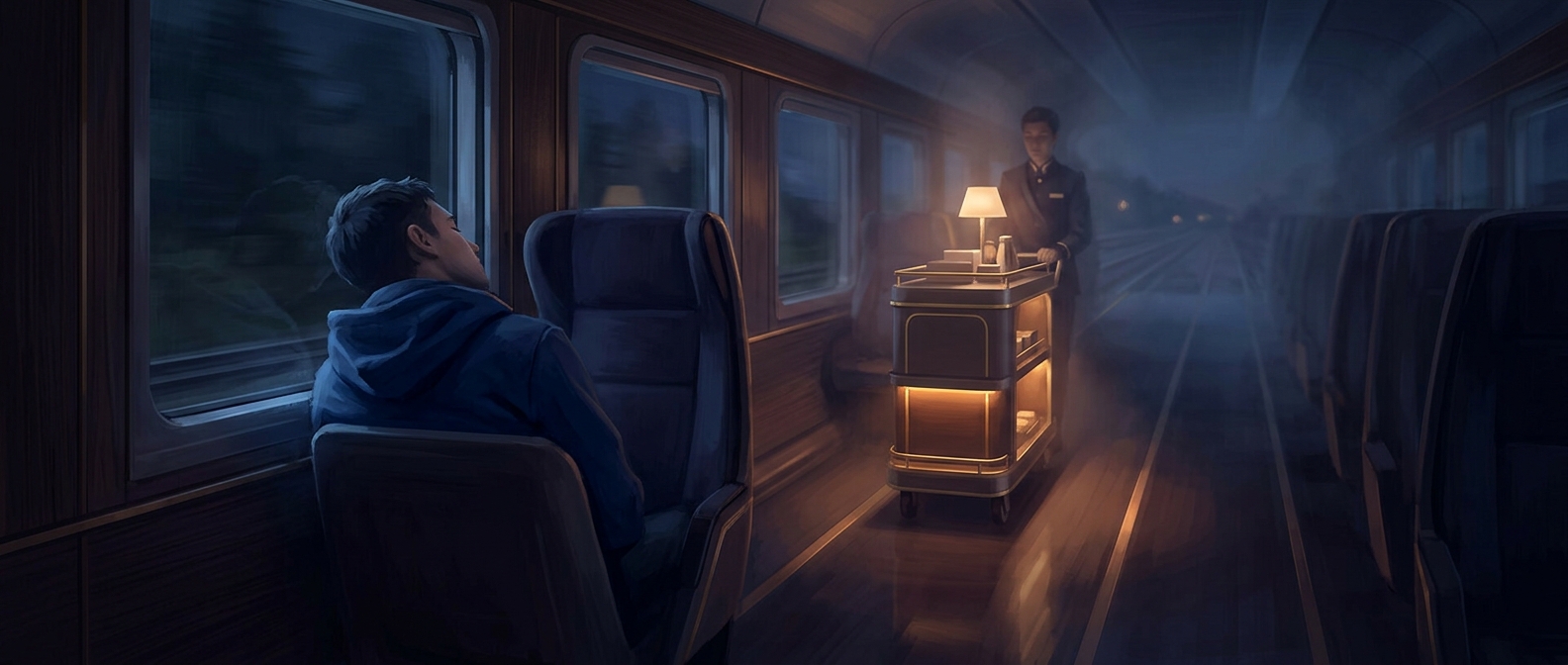
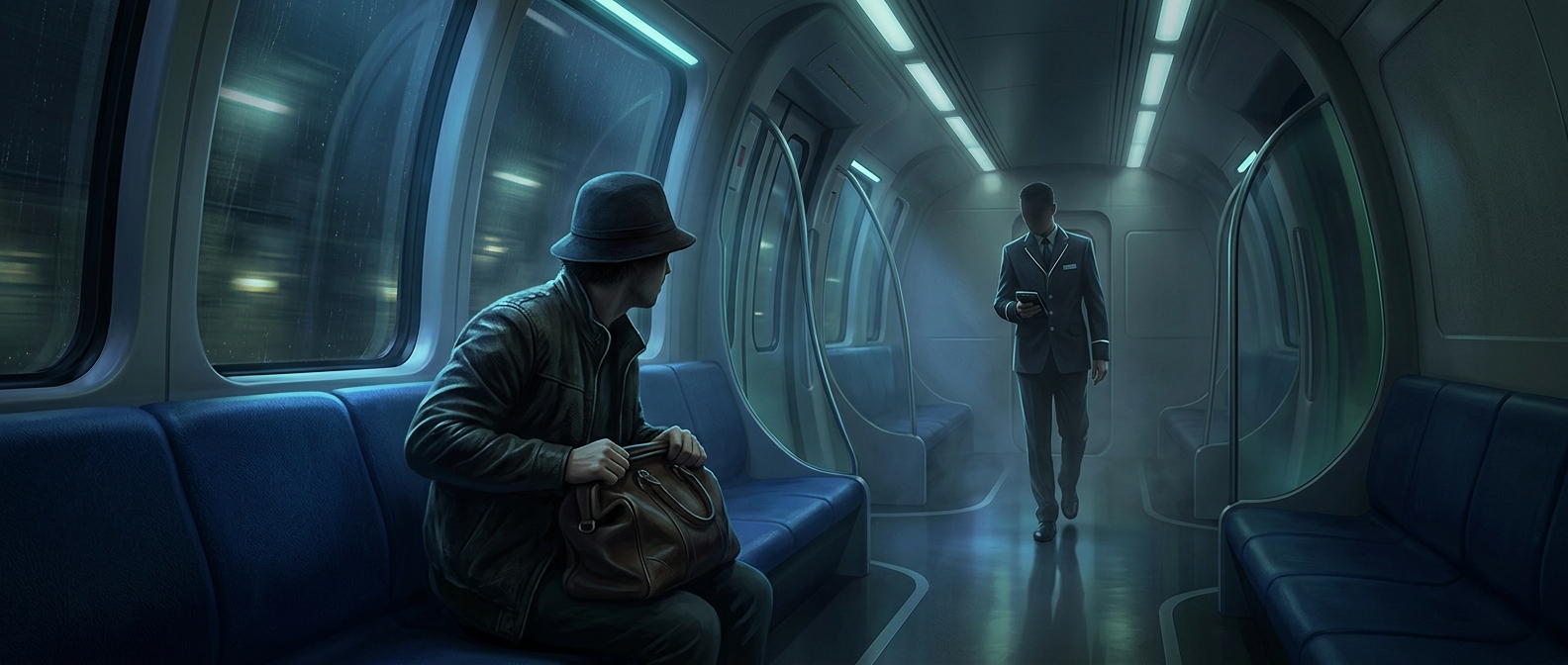
When an inspector checks a carriage one seat or row at a time, the sequence is easy to follow. That predictability does not necessarily make the wait comforting: it gives each passenger time to notice the inspector getting closer and to wonder whether their ticket is ready.
The tension comes from anticipation. A distant inspection is an abstract possibility; a person approaching along the aisle is a visible event with a direction and pace. Each step narrows the gap between “not yet” and “my turn,” so a brief wait can feel unusually urgent.
The Carriage Becomes a Moving Queue
Working through a carriage in order turns scattered passengers into a practical queue, even when nobody is standing in line. The inspector can make progress through the space, while each passenger can see roughly when the check may reach them. Having a ticket or travel pass ready is a small act of preparation—but until the inspector arrives, the passenger is left watching the approach.
That is the comic pressure in the slow walk: the outcome is ordinary, but its timing is no longer in your control. For the person waiting, the nearest pocket suddenly feels like a ticket office that cannot open soon enough.