Why a Delay Message Can’t Move a Train
A station board reports what the railway currently expects; it does not control the railway. Behind a delayed departure are connected pieces of a schedule: the train’s location, the track and platform it can use, and whether the people and equipment needed for the journey are ready. If one part is unavailable, the train may have to wait—and other trains may be affected too.
That chain reaction matters because railways share limited space. A train held on a track can block another from passing or using a platform. Reordering departures may ease one bottleneck, but it can create waits elsewhere. Dispatchers have to balance those conflicts while keeping movements safe, so the quickest-looking fix for one train is not always workable for the network.
Why the time keeps changing
A delay estimate is a forecast, not a countdown. Staff and operational systems update it as they learn when a train can move and how the disruption is affecting the timetable. If the underlying problem remains unresolved—or its effects spread—the expected departure may shift again. A board can therefore show more than one estimate over the course of a delay without the train having made visible progress.
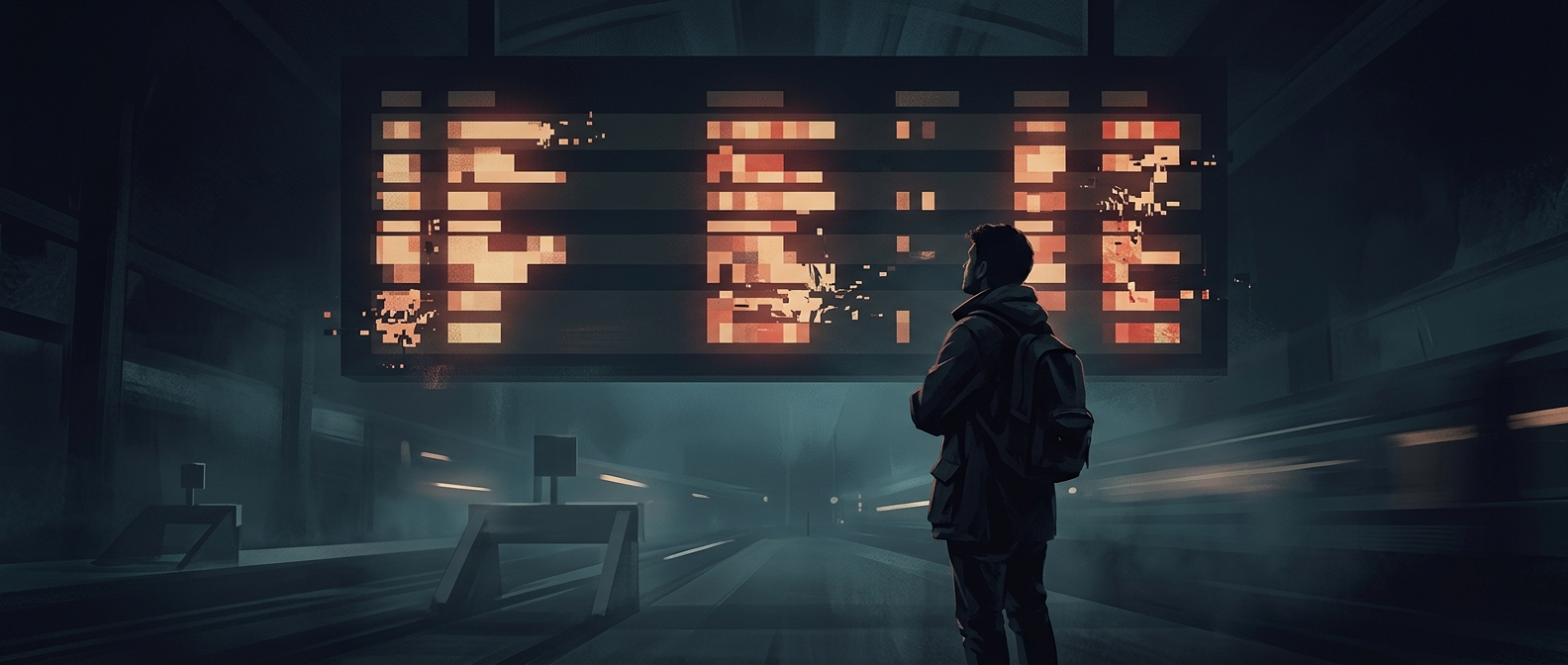
For passengers, the screen is one of the few immediate signs of a problem, but staring at it cannot change the track, clear a blocked route, or bring a train into position. The glare is understandable: people are waiting on a decision made elsewhere, with little ability to influence it. What the board offers is narrower but still useful—an updated expectation that can help someone decide whether to stay put, seek staff guidance, or change plans.