A snack gives waiting a sequence
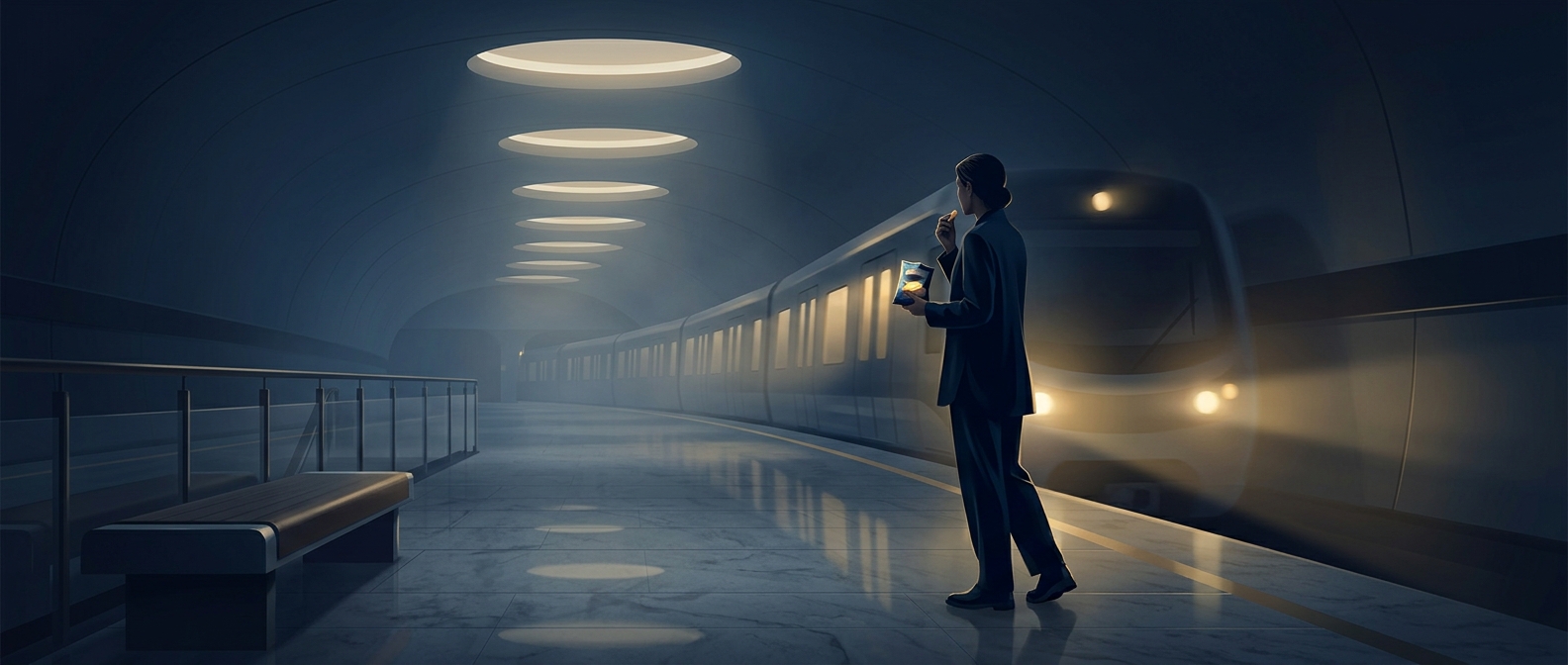
Before a train moves, a passenger may have little to do beyond watch the platform and wonder when boarding or departure will happen. That kind of waiting has no clear endpoint to act on. Opening a wrapper, choosing a bite, chewing, and reaching for the next one create a small sequence with immediate feedback: each step is finished, and the snack changes.
The task is simple enough to do without much planning, but engaging enough to draw attention away from the clock. A few bites can make an empty stretch of time feel occupied—even though the timetable has not changed.
The reward is built into the routine
Food adds a sensory payoff: crunch, salt, sweetness, or warmth. Because the reward arrives bite by bite, eating can become an easy default when a person feels restless or understimulated. The train does not have to be delayed for the habit to kick in; an ordinary pause can be enough.
That is why the snack may be gone before the journey begins. It has served two purposes at once: food and something to do. The practical catch is that a snack chosen for the ride may instead be finished during the wait on the platform.