The Doorway Becomes a Bottleneck Before the Train Stops
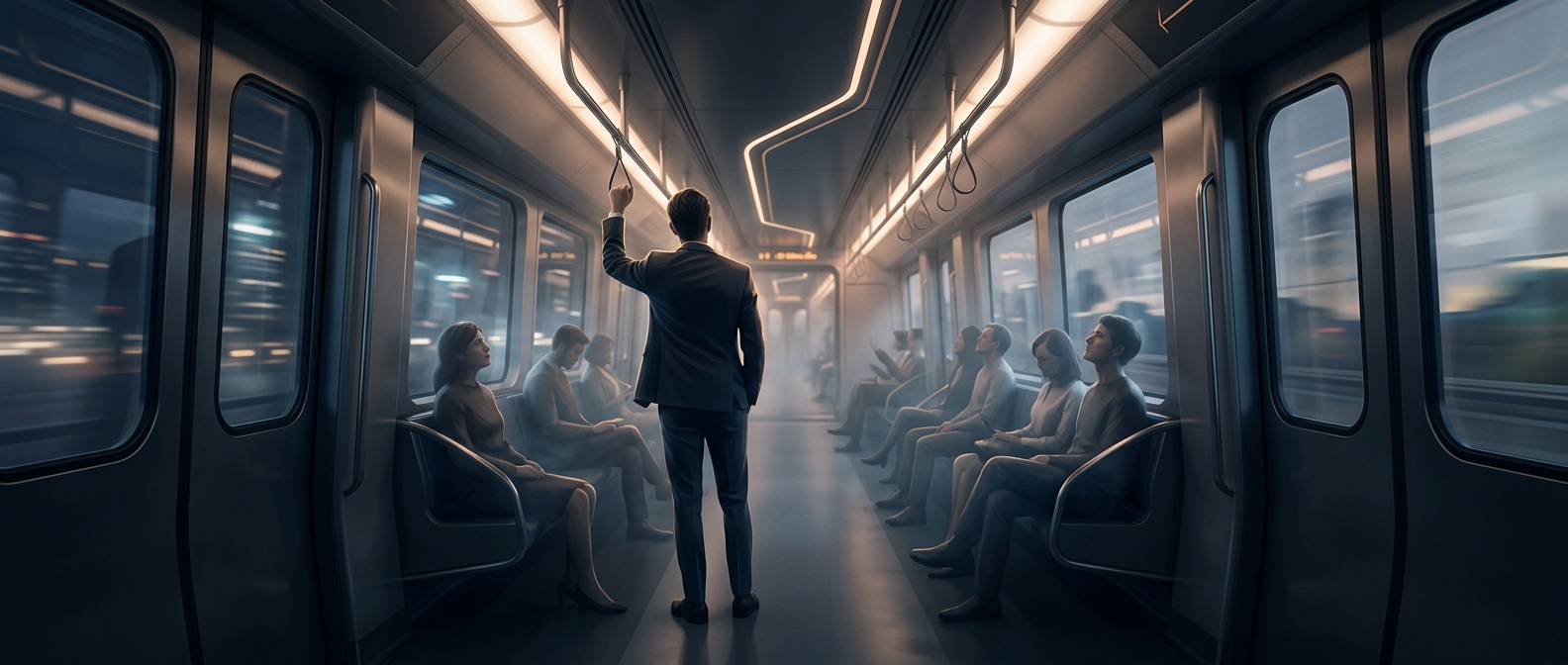
A train door is a narrow exit serving a much larger room. When several passengers plan to leave at the same station, they begin arranging themselves around that bottleneck while the train is still slowing: gathering bags, stepping out of seats, and edging toward the door. By the time it opens, they hope to be facing the platform rather than starting from the middle of the carriage.
The movement also reflects how people estimate their place in the exit sequence. Those nearest the door can leave first; passengers farther back may try to close the gap before others do. Because each person’s delay depends partly on everyone ahead, a few seconds saved by moving early can feel valuable—even when the train is only moments from stopping.
A Head Start Can Also Create a Jam
That early positioning works only if it leaves room for other people to move. Passengers standing in the aisle or crowding the doorway can obstruct those already trying to get off. The door area is most efficient when exiting passengers can clear it first, leaving space for boarding passengers to enter afterward.
So the pre-stop shuffle is a small coordination problem: everyone wants a faster exit, but the doorway can pass people through only one at a time. The apparent race for position can shorten an individual’s wait—or turn the last seconds of the ride into a bottleneck that slows the whole carriage.