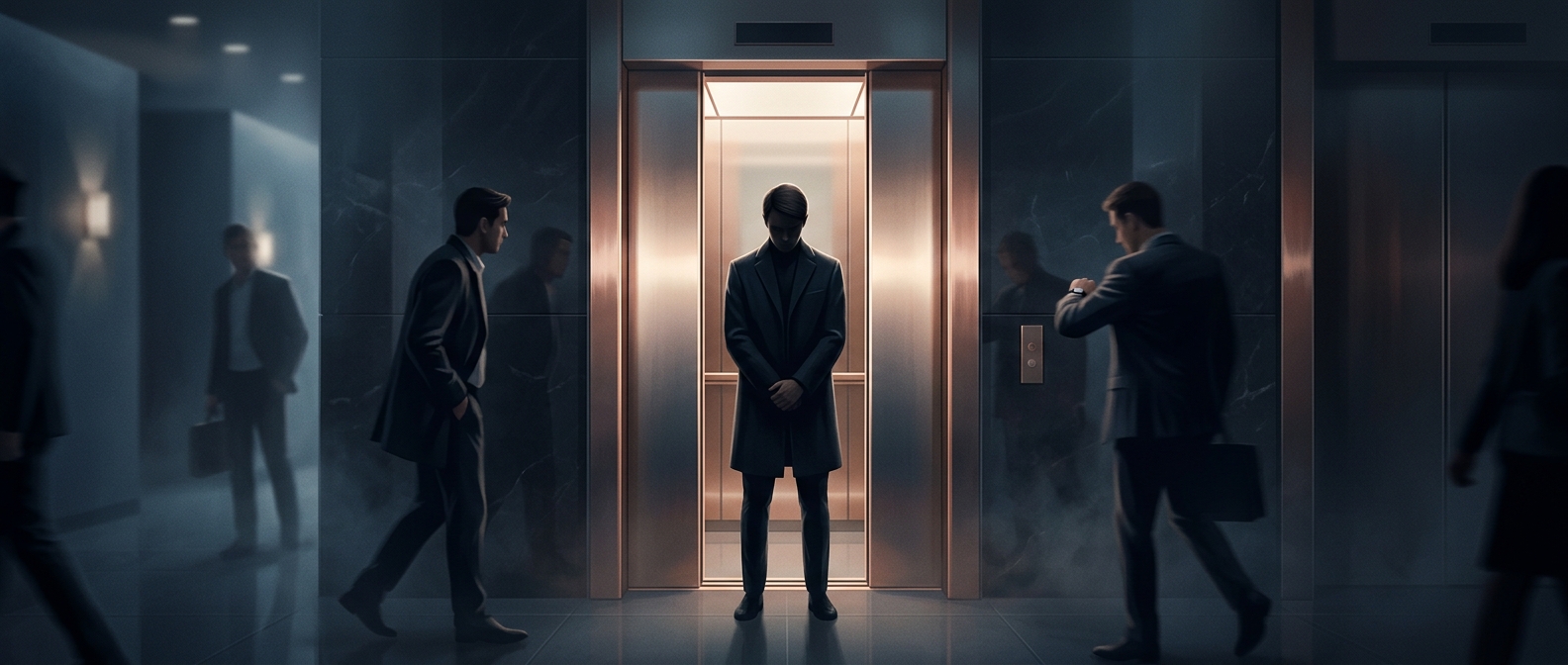
The Elevator’s Unspoken Seating Plan
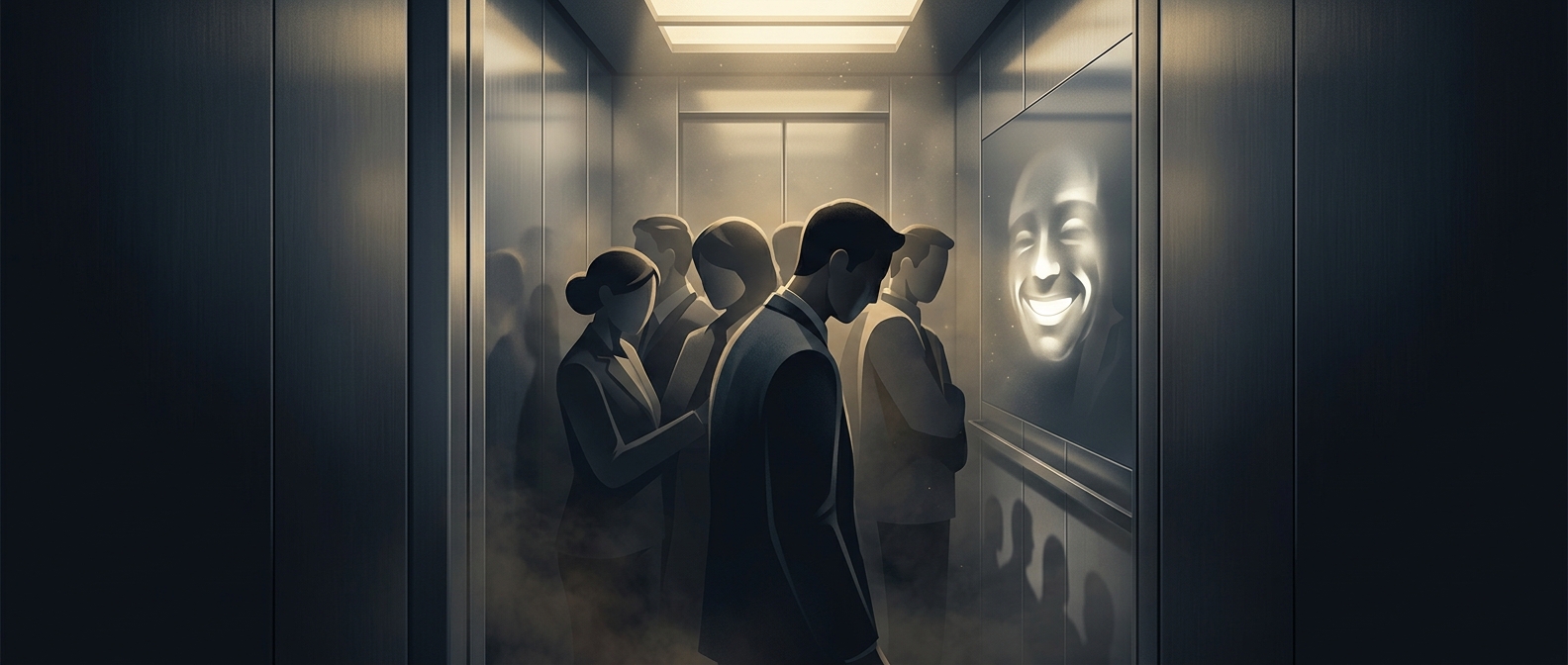
An elevator offers little room to choose how close to stand, but it does leave one small choice: where to point your body. People tend to keep a little distance from strangers and avoid prolonged, direct face-to-face attention. In a crowded car, turning toward a wall or the doors makes that distance easier to manage without anyone having to say a word.
The corners help because they give a rider a stable place to stand while leaving the middle and door area open. From there, it is easy to watch for the floor display or step out when the doors open, without repeatedly shifting around other passengers. The spot also limits how many people are directly in the rider’s line of sight.
A Tiny Negotiation in Motion
As more passengers enter, the arrangement changes. Riders spread out when there is room; when the car fills, they turn toward the doors and reduce eye contact. These small adjustments let strangers share close quarters while signaling, in effect, that they are not trying to engage.
That is why the corner can feel like the elevator’s least socially demanding spot: it offers a little control over where you look and how you move, even when you cannot control how close everyone is.