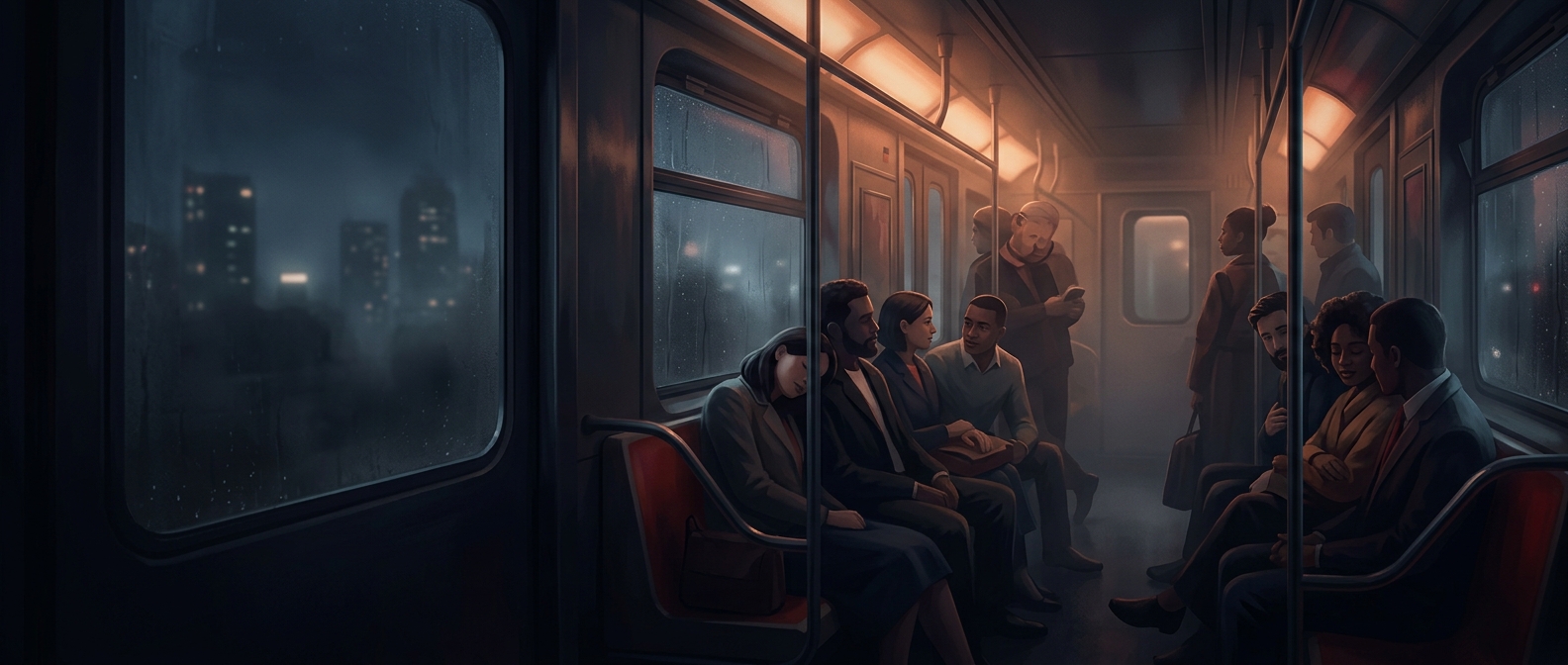
Why a Delayed Train Can Turn Strangers Into a Temporary Team
A delay gives everyone on a platform a shared problem, but often not a shared explanation. The departure board may show a new time—or none at all—while passengers try to decide whether to wait, find another route, or grab food without missing an update. In that uncertainty, even a small piece of useful information has value.
Passengers compare what they have heard, point out announcements someone missed, or keep an eye on a bag while its owner steps away. This is informal coordination: people help one another manage a situation without a designated organizer. Trading snacks or offering a sympathetic look may do less to solve the delay, but it makes the wait feel less solitary.
A Brief Community, Built Around a Shared Constraint
The platform brings people into close contact and gives them a common focus: the train that has not arrived. Their usual differences matter less for the moment than the fact that they are all trying to make the same uncertain stretch of time workable. A nod or a practical tip can quickly establish a small measure of trust.
That community is temporary. Once the train comes, passengers scatter toward different seats, stops, and destinations. But during the wait, the station can function like a neighborhood in miniature—not because everyone becomes close, but because people briefly depend on one another to navigate the same disruption.