Why a falcon may travel differently from a pet
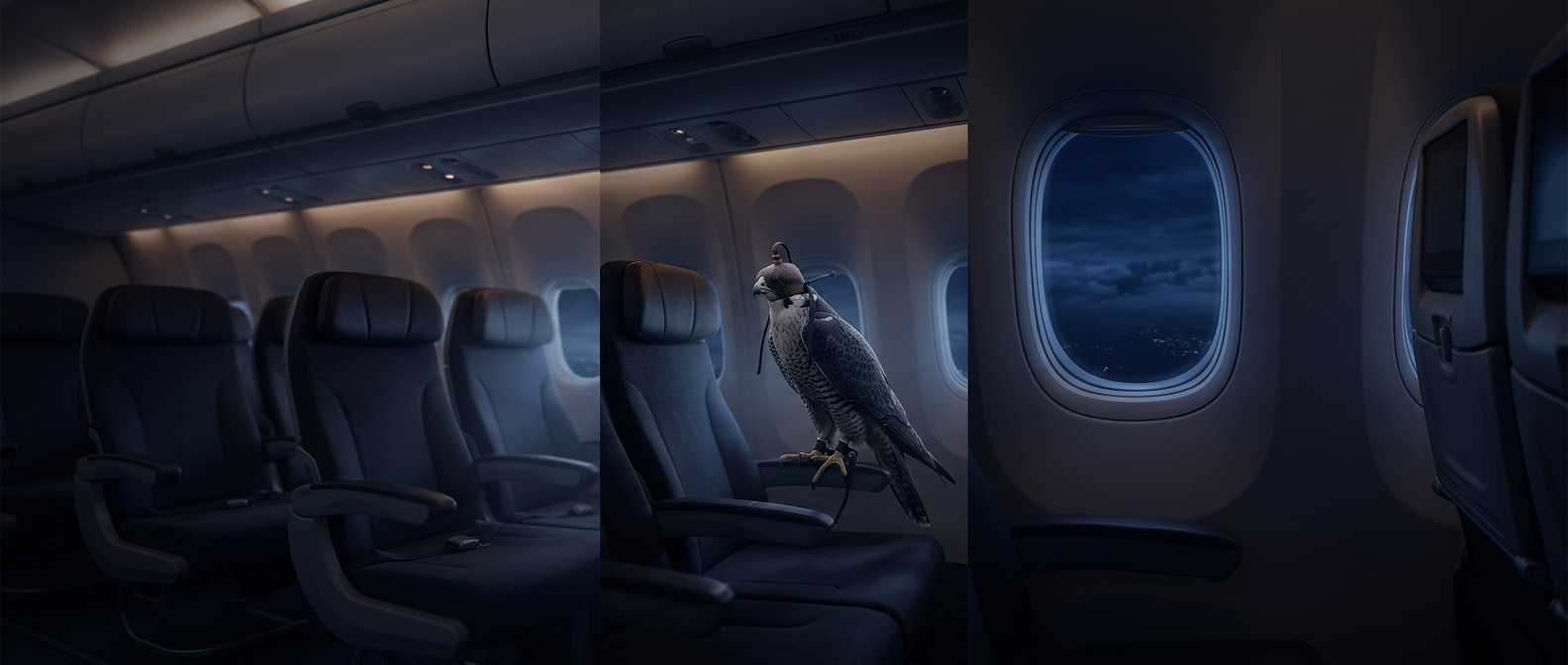
A falcon in an aircraft cabin is not simply a bird in a carrier. In falconry, the bird is commonly hooded and kept on a handler’s glove or a purpose-made perch. The hood limits what the bird can see, reducing the visual stimulation of unfamiliar people and movement. The perch gives it a familiar place to settle, while a tether helps keep it in position.
That setup matters in a cabin, where a loose bird could be startled, injured, or interfere with other passengers. The handler remains responsible for managing the bird throughout the journey; the hood and perch do not remove the need for supervision.
An exception shaped by falconry
Cabin policies are usually written around familiar categories such as small pets in carriers. Falcons require different arrangements because their handling equipment and posture are specific to the bird. Where an airline permits them, it must accommodate the bird and handler without compromising safe travel for everyone else. Permission is therefore a carrier-specific exception, not a general right to bring a falcon aboard.
The practice is especially associated with places where falconry is a living tradition, but the exact rules depend on the airline and route. A bird’s hood and perch may look ceremonial to other passengers; in flight, they are practical tools for keeping a trained raptor settled and under control.