A Window Held in Place by the Wrong Bolts
The windshield did not fail because the aircraft suddenly became too weak to fly. It had been replaced the night before, and the bolts used to secure it were the wrong size: too narrow to grip the fittings as intended. The mismatch was hard to spot because the bolt heads looked right from the outside. Once the aircraft climbed and cabin pressure rose, that pressure pushed against the windshield until its fastenings gave way.
The incident exposed a small but consequential maintenance-control failure. A part can appear properly installed while its hidden fasteners are not doing their job; checking that a bolt fits the hole is not enough if it cannot hold the load.
A Cockpit Under Pressure
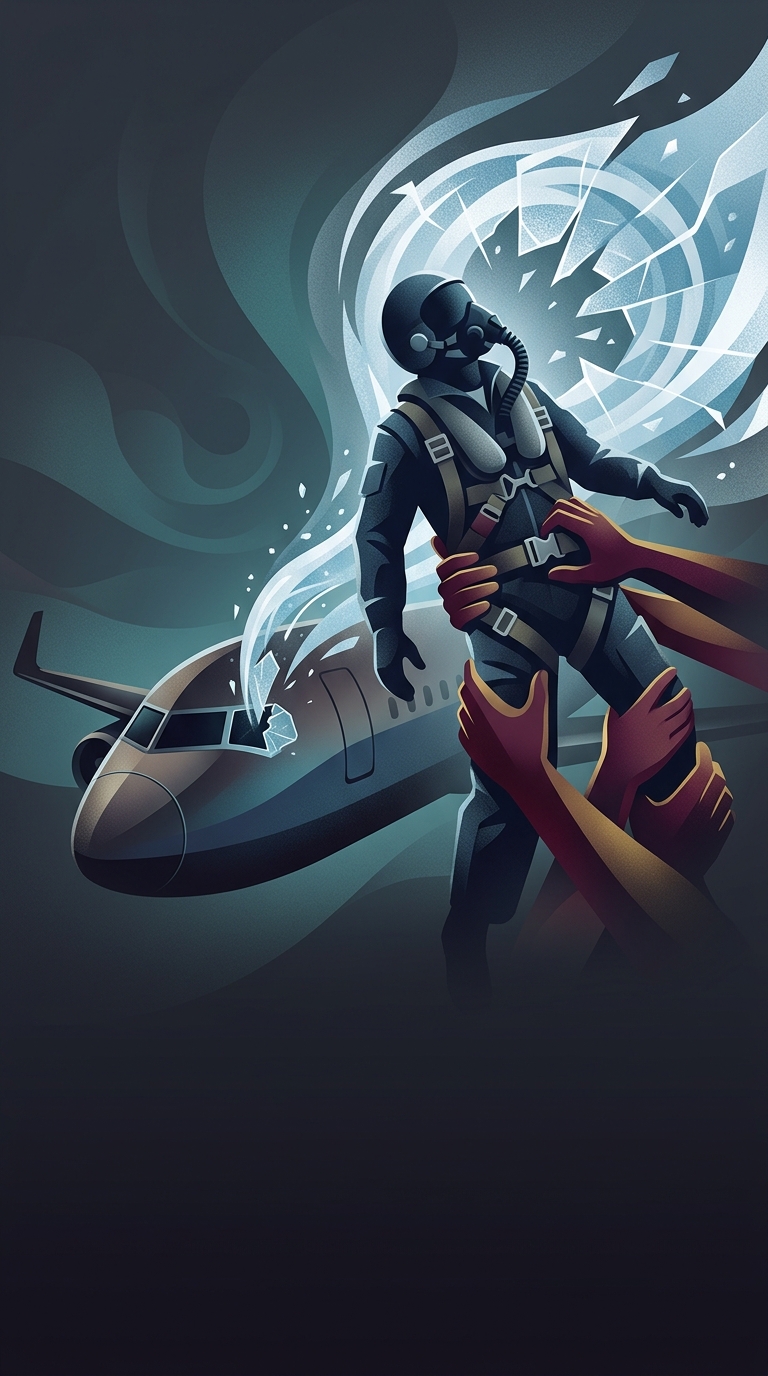
When the windshield blew out, the cabin rapidly lost pressure and rushing air filled the cockpit. The captain was pulled partly through the opening, while the co-pilot had to keep the aircraft under control and begin an emergency descent. At the same time, cabin crew tried to hold the captain and keep him from being carried farther outside. Their grip bought time, but they could not operate the plane for the pilots.
The co-pilot’s task was therefore twofold: stabilize the aircraft and bring it down to air dense enough to breathe without relying on the cabin’s pressure system. He then diverted and landed at Southampton. The crew’s actions mattered in different ways—one person flew, while others kept the captain from being lost during the descent.
The Safety Lesson Was in the Details
The flight became a stark reminder that aviation safety depends on ordinary procedures as much as on dramatic emergency skills. Correct fasteners, verified against the required specification, are a quiet line of defense against the forces created by a pressurized cabin.
The aircraft landed with its captain severely injured but alive. The astonishing survival story began not with a novel technology, but with a basic maintenance question: were the bolts actually the right ones?