A Map Built Around a Living Tree
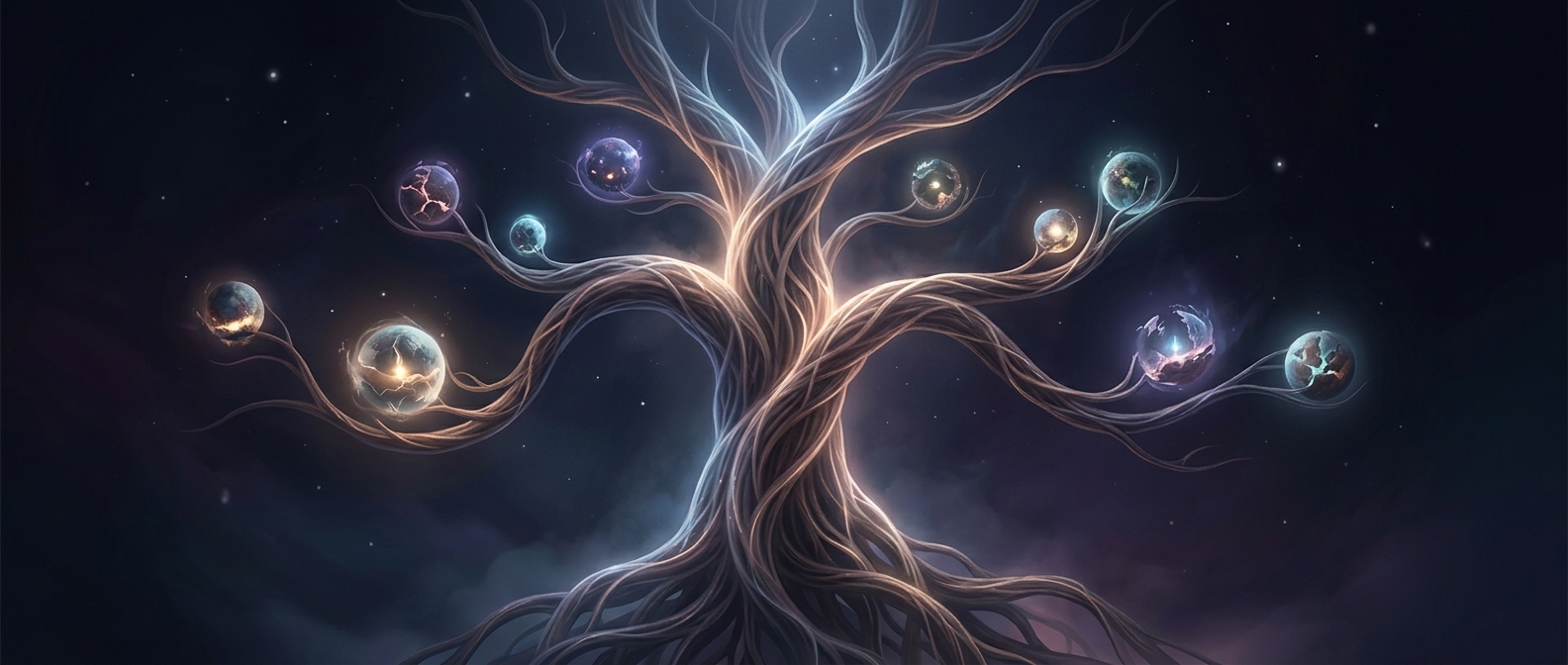
Yggdrasil does not function like a road laid across a finished landscape. It is the structure that makes the landscape of Norse myth intelligible: different realms occupy parts of a shared cosmic order, and the tree’s roots and branches bind that order together. The image turns an enormous, otherwise abstract universe into something with an up, a down, and connections between them.
Connection Does Not Mean Easy Passage
A branch linking realms is not the same as a safe, public route. The myths portray the cosmos as inhabited by different beings and shaped by forces that can threaten its stability. Yggdrasil is both a point of connection and a vulnerable living thing within that world. Its health matters because the tree is not merely scenery; damage to it would imply strain on the order it holds together.
That makes the tree a different kind of infrastructure from a bridge or road. A road helps travelers move through territory. Yggdrasil gives the realms a common framework, whether or not anyone is making a journey between them.
A Cosmic Structure, Not a Fixed Atlas
Norse myth survives in medieval texts that do not always present every detail in one consistent diagram. The familiar count of nine realms offers a way to describe the breadth of the cosmos, but the stories do not read like a precise travel map with a single agreed route between each place.
The memorable idea is the scale of the connection: the worlds are not isolated islands. They belong to one living system, and its central support is itself subject to change and danger.