Why the Back Seat Feels Smaller Than the Car Looks
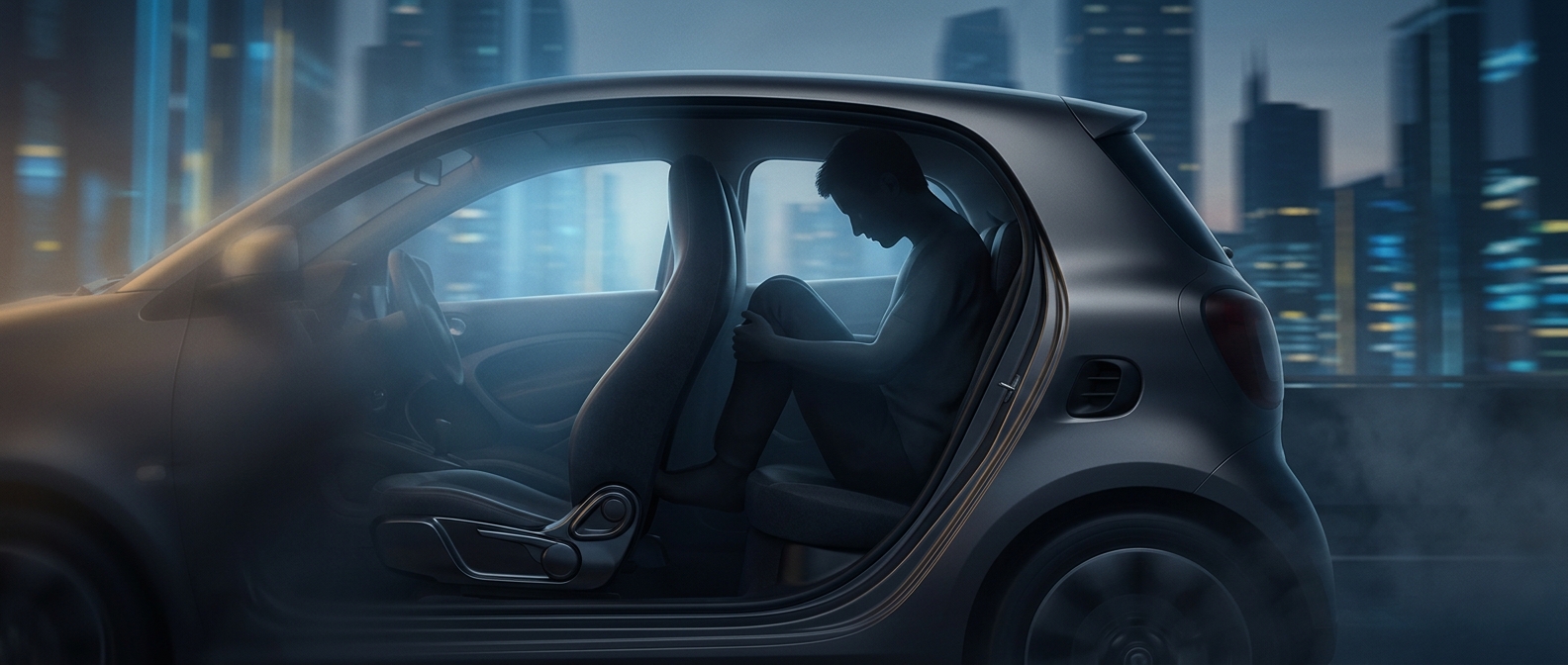
In a subcompact, rear-seat comfort is shaped by more than the car’s outside length. Designers must fit seats, doors, wheels, and crash-protecting structure into a tight outline. The result is often a back seat where the usable space is pinched in several directions at once: knees meet the front seatbacks, feet have little room beneath them, and the seat cushion may be short enough to support less of the thighs.
Front-seat position makes the squeeze especially noticeable. If a driver or passenger slides a seat back, the rear passenger directly behind loses knee room. A taller roof or upright seating position can help occupants sit without hunching, but it cannot create extra floor space; the cabin’s shape has to balance headroom against the room available for legs and luggage.
The Tradeoff Shows Up in Everyday Use
A small rear door can make getting into that seat awkward even when the car is parked. Once inside, the middle position is often the least comfortable because the floor may rise around the transmission tunnel or other underbody components, leaving less room for feet. With three people across, narrow shoulder space adds another constraint.
These compromises are not identical across all small cars. A tall, boxy design can make better use of its height than a low, sloping one, and seat shapes can improve comfort without changing the car’s footprint. But when a car is designed around easy parking, low weight, and room for front occupants, rear passengers often feel the limits first—especially on a long trip, when a few inches of knee or thigh support matter more than they do on a quick ride.