The shortcut is in the geometry
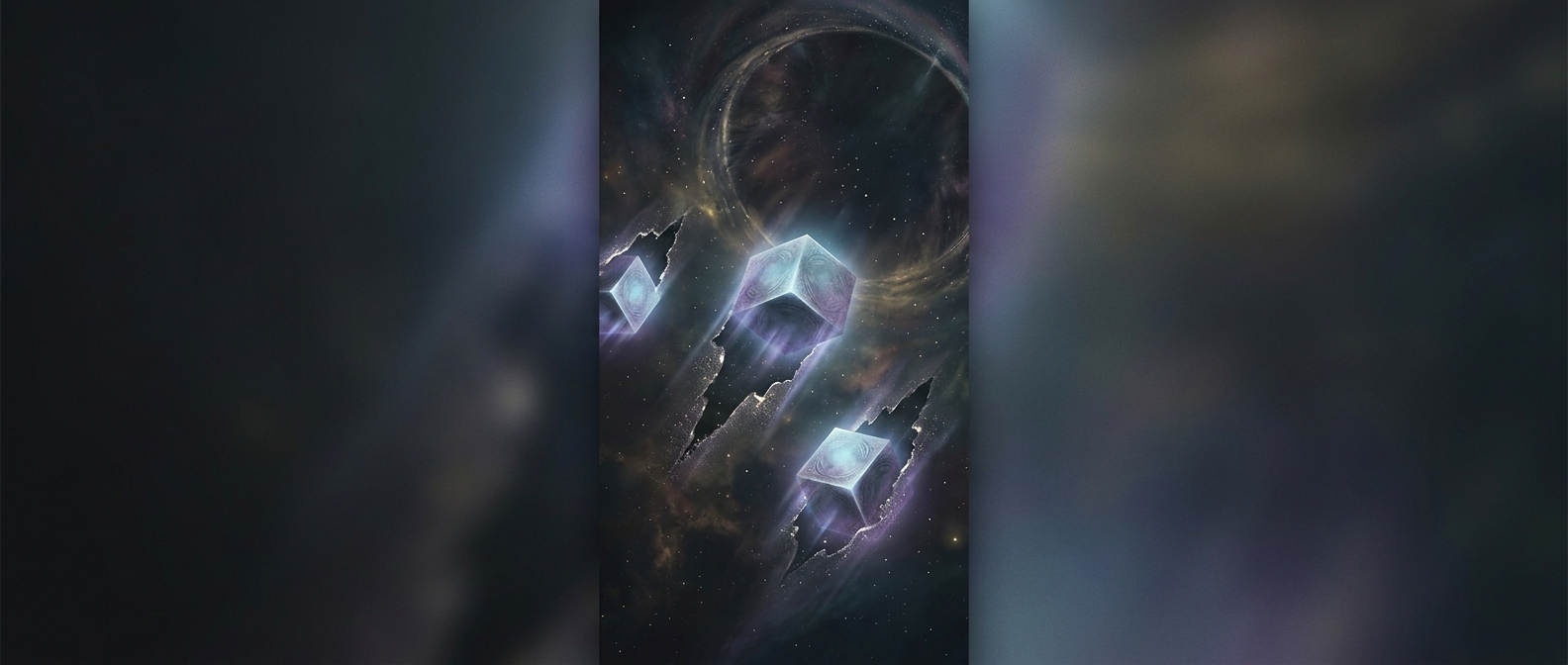
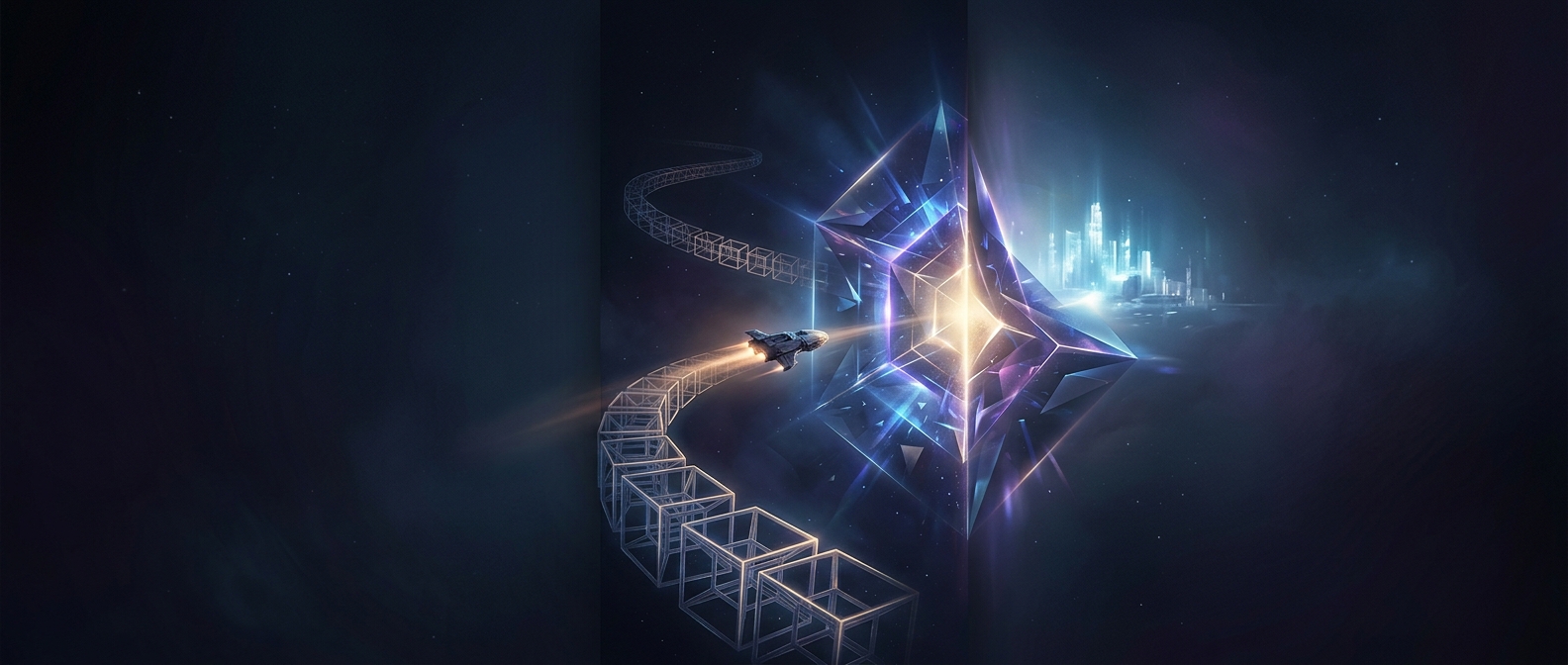
A tesseract is the four-dimensional analogue of a cube: just as a cube extends a square into a third spatial dimension, a tesseract extends a cube into a fourth. In speculative travel stories, the word can suggest a space with an extra dimension that lets two far-apart locations become neighbors.
The useful image is a map folded so two distant points touch. A traveler crosses the short gap between them instead of traversing the long route drawn across the map. In the story’s imagined geometry, the distance has not been crossed faster; the route itself has been made shorter.
What the traveler experiences
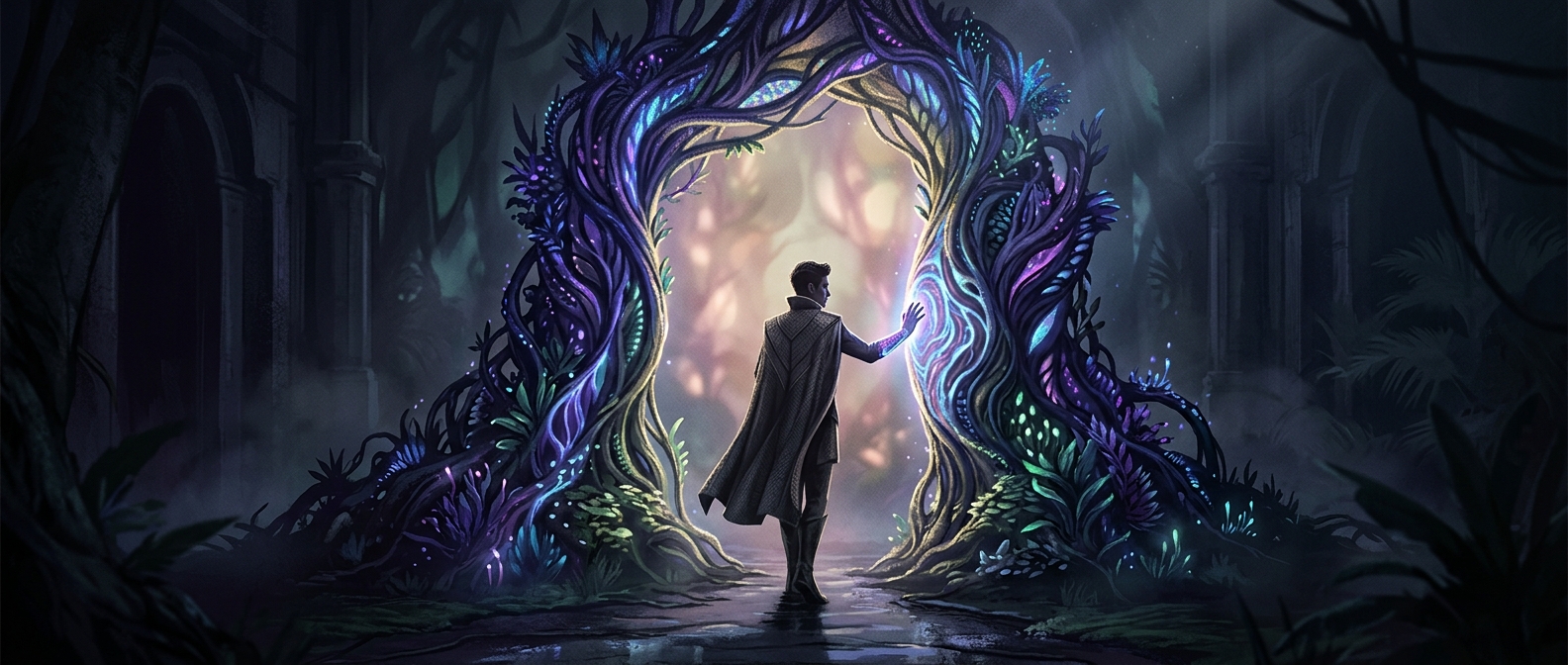
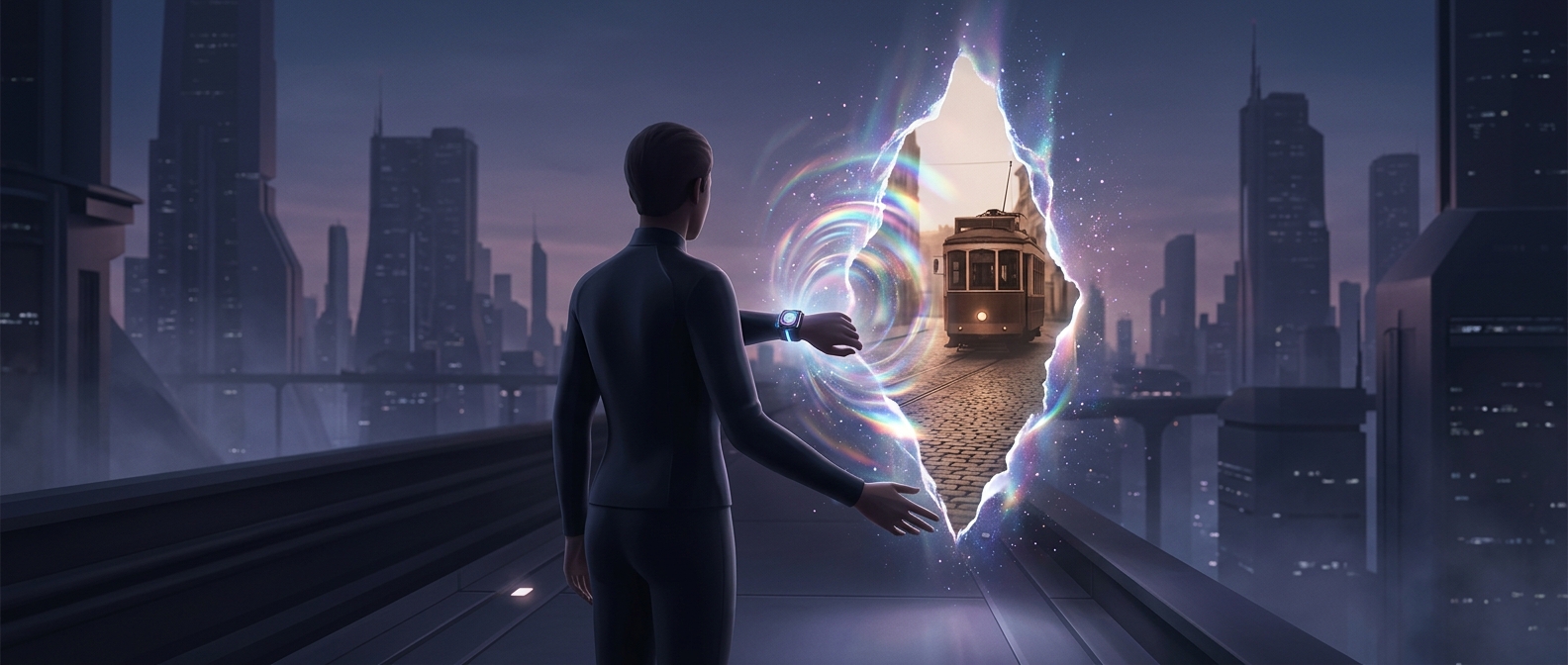
The “fold” is not a physical crease in space like a bend in paper. It is a way to picture a change in the connections between places. A traveler might enter one opening and emerge from another, with the intervening distance bypassed. The tesseract supplies the larger-dimensional framework that makes this shortcut imaginable; it is not a vehicle that accelerates through ordinary space.
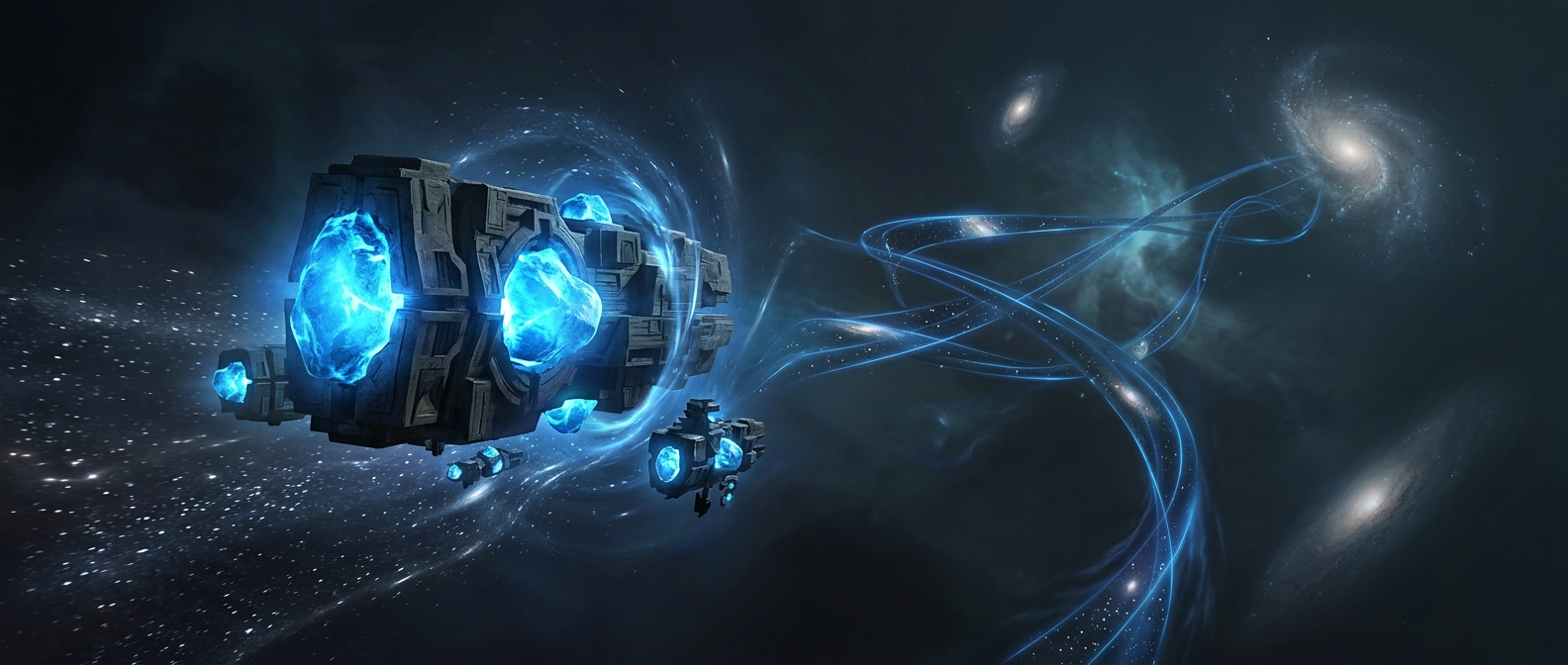
That distinction changes the scale of the journey. If the two openings can be placed near the departure point and destination, a trip that would normally span an enormous distance could become a brief passage. The remarkable part is not how quickly the traveler moves, but how little space the traveler has to cross.