A watchmaker’s idea met the limits of the road
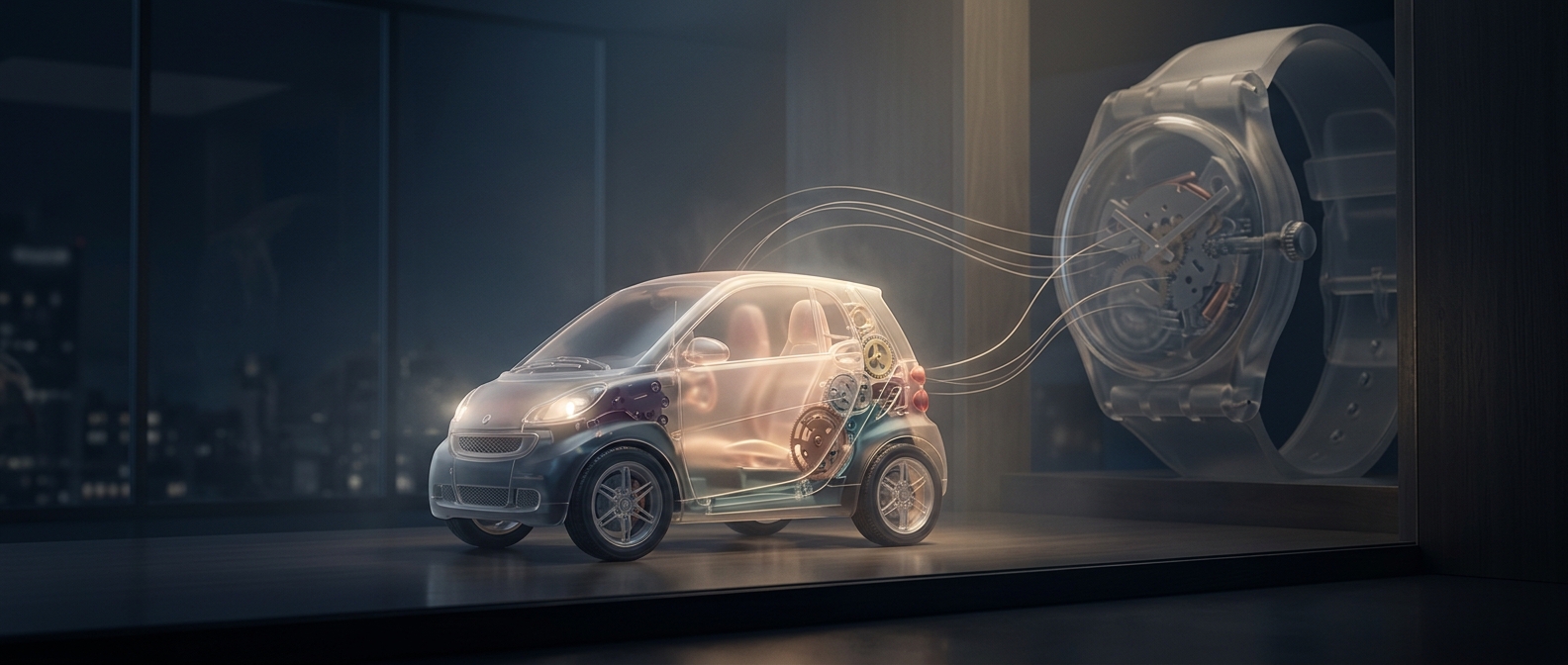
Nicolas Hayek’s proposal was not simply to shrink a conventional car. He wanted a small, personal vehicle for urban trips—something people might choose and customize in a way that made it feel individual. But a car cannot be reduced like a watch: even a two-seat city vehicle must carry passengers, withstand impacts, and fit the mechanical systems needed to move and stop it.
That gap between concept and roadworthy machine made an automotive partner essential. Mercedes-Benz brought the engineering and manufacturing experience to turn the compact-car idea into a vehicle that could meet the demands of everyday use. The result had to balance a tiny footprint with the structures and equipment that make a car more than a stylish shell.
The name carried the partnership into the showroom
“Smart” combined Swatch, Mercedes, and “art,” signaling both the project’s origins and its design ambition. The name outlasted the original collaboration: the car became a production vehicle, not merely a branded accessory or a moving version of a watch.
That transformation is the revealing part of the story. A compact car may look like a simple object made smaller, but its proportions force choices about space, safety, and engineering. Hayek supplied the provocation; Mercedes helped make it fit the rules of the road.