Why a Chariot Could Tip in a Turn
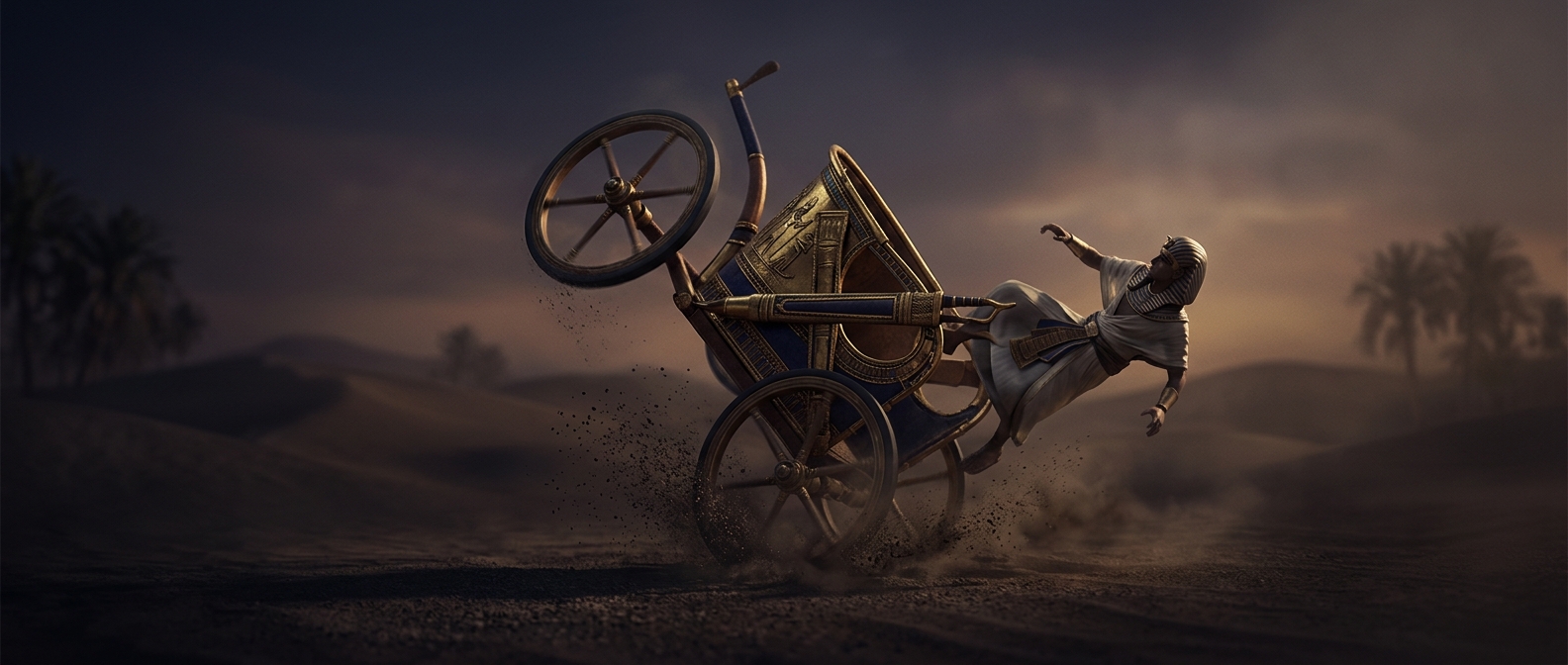
A chariot’s narrow wheelbase—the distance between its left and right wheels—gave it little room to resist a sideways shift. The danger came from the combination of a high load and a tight turn. As the vehicle changed direction, its momentum carried it outward; the wheels pushed against the ground to redirect it, shifting the load toward the outer wheel. If that shift moved the combined weight of chariot, driver, and passengers beyond the wheel’s support, the vehicle could overturn.
This is the same leverage problem that can tip a tall, narrow cart, but speed makes it worse: the faster and sharper the turn, the stronger the outward force. A shove or uneven ground could add to the risk, while a low, centered load and a controlled turn helped keep the wheels beneath the weight.
Speed Came With a Handling Cost
Two wheels made a light vehicle that could move quickly, but they offered less side-to-side support than a wider base. That tradeoff mattered most when turning, crossing rough ground, or maneuvering under pressure. A chariot was not simply a platform that could be driven in any direction at full speed; its driver had to manage momentum and choose a path the vehicle could follow without throwing its weight outward.
Royal ornament and status could make a chariot impressive, but neither changed its geometry. The same narrowness that helped make it a fast vehicle also made a sudden sideways movement a serious hazard.