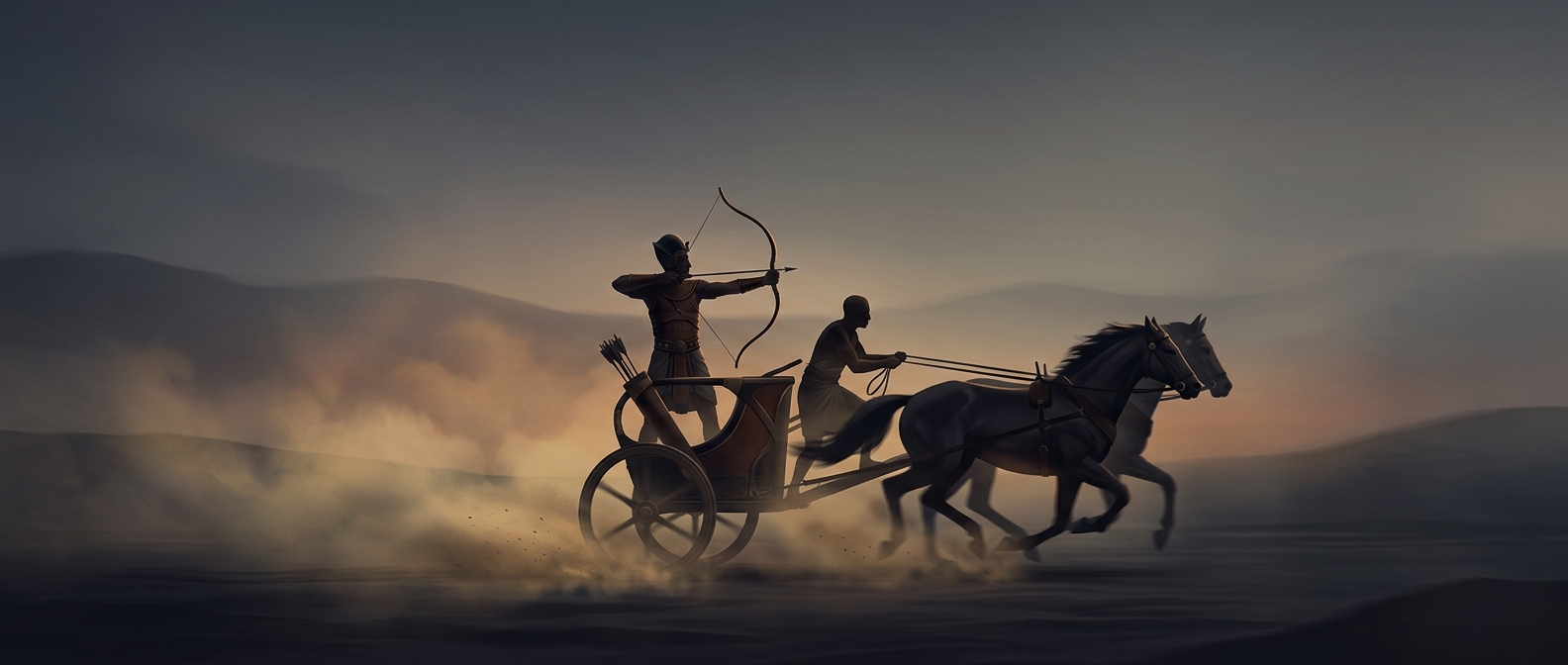
A Two-Person Weapon on Wheels
A chariot solved a basic problem for an archer: aiming and controlling a team of horses demand attention at the same time. With a driver managing the reins, the archer could keep a bow ready, choose a target, and use both hands to shoot. The division of labor mattered as much as the vehicle’s speed.
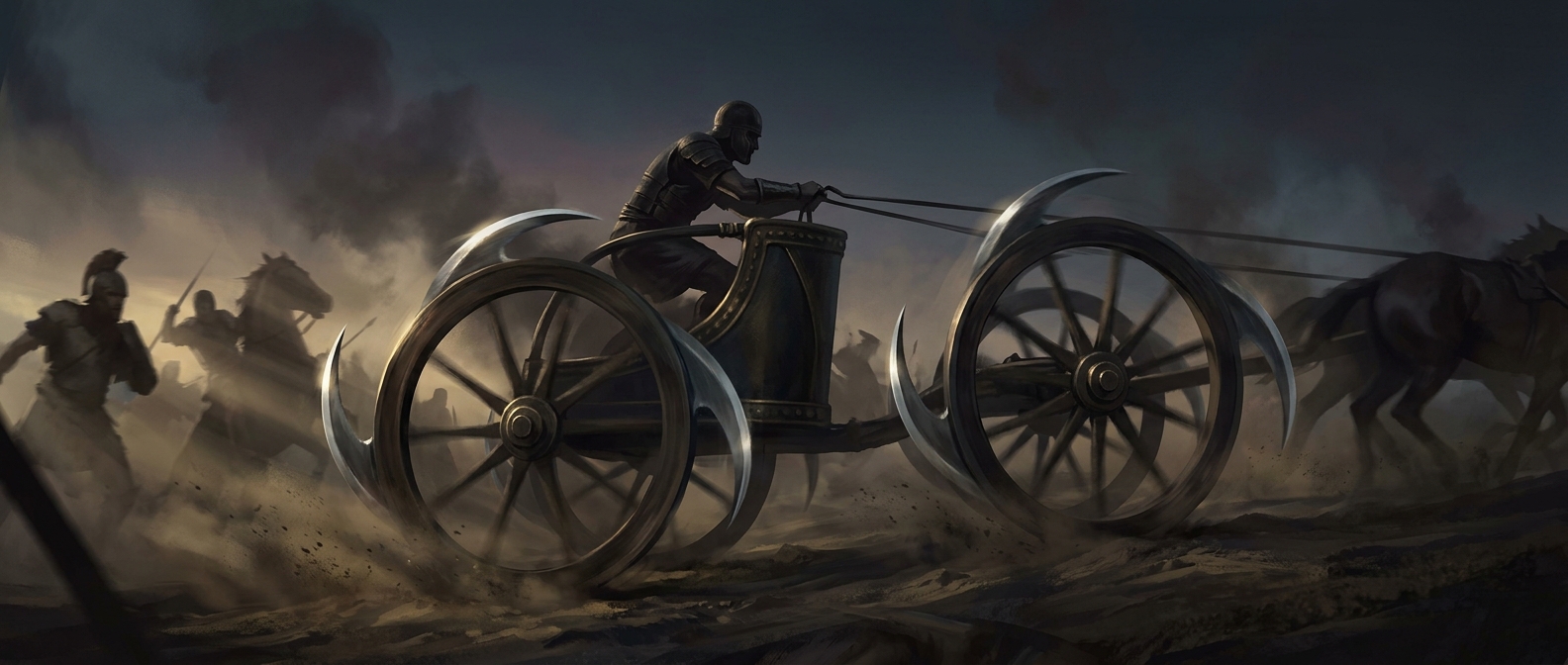
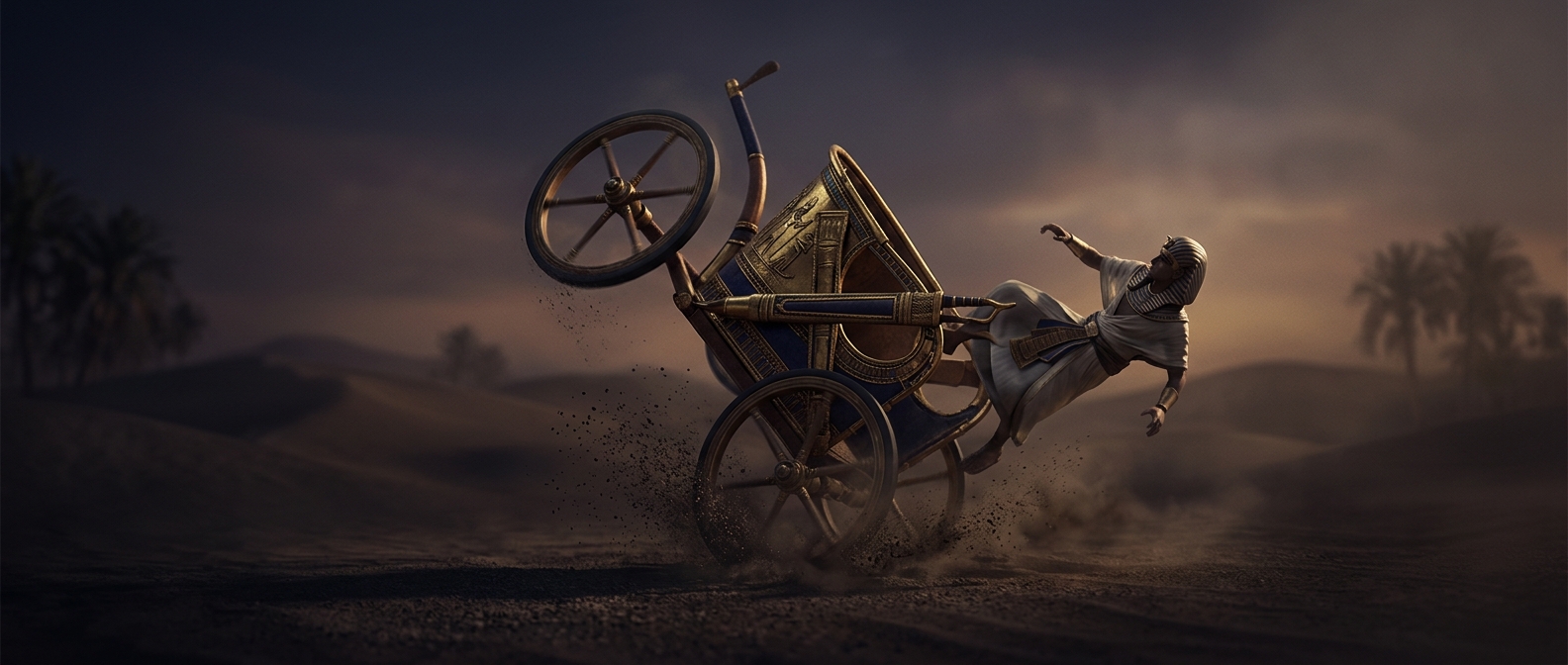
Many war chariots were built relatively light, often with spoked wheels that reduced weight while keeping the wheel strong. That helped a team accelerate and turn across open ground. It did not make the ride smooth: jolts and sway complicated aiming, so firing accurately from a moving platform took skill and close coordination with the driver.
The Advantage—and Its Limits
A chariot’s value lay in choosing when to engage. Its crew could approach within useful bow range, shoot, then turn away before slower troops could close in. That forced opponents to react: hold position and risk repeated attacks, or pursue and risk losing formation. The chariot was not simply a faster way to carry an archer; it gave the crew control over the distance and timing of a fight.
That control depended on suitable ground. Open, firm terrain gave horses room to run and turn, while obstacles, uneven ground, or tightly packed troops could blunt the advantage. A chariot was also more demanding than a lone mounted fighter: it needed a trained team, a driver, an archer, and room to maneuver. Its hit-and-run role worked best when the battlefield offered space—and when the crew could use that space before the enemy could force a close fight.