How an axle turned a chariot into a weapon
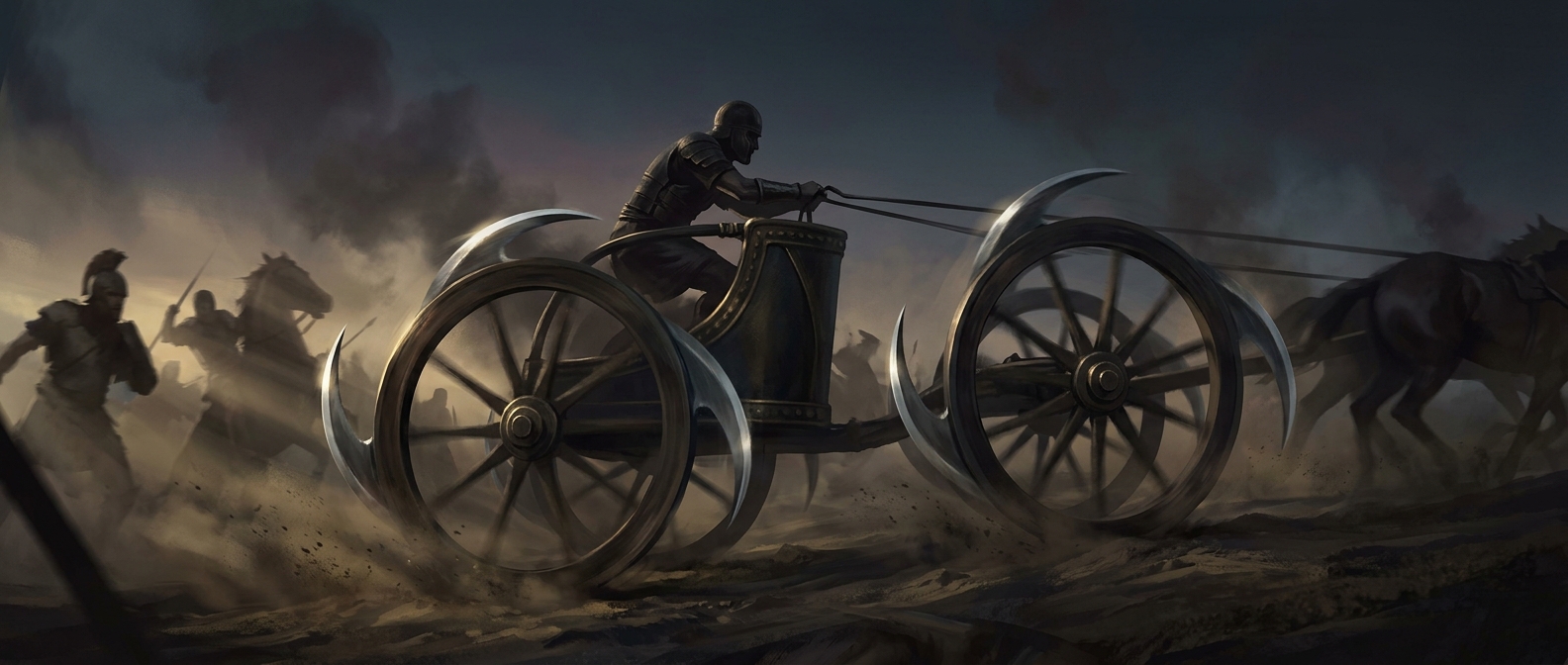
A chariot’s wheels already carried its weight and let it race across open ground. Fixing blades near the ends of the axle added a dangerous extension: as the vehicle rolled past, the blades swept through the space beside the wheels, where infantry might be standing. The weapon’s reach came from the chariot’s width, while its force came from its forward motion.
The blades did not need to aim like a spear. A driver could steer the vehicle along a line through or beside a group of soldiers, using speed to make the passing wheels and blades threatening. The design tried to make a fast-moving chariot dangerous not just to the person in it, but to anyone close to its sides.
Speed came with a narrow set of conditions
That threat depended on having room to build up speed and keep the chariot moving in a predictable direction. Uneven ground, obstacles, or tightly packed terrain could make a charge harder to control and leave less room to pass. A chariot was also a conspicuous target, so the blades did not remove the risks of driving a large vehicle into a formation.
The result was a weapon built around a blunt tradeoff: more danger at close range, but only when the terrain and the charge worked in its favor. Its blades made the vehicle’s path itself part of the attack.