The small gear that keeps a team moving
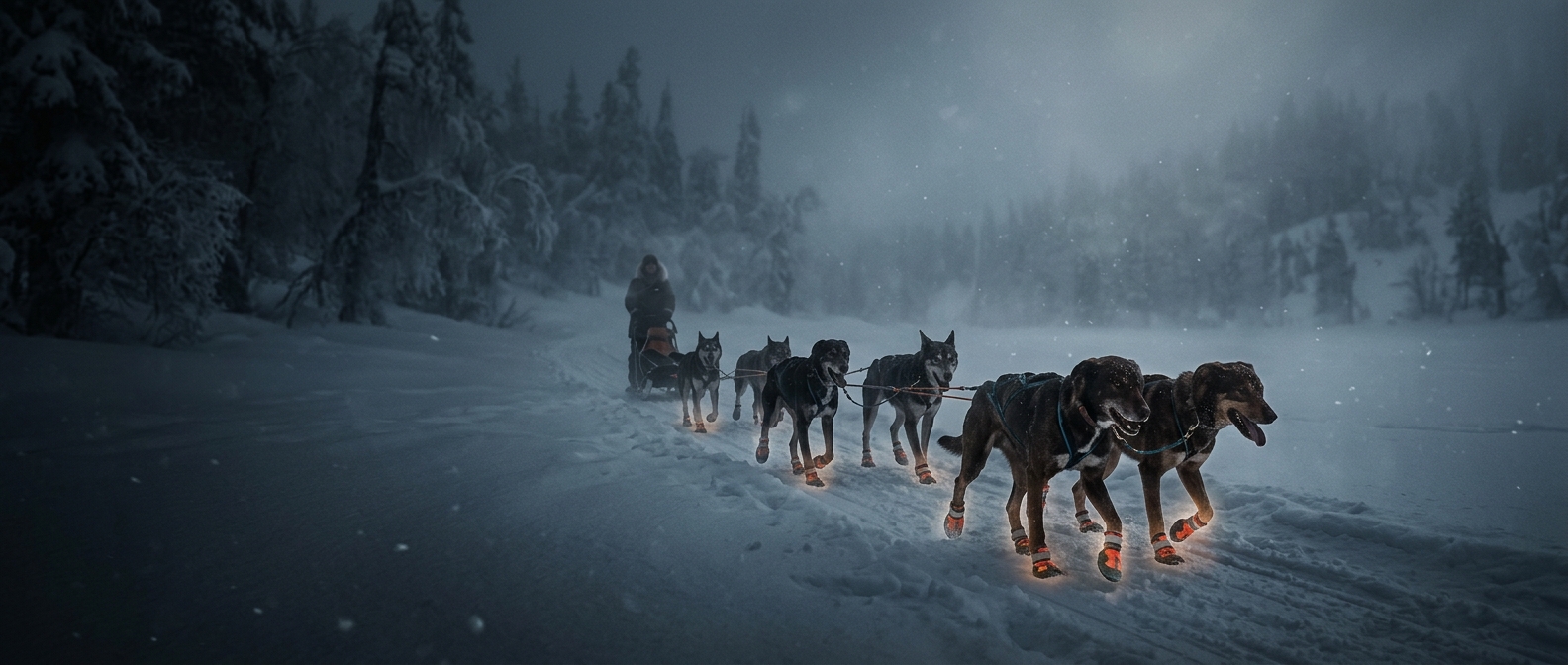
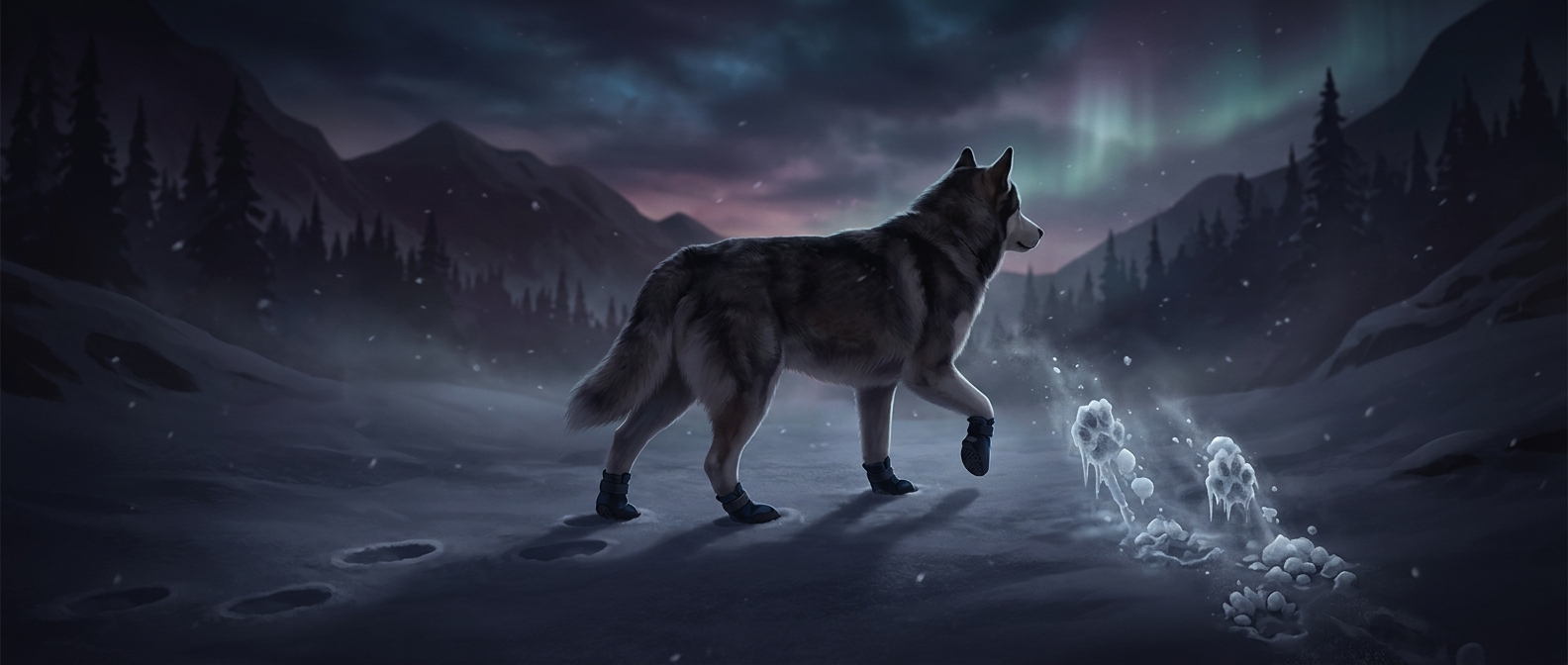
A sled dog’s paws are its contact points with the trail. On a long run, they meet not just soft snow but crusted drifts, rough ice and repeated friction. Booties act as a simple barrier: they take much of that wear instead of the skin, helping prevent cuts and irritation that could make each step painful.
They also address a problem that can develop stride by stride. Snow can collect in the hair and spaces between a dog’s toes, then freeze into hard clumps. Those clumps press against the paw as the dog walks, turning a tiny bit of packed snow into an ongoing source of discomfort. A bootie helps keep snow from building up there.
Protection has to fit the job
Booties are not heavy armor. They need to be light and flexible enough for a dog to run naturally, while staying in place on uneven ground. If one slips off or becomes damaged, the paw is exposed again; if it fits poorly, it can rub or interfere with movement. Handlers therefore have to treat paw gear as part of trail care, checking that it remains secure and that the feet are in good condition.
That routine matters because a sled team depends on many paws working together over miles of travel. A dog may be capable of crossing a frozen wilderness, but protecting its feet helps keep that ability useful from one stretch of trail to the next.