A Push Becomes a Glide
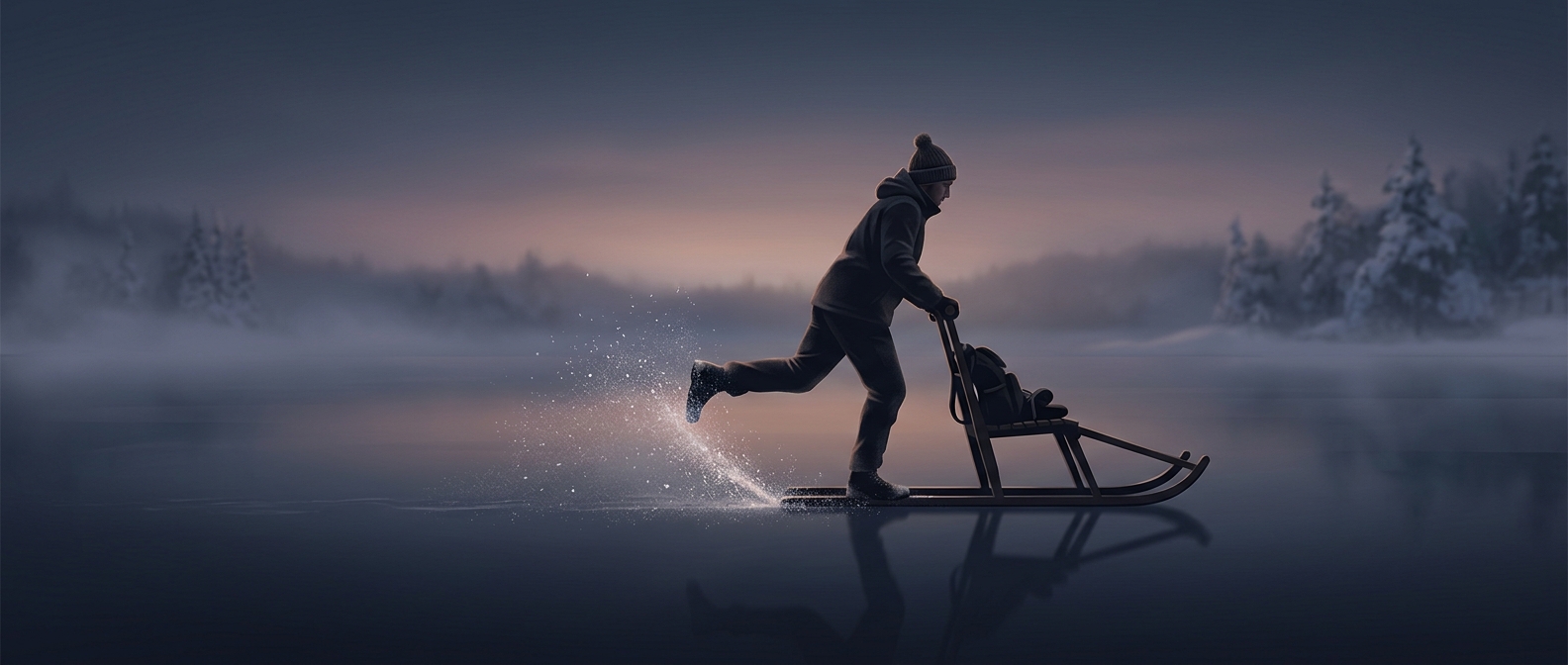
A kick sled works by separating two jobs that a wheeled scooter handles with tires: one foot supplies the push, and the runners carry the rider forward. The rider presses a foot backward against the ground; the ice pushes back, sending the sled ahead. Once moving, the rider places that foot on a runner and lets the sled coast while the other leg prepares the next push.
The long runners matter because they spread the rider’s weight along narrow, smooth surfaces. On firm ice, they can slide with little resistance, so a modest kick may carry the sled farther than it would on rough snow. Soft or uneven snow creates more drag, making each glide shorter and the next push harder.
The Surface Sets the Pace
The kick sled’s advantage is also its constraint: it needs a surface that lets the runners slide. On a clear, icy path, alternating between kicking and coasting can maintain steady motion without a motor. On loose snow, the runners sink or plow through the surface, and the rider spends more effort overcoming resistance.
That makes the sled’s speed less about a machine’s power than about the condition of the path. A smooth winter sidewalk can turn each kick into a long glide; a snowy one can bring the same sled almost to a crawl.