How a Dogsled Runner Turns Pulling Into Gliding
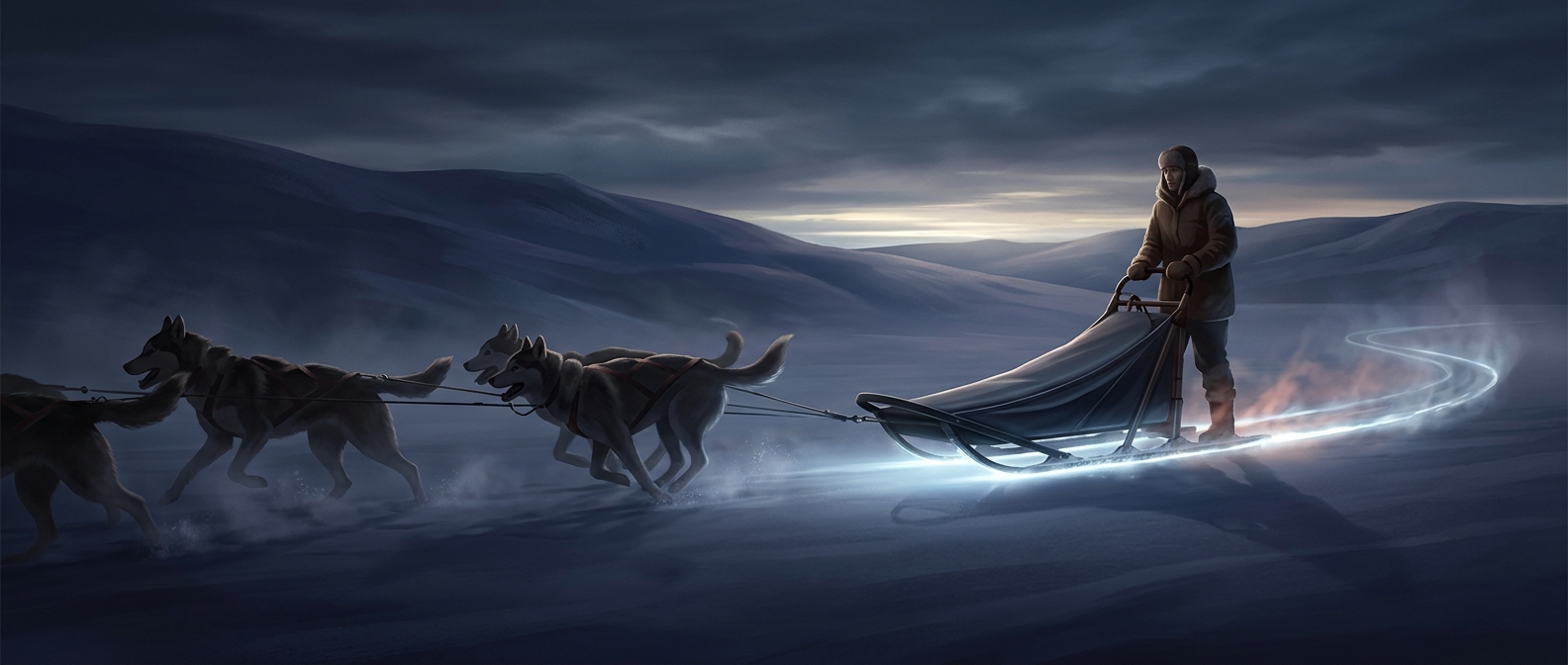
A dogsled’s runners are the narrow strips that contact the snow. Their job is to keep the sled moving while limiting the force the dogs must spend overcoming friction. Many sleds use plastic runner strips, sometimes coated with Teflon, a low-friction material better known by its chemical name, PTFE.
The coating helps snow slide past the runner rather than grip it. That matters because even a small amount of drag is multiplied across every stride: the dogs pull, the sled advances, and the runners continuously scrape along the trail. A smoother contact surface wastes less of that effort as heat and resistance.
A Replaceable Surface Takes the Wear
Runners also act as a sacrificial contact layer. Snow can conceal grit, ice, and rough patches that scrape at the sled. Instead of letting every encounter wear directly on the sled’s frame, the runner strips take much of the abrasion. Plastic can be replaced or repaired when it becomes too worn, helping protect the structure above it.
The design is a practical tradeoff: the runners must be slick enough to glide, but durable enough to survive repeated contact with an unpredictable surface. Their narrow shape concentrates the sled’s weight over a small area, while the material provides a smooth path across the snow.
The dogs supply the power; the runners determine how much of it reaches forward motion. On a long trail, reducing drag and containing wear can make the difference between a sled that moves efficiently and one that makes every pull harder.