Why a sled can beat a backpack
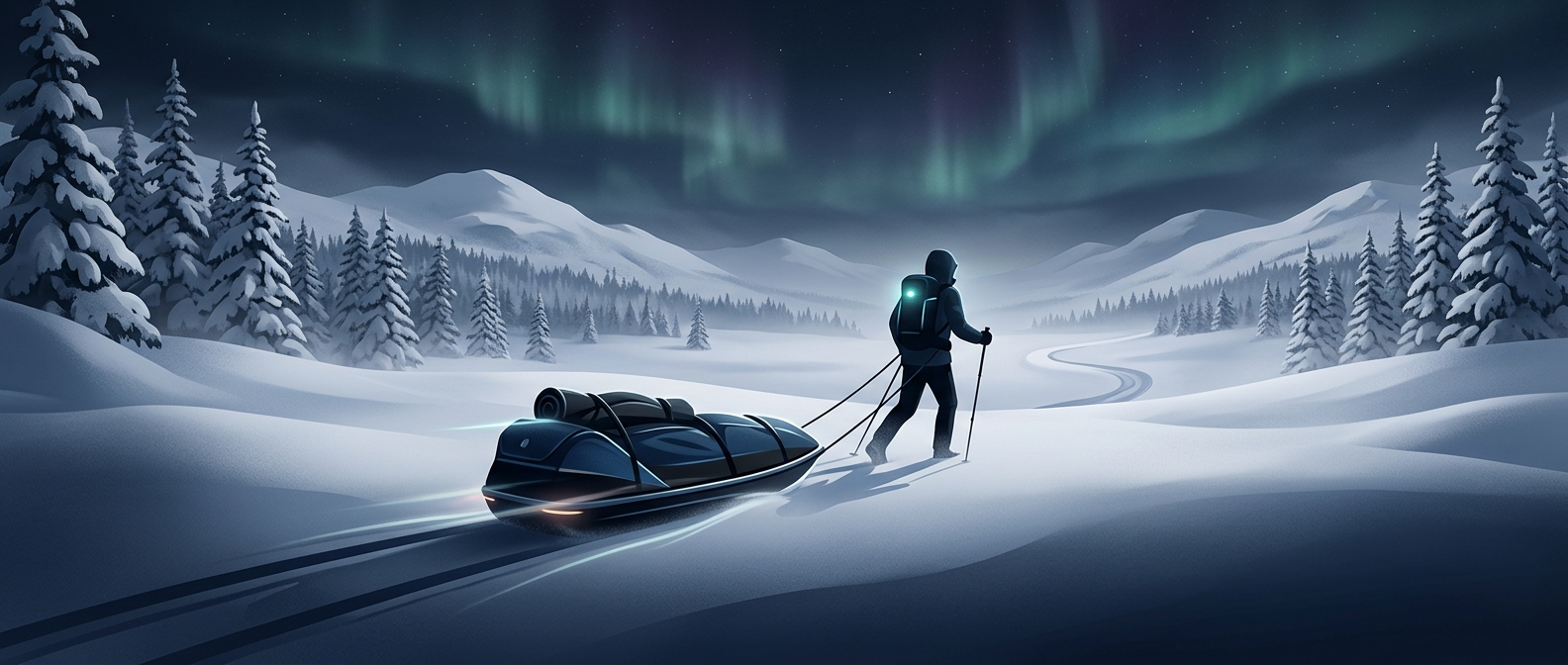
A pulk changes the main cost of carrying supplies: instead of supporting the load’s full weight on the body, a traveler must overcome the resistance of a moving sled. On snow, that resistance can be lower than the effort of carrying the same heavy gear—especially when the snow supports the runners rather than letting them sink deeply.
The runners spread the load across a longer surface, helping the pulk slide over soft ground. They also create drag, and that drag rises with the weight of the cargo and the condition of the snow. A pulk is therefore not effortless; it trades pressure on the back for a steady pulling force.
The harness is part of the steering system
A harness connects the person to the sled so that each step draws it forward. Routing the pull through the hips lets the body’s larger muscles do much of the work, rather than asking the arms to haul the load. The connection also has to manage what happens when the sled resists: if it catches in uneven snow or tips, the pull can become awkward, and the traveler may need to slow down and reposition it.
That makes packing a practical engineering choice. Dense items kept low help the sled stay stable; a tall or uneven load is more likely to shift as the pulk crosses ruts or turns. Unlike a wheeled cart, it can travel where snow covers the ground, but it depends on a surface that will support and slide beneath it. The useful trade is simple: the traveler still supplies the energy, but the snow carries much of the cargo’s weight.