Why a toboggan has a broad, smooth bottom
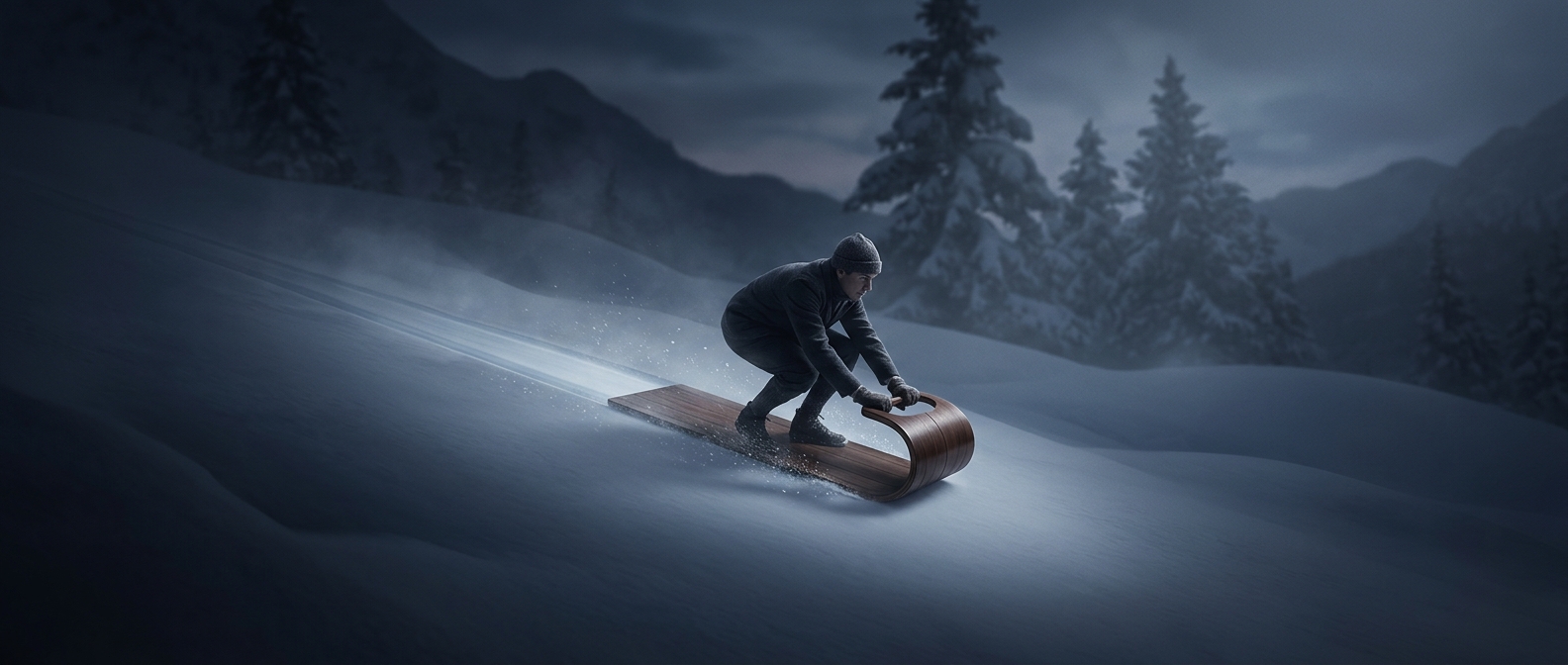
A traditional toboggan is built to slide on top of snow rather than ride on narrow runners. Its wide underside spreads the riders’ weight across a larger area, helping the sled skim over soft snow instead of sinking as deeply. With no metal runners or fixed steering gear underneath, the design is simple and has few parts to catch on uneven ground.
That broad contact also shapes how the sled behaves. Snow presses against much of the underside, creating friction, while packed tracks offer less resistance and let the toboggan glide faster. Unlike a runner sled, it does not have narrow rails that can bite into the snow to hold a line.
The upturned nose helps it keep moving
The front curves upward so it can climb over small ridges and lumps. A blunt, low nose would be more likely to dig into a bump and abruptly slow or stop the sled. The curve does not make rough terrain harmless, but it helps the toboggan pass over minor obstacles rather than meeting them head-on.
Steering comes from the riders
Without a steering mechanism, the people aboard provide the control. Shifting weight changes how the toboggan presses into the snow; dragging a foot adds resistance on one side and can pull the sled around. These are modest corrections, not the precise turns a dedicated steering system can make.
The tradeoff is straightforward: a toboggan is easy to build and carries weight on a broad surface, but its direction depends on the riders’ balance and contact with the snow. On a crowded or uneven slope, that makes choosing a clear path before the descent especially important.