A playful name for a new way to ride
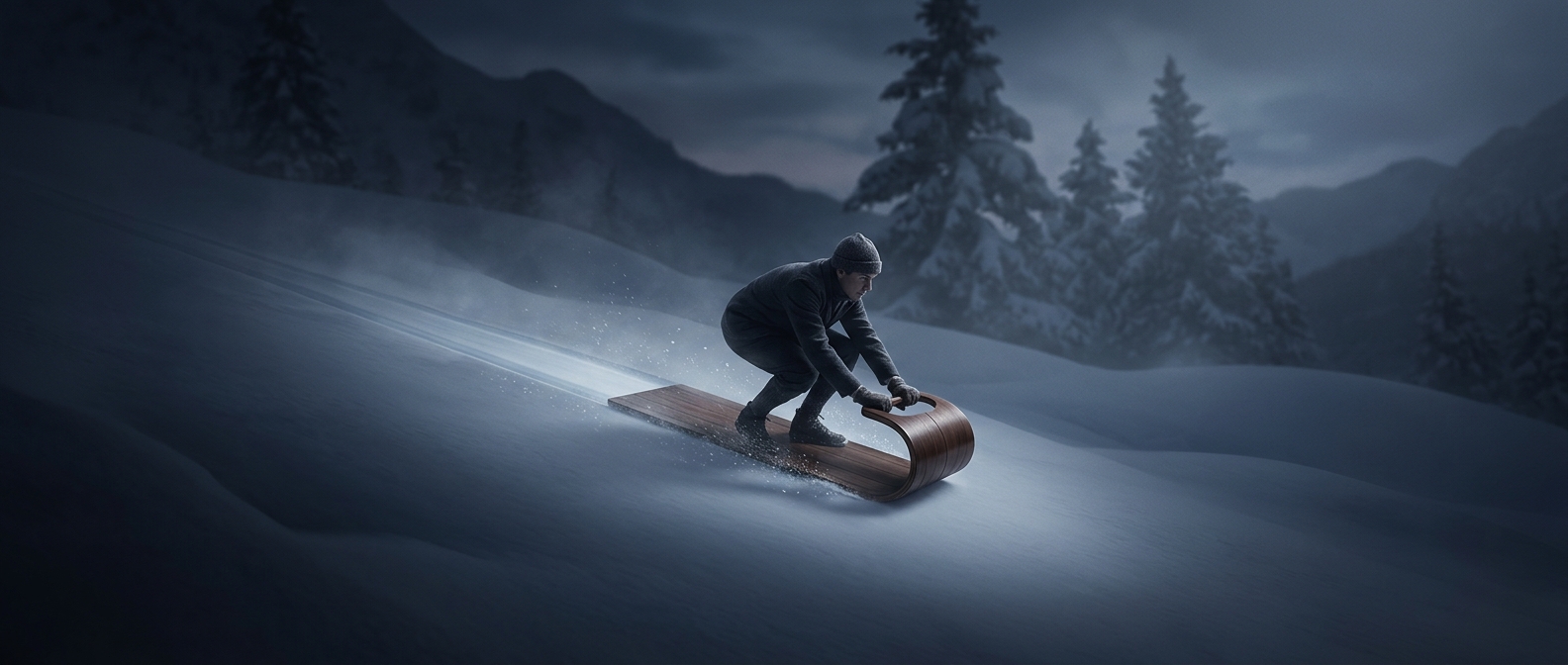
“Snurfer” was more than a catchy label: it captured the unusual mix that made the device appealing. The rider faced across the slope, as on a surfboard, rather than pointing downhill with one foot ahead of the other as on skis. That sideways stance became a defining feature of snowboarding.
The first version was also a practical experiment in control. A rope at the front gave the rider something to hold and use to influence the board’s direction. But a rope could not provide the same steady connection as securing a rider’s feet to the board. As the design developed, bindings—straps or other fixtures that hold boots in place—made it easier to steer with shifts in body weight and to stay connected over uneven snow.
From a novelty to a sport
The Snurfer helped make the basic idea tangible: one board, two feet, and a sideways ride down a hill. Turning that idea into a reliable piece of sporting equipment required more than joining skis. Designers had to make a board that could flex under a rider, grip the snow at its edges, and respond predictably when the rider leaned or shifted weight.
Those refinements helped move the concept beyond a backyard novelty. The original name preserves the invention’s surf-inspired spirit, while “snowboard” describes the equipment that emerged as the sport matured. The change is a small clue to the larger transformation: what began as a simple way to slide became a new kind of downhill control, built around riding across the slope rather than facing straight down it.