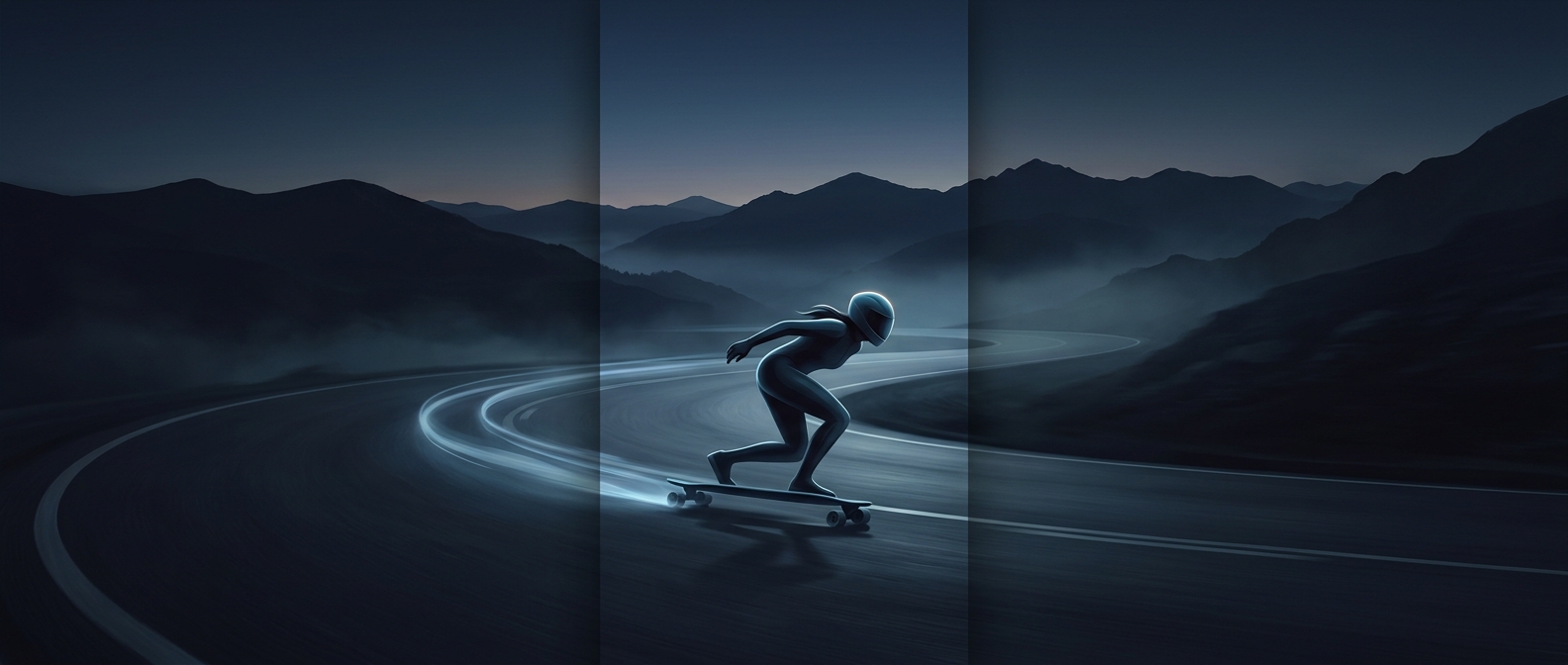
Why a Longer Board Feels Calmer at Speed
A longboard’s geometry changes how small steering movements affect the ride. Its longer wheelbase—the distance between the front and rear trucks, or axles—generally makes the board respond less sharply to a given shift in the rider’s weight. That can make a fast descent feel less twitchy than it would on a shorter board, though the board still needs a rider who can control it.
The tradeoff is maneuverability. A shorter wheelbase can make tight turns easier; a longer one usually needs more room to turn. Longboard shapes vary, so riders can choose setups that favor cruising, carving from side to side, or downhill stability.
Small Wobbles Can Feed on Themselves
At speed, a slight turn can send the board drifting toward one side. If the rider’s correction comes late or is too strong, the board may swing back the other way, prompting another correction. This growing side-to-side motion is often called a speed wobble. A steadier-feeling geometry can reduce how readily the board reacts to tiny inputs, but it cannot eliminate the effects of poor balance, rough pavement, or excessive speed.
A low deck can also make it easier to push: the rider’s foot has less distance to travel down to the road. Some designs lower the standing platform between or below the trucks, bringing the rider closer to the ground. The result is a board shaped for long, smooth coasts—but on a descent, even a modest wobble has less time to settle before the pavement rushes up.