Why a Slip-and-Slide Needs a Continuous Water Film
A person sliding across pavement is constantly being slowed by friction: tiny bumps in the two surfaces catch against one another and resist motion. A smooth coating of paint fills in some of concrete’s roughness, making it easier for water to spread across the surface. That water acts as a thin lubricant between skin and pavement, so the two surfaces have less direct contact and the slide lasts longer.
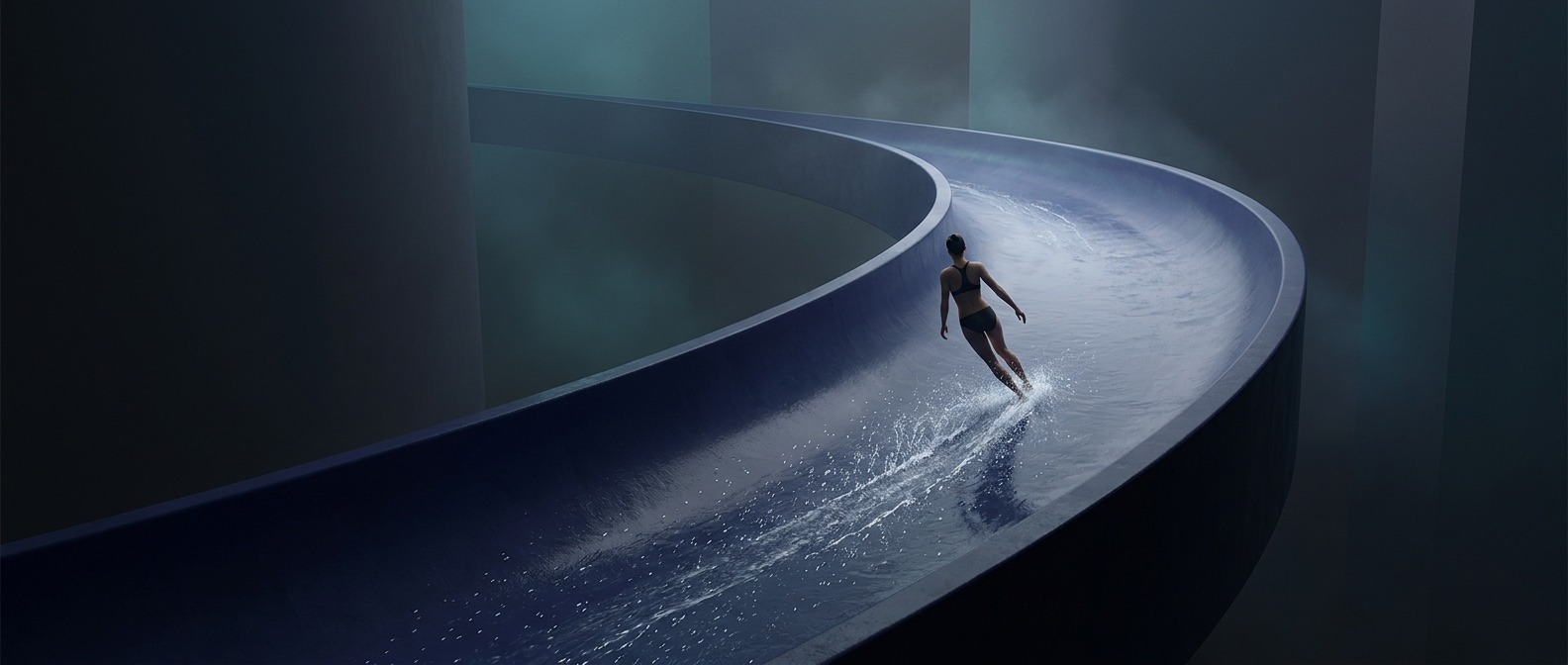
The film has to keep being replenished. As a body passes, it pushes water aside; on a slope, gravity carries water downhill. If the surface dries or the film becomes patchy, bare skin meets the painted concrete directly. The returning friction can slow a slider abruptly, which is why a merely damp stretch may feel much less forgiving than a fully flooded one.
The Surface Is Part of the Ride
Water flow and surface finish work together. A smoother painted surface helps maintain the lubricating layer, while bumps, cracks, or poor drainage can interrupt it. A steady supply of water replaces what gets displaced and helps keep the ride consistent from one section to the next.
That creates a practical tradeoff: the surface needs enough grip to be usable when dry, but a reliably wet, smooth path to slide on. It is the uninterrupted water layer—not paint alone—that turns hard pavement into a sliding surface. When that layer breaks, the same pavement that seemed slick can suddenly slow a slide.