Why the bumper is more than decoration
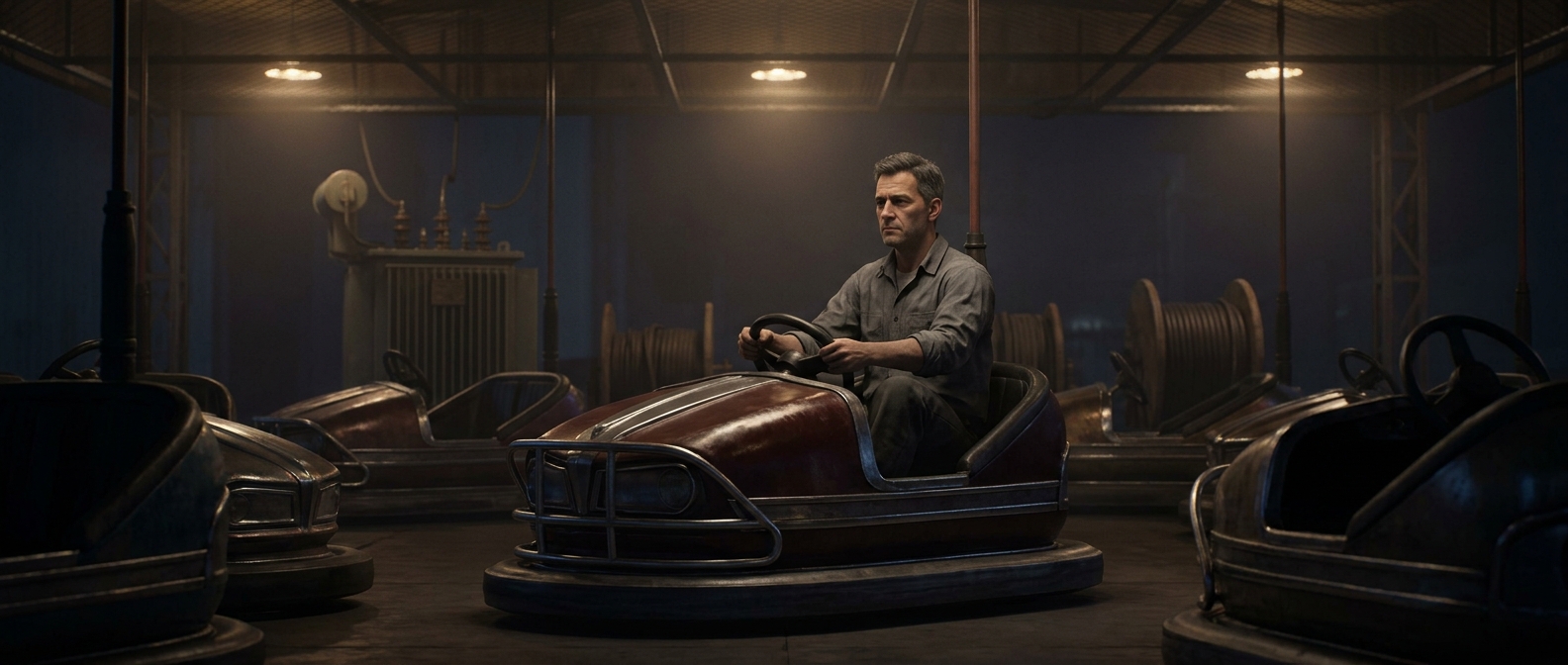
A bumper-car collision is designed to give way. The rubber ring around each car compresses when it meets another car or the arena barrier, spreading contact over a broader, softer surface than a hard metal edge would. It also extends the collision slightly: instead of stopping abruptly, the cars deform the bumper, then rebound. That cushioning reduces the sharpness of the impact and helps the cars separate.
A crash with limits
The other part of the design is speed. Bumper cars move slowly enough that their impacts remain a controlled part of the ride rather than the kind of high-energy crash seen on a road. The ring cannot erase the force of a collision, but it changes how that force is delivered: a springy bump is easier to absorb than a sudden strike against a rigid edge.
That distinction is the ride’s central engineering trick. The cars are not made crash-proof; they are built so that bumping into one another is the expected activity, and the contact surfaces help manage it. The result is a collision that ends with a rebound instead of a sharp stop—a small demonstration of how cushioning can make impact more forgiving.