Why a Penny Board Feels So Different
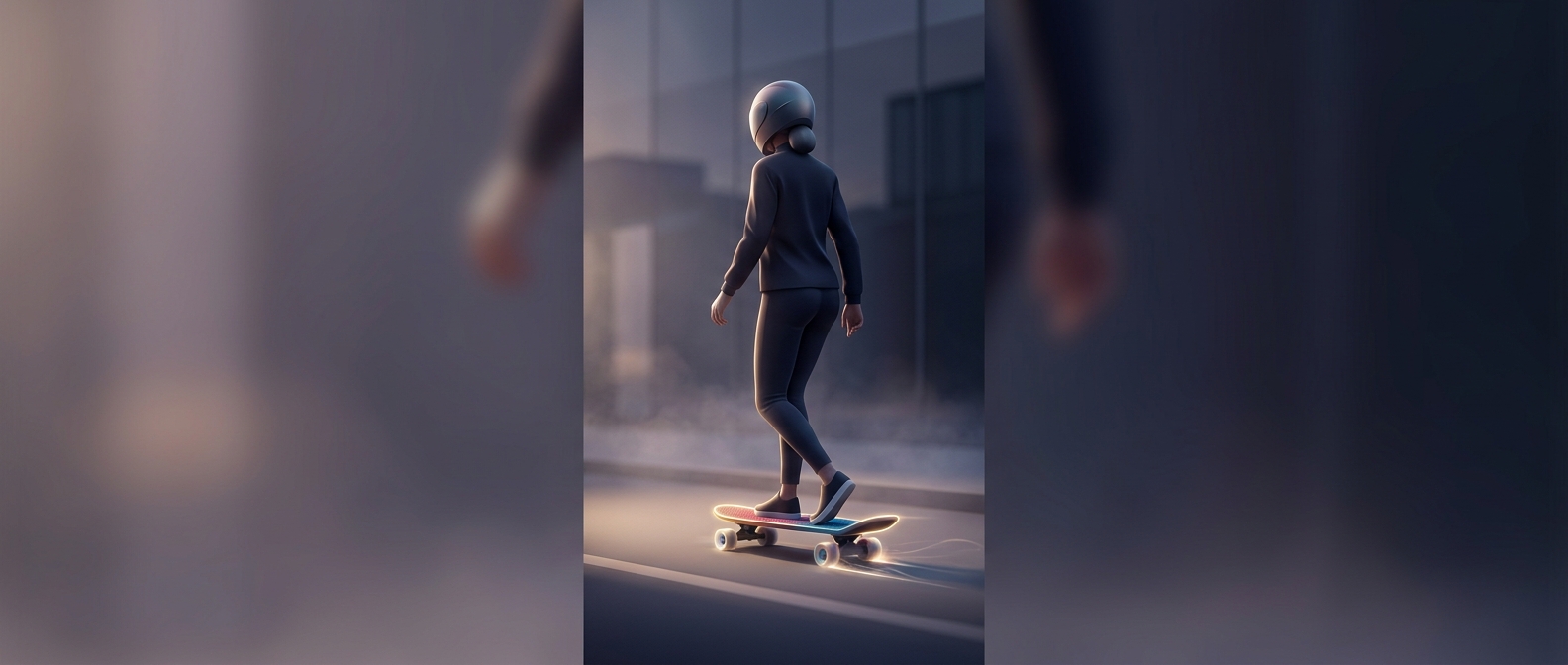
A Penny board is a compact cruiser: its short deck and close-set trucks—the metal assemblies that connect the wheels and let the board turn—leave little space between the rider’s feet. That small footprint makes the board easier to tuck under an arm or carry onto a bus than a full-size skateboard.
The short distance between the trucks also makes steering feel lively. Leaning shifts the rider’s weight over a smaller platform, so turns can come quickly. That responsiveness is useful for weaving through open space, but it can make small movements feel less forgiving, especially for a new rider.
Portability Has a Physical Tradeoff
On a longer deck, riders can spread their feet apart and adjust their stance. A Penny board offers less room for those shifts, so balance depends more on precise foot placement. The rider must also keep enough weight over the board to steer without leaning so far that the wheels lose their line.
That changes what the board is best suited for. Its compact size is convenient for short trips and carrying between rides; it is not simply a smaller version of a standard skateboard with all the same room and stability. The deck saves space by asking the rider to use that space carefully.