Speed arrived before control
Merlin’s early skates put small wheels in a single line beneath each foot. That arrangement let a skater roll forward, but it offered little help with the two other jobs walking normally handles almost without thought: changing direction and stopping.
A wheeled foot keeps moving when the skater shifts weight. To turn, the skater has to guide the wheels onto a curved path while staying balanced; to stop, the wheels need to be slowed by friction or an obstacle. Without a dependable brake, simply deciding to stop was not enough.
The room became part of the test
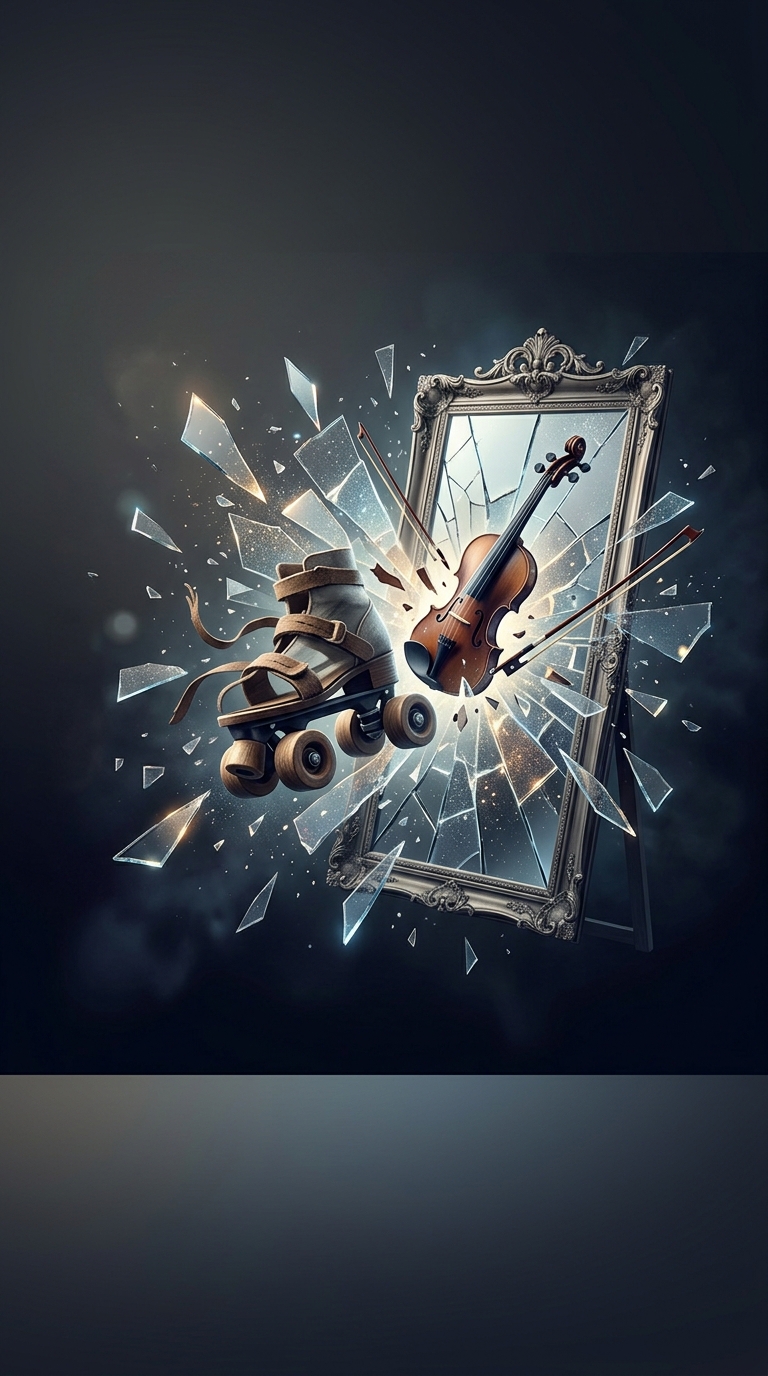
A crowded masquerade made those limits hard to hide. A violin performance required Merlin to divide his attention, while guests, furniture, and mirrors left little open space to recover from a poor turn. His collision with a mirror was not merely a mishap: it exposed the gap between a device that could roll and one that could be managed safely.
That distinction shaped what roller skates needed next. Better control—not just faster wheels—would determine whether skating could move beyond a dramatic demonstration and work in everyday spaces.