The problem was getting through, not getting around
For Joseph-Armand Bombardier, deep snow could turn an ordinary trip into an emergency. After his young son died during a winter illness, with snowbound roads preventing him from reaching medical care, Bombardier focused on a practical question: how could a vehicle travel where wheeled cars could not?
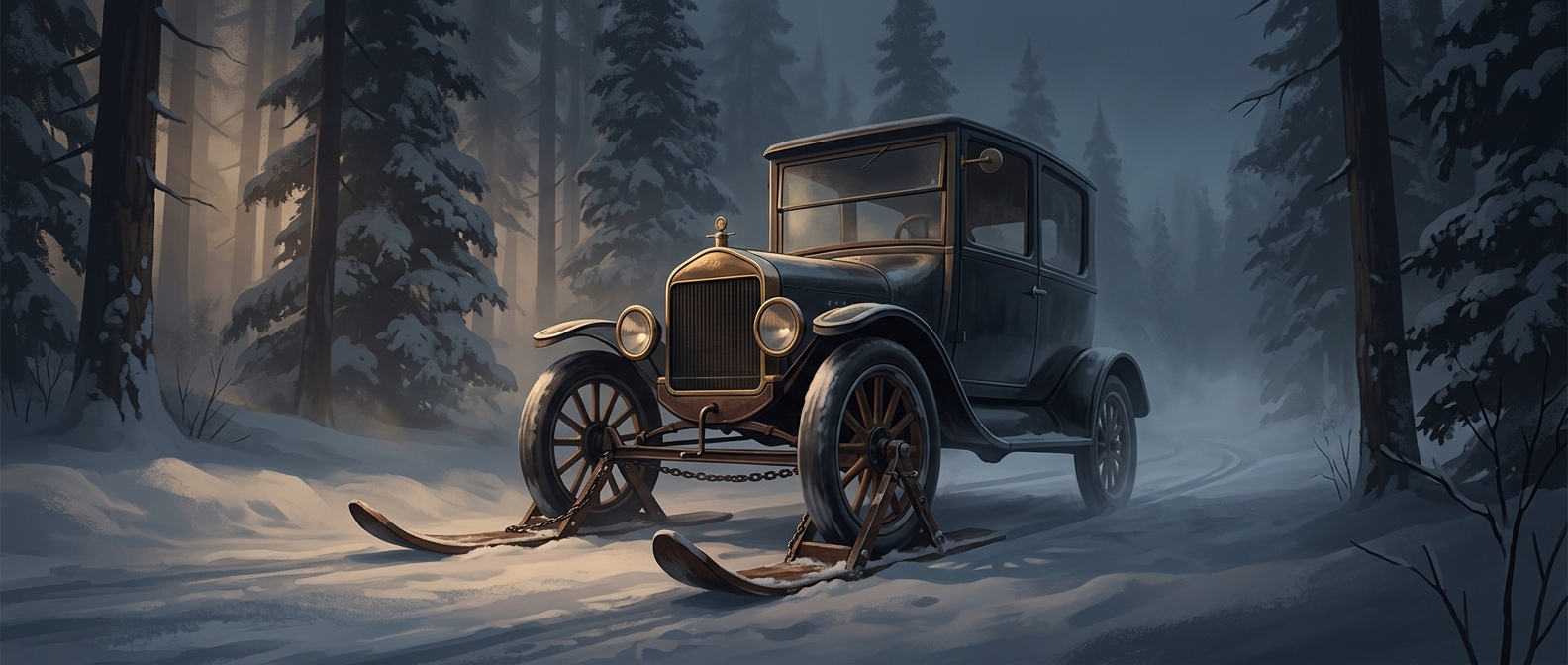
The answer was to replace wheels with a broad track. Like a continuous belt wrapped around the vehicle’s underside, the track spreads its weight over more snow than narrow tires would. It also grips the surface to push the vehicle forward. Skis at the front steer it, combining traction beneath with directional control at the nose.
From a family need to a winter vehicle
Bombardier’s early solution was not the lightweight, one-person snowmobile many people picture today. It was an enclosed, powered vehicle designed to carry passengers over snow—useful for communities where winter could isolate homes and make ordinary transport unreliable.
That difference matters: the invention’s promise was not simply speed or recreation. A vehicle that could cross snow could connect people to services and one another when roads became impassable. The same basic engineering idea—tracks for forward movement, skis for steering—helped turn winter terrain from a barrier into a route.