A bicycle powered by a runner’s stride
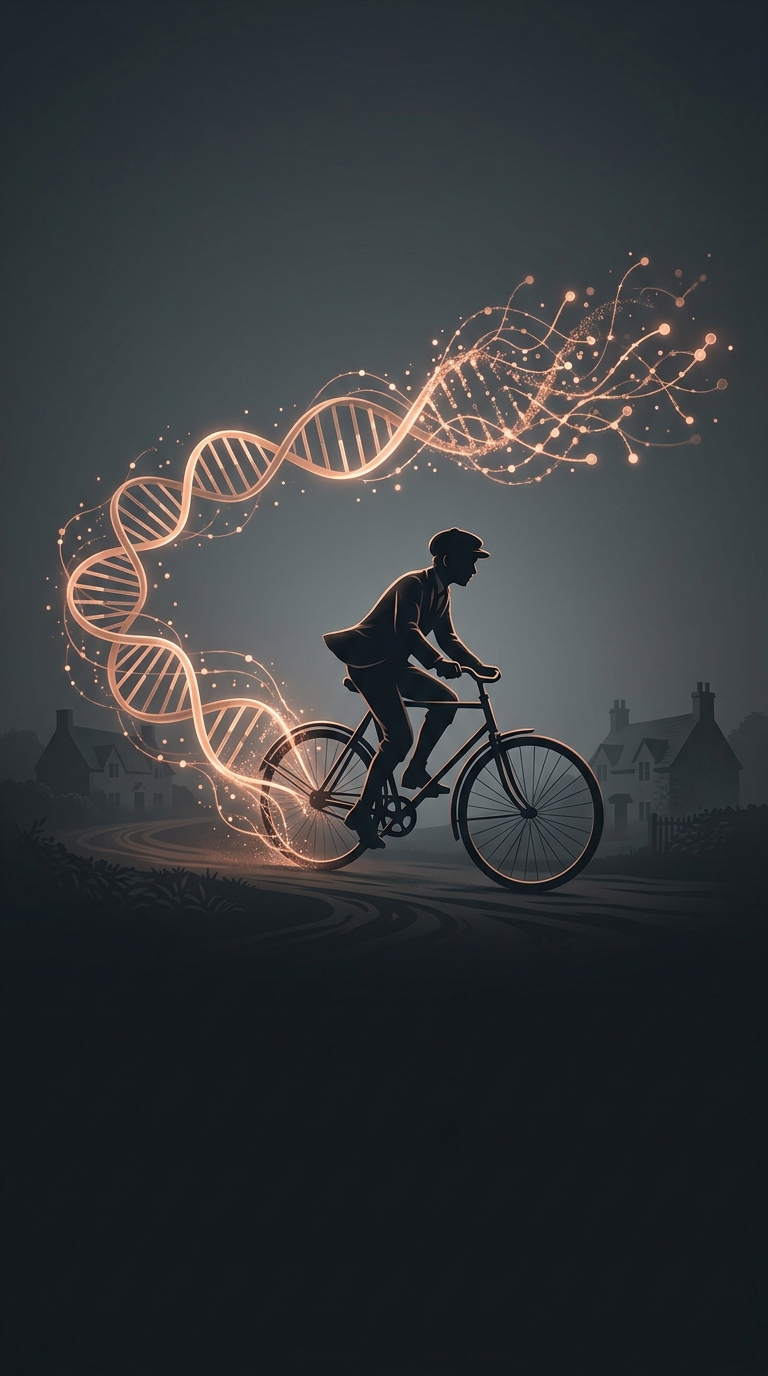
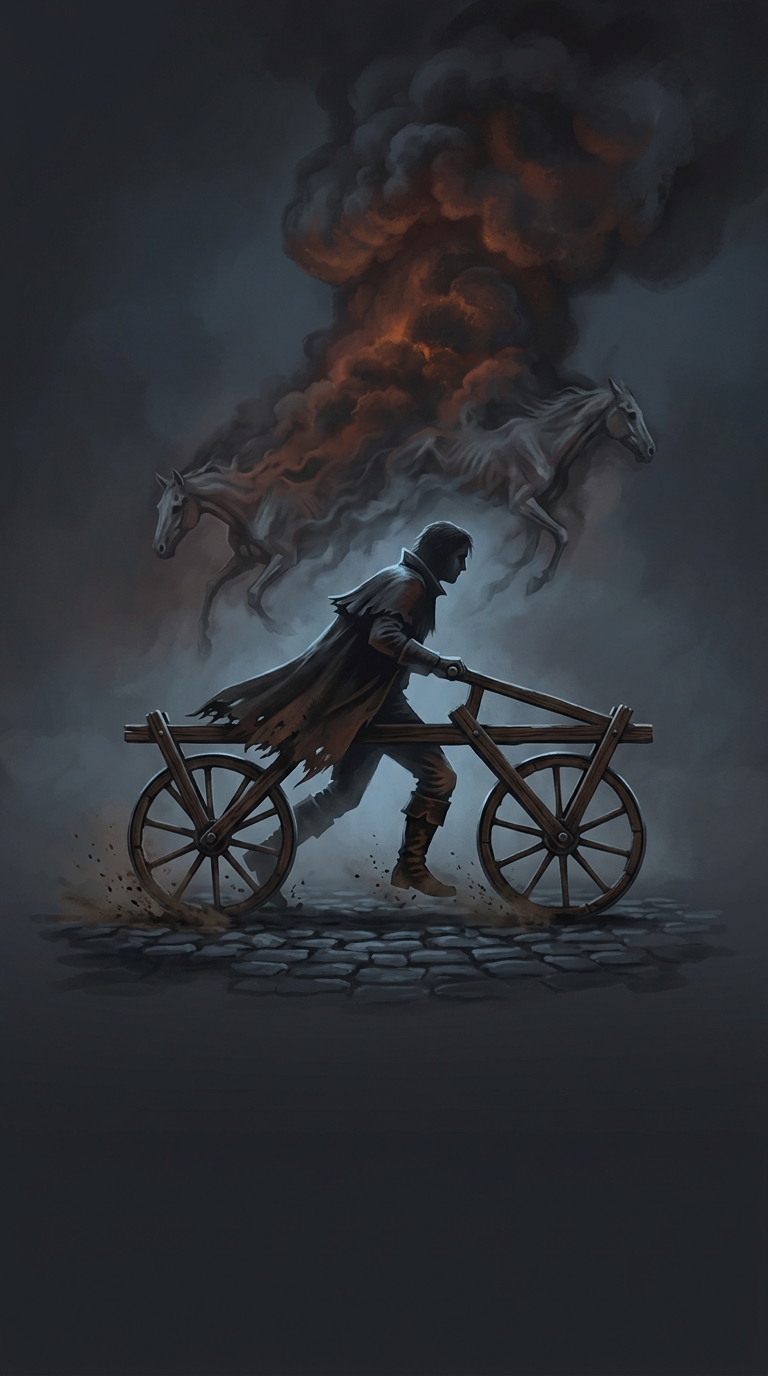
Karl Drais’s 1817 machine moved by a simple cycle: the rider sat astride it, pushed backward against the ground with one foot, lifted that foot as the vehicle rolled, then pushed again when it slowed. The wheels carried the rider between strokes, much as a brief glide separates steps in a run.
That arrangement made the machine a coasting vehicle, not a pedal-driven one. Its handlebar turned the front wheel, letting the rider steer around obstacles while moving. But it offered no mechanical way to keep moving once the rider stopped pushing, and no brake to slow the wheels independently of the rider’s feet.
The rider was part of the braking system
To stop, the rider dragged or planted a foot on the ground. That put shoes in direct contact with the road, where friction—the resistance between surfaces sliding against each other—did the work. The faster the machine was moving, the more demanding that stop could be, and repeated contact wore footwear. The joke about expensive soles points to a real design cost: the vehicle spared the rider from walking every moment, but it did not spare their shoes.
A first step, not a finished bicycle
The machine solved one problem elegantly: two wheels let a seated rider roll farther with less effort than walking the whole way. Its limitations also made clear what later designs had to add. Pedals could supply power without repeated ground pushes; a chain could transmit that power to a wheel; and brakes could slow the vehicle without using a shoe as the stopping surface.
Until those parts arrived, every ride depended on the rider’s legs for both momentum and control—and every stop ended with a foot back on the road.