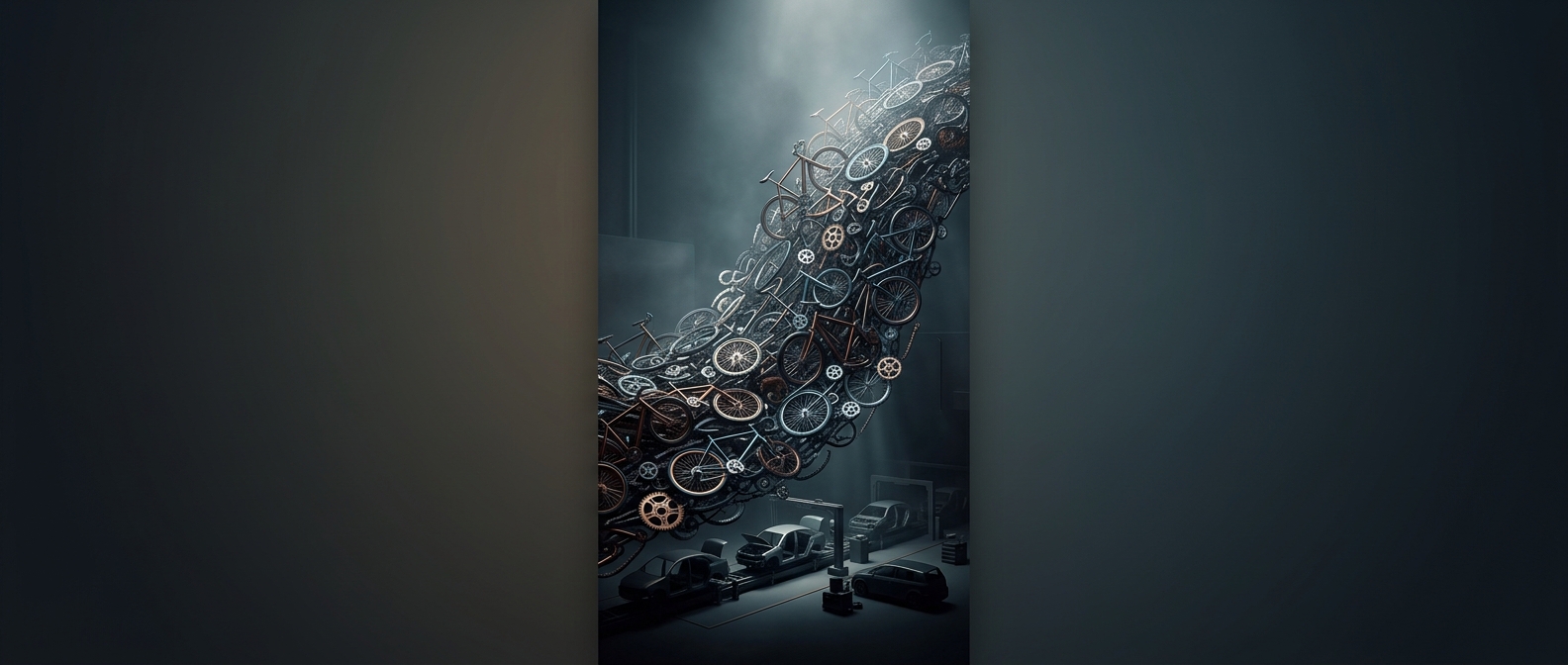
Why Bicycles Are Easier to Build at Scale
A bicycle can move under human power with a relatively small set of mechanical parts: a frame, two wheels, steering, brakes, and usually a chain-driven gear system. A car must also carry and control its own power source. Its engine or electric motor, transmission, battery or fuel system, cooling, wiring, and safety equipment add parts that must fit and work together precisely.
That difference changes what a factory has to do. Bicycle production still requires skilled engineering and reliable components, but a simpler design generally means fewer assembly steps and less material and machinery per vehicle. Many models can also share common parts, letting manufacturers produce large batches without building a complete powertrain for each one.
One Vehicle, Many Different Jobs
Bicycles serve as everyday transport, delivery vehicles, and recreation equipment. They can be useful where trips are short, roads are crowded, or buying and maintaining a car is out of reach. Their lower cost and simpler upkeep make them accessible to more households, while manufacturers can make them for a broad range of uses and price points.
Cars solve a different problem: carrying people and cargo farther, faster, and often in greater comfort or in difficult weather. Meeting those expectations—and protecting occupants in a crash—requires more systems and more elaborate manufacturing. The result is a more expensive product with a more demanding production chain.
The Difference Shows Up on the Factory Floor
Car plants coordinate many specialized suppliers and tightly timed assembly operations. A missing or faulty component can disrupt a line built around thousands of interdependent parts. Bicycle factories also rely on suppliers, but the simpler vehicle can generally be assembled with fewer such dependencies.
So the production gap is not just a matter of preference. A bicycle delivers basic mobility with far less machinery built into the vehicle, making it practical to manufacture in enormous numbers across many markets. The tradeoff is equally plain: a bike asks the rider to provide the power and accepts limits in speed, weather protection, and carrying capacity.