How a steer turns into a lean
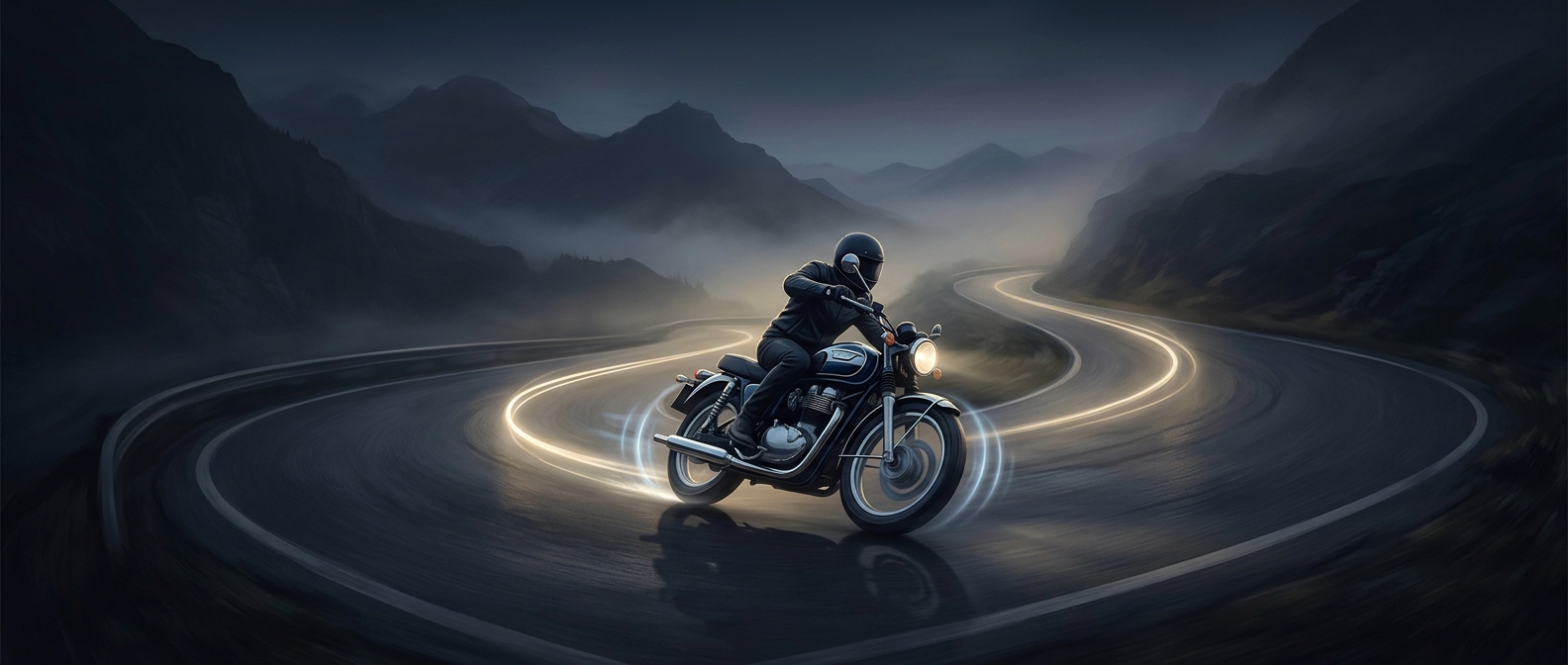
At ordinary road speeds, a rider usually begins a turn with a brief steering input in the opposite direction from the intended bend. To turn left, for example, the rider nudges the handlebars right. This is called countersteering. The front tire’s contact with the road shifts the bike’s path, while the motorcycle’s mass continues forward; the resulting sideways motion tips the bike left. The rider then steers into the turn.
The maneuver can feel backward because the initial input is quick and subtle. At walking pace, motorcycles are steered more directly, like bicycles. Countersteering becomes the practical way to initiate a lean once speed makes the bike’s sideways balance matter more.
What keeps the bike on the curve
A leaning motorcycle turns because its tires push against the road. As the bike follows a curve, the tires generate an inward force that continually redirects its motion. The lean lets that force act in a way that balances the bike’s weight, rather than tipping it over. For a given speed, a tighter curve generally requires a stronger inward force and a greater lean.
The tire’s grip is essential: steering can set the bike’s direction, but the road must push back through the tire contact patches for the motorcycle to follow the curve. If grip is limited, the rider has less force available to turn, brake, or accelerate.
Where gyroscopic forces fit
Spinning wheels do resist changes in their orientation, so their gyroscopic effect influences how a motorcycle responds to steering. But it is one part of a larger interaction among steering geometry, the bike’s mass, the rider’s movements, and tire forces. It does not hold the motorcycle upright like a hidden support.
That distinction matters in practice: a rider can change the bike’s lean and line by steering, while the tires—not wheel spin alone—must negotiate the bend against the road.