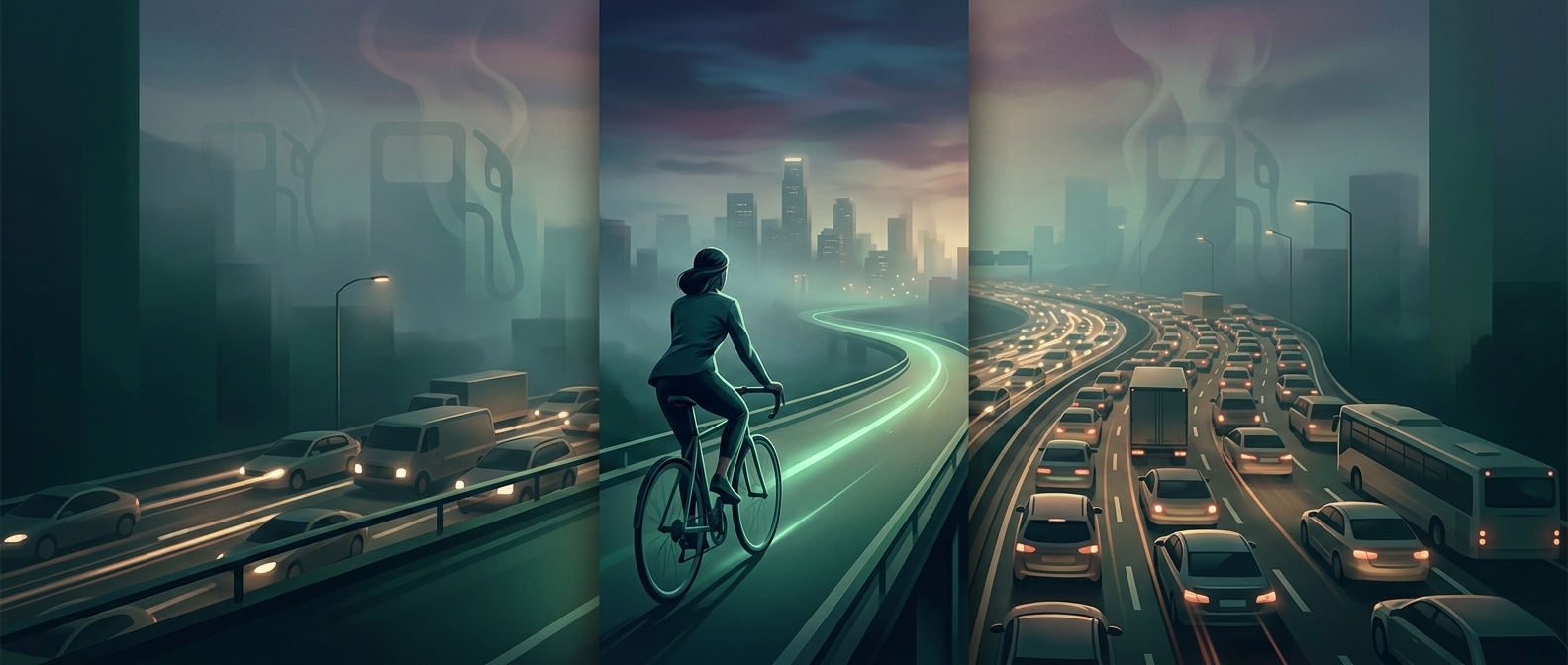
Why the Rules Treat a Bicycle Like Traffic
A bicycle’s lack of a motor does not make it a pedestrian when it is being ridden on a public road. Treating it as a vehicle gives riders a predictable place in the traffic system: they can proceed when signals allow, must stop where stop signs require, and are expected to signal turns when they can do so safely. The details vary by state and locality, but the underlying idea is that road users follow a shared set of rules rather than being sorted only by speed or engine size.
That framework matters most at intersections. A cyclist going straight has to be considered by a driver turning across the cyclist’s path, just as another vehicle would be. In turn, a rider must yield when the rules require it and avoid assuming that being legally entitled to the lane makes every maneuver safe.
Sharing Space Requires Seeing the Whole Trip
A bicycle moves more slowly than most cars and may need room to steer around a pothole, drain grate, or parked car. A driver who passes too closely can leave the rider with nowhere to go; a rider who suddenly moves around an obstacle can surprise someone who has not looked ahead. Safe sharing depends on anticipation, not just on knowing who has the right of way.
The vehicle framework also explains why a bike may occupy a lane rather than hug the curb when the edge is unsafe or the lane is too narrow for a safe pass. Road rights are useful because they make cyclists visible as participants in traffic—with both protections and responsibilities—not because bicycles behave like cars in every way.