The bicycle widened the village marriage map
Before bicycles, a young person’s practical social world was often limited by how far they could walk, especially in the countryside. A bicycle made a neighboring village reachable for an evening visit rather than a strenuous journey. That changed the distance between communities in a way that mattered not just for errands, but for courtship.
From easier rides to more genetic mixing
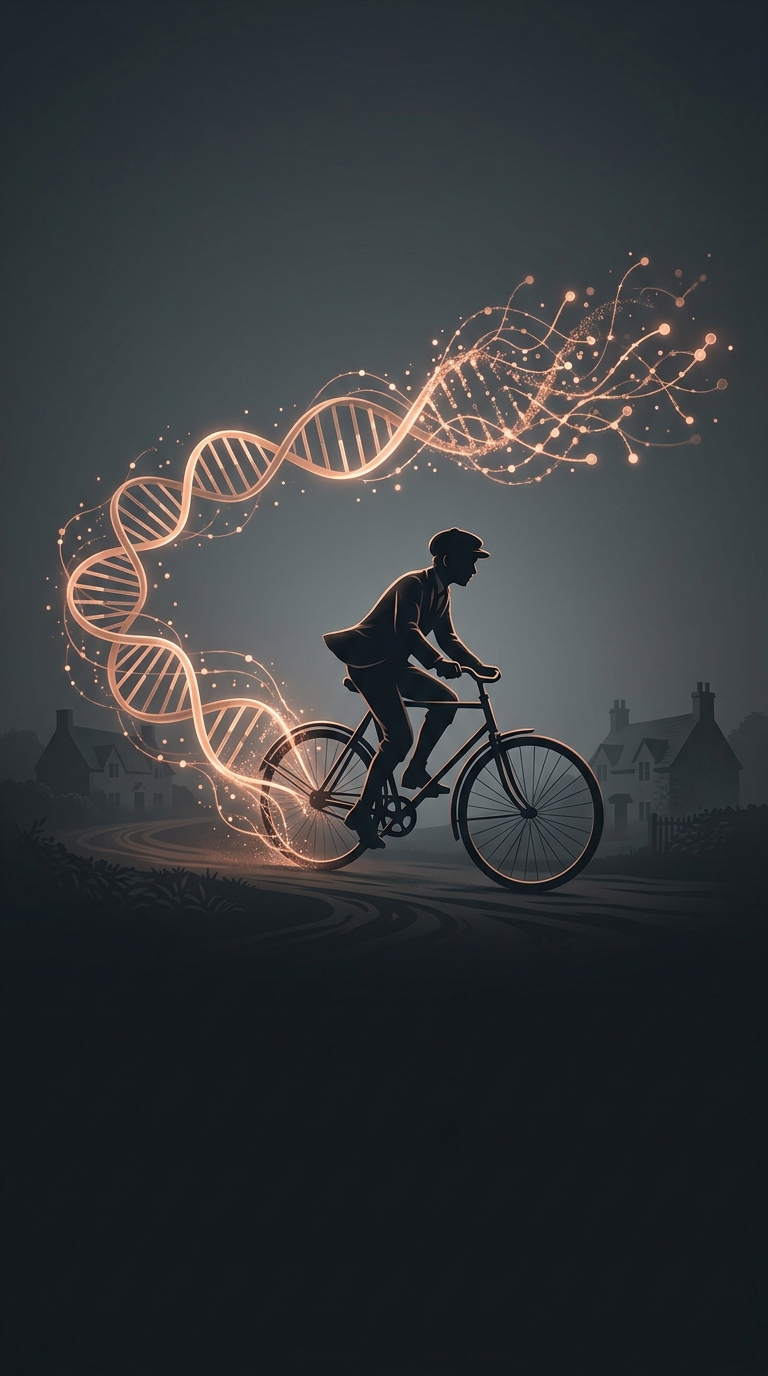
The mechanism was social, not biological. A bicycle did not alter anyone’s DNA or make people more fertile. It lowered the cost—in time and effort—of visiting people beyond one’s immediate circle. More encounters could lead to more relationships and marriages between people from different villages and family networks.
Over generations, that movement can affect how common particular inherited variants are in a place. When people have children with partners from a wider range of communities, their descendants’ ancestry is drawn from a broader pool. In population genetics, this movement of genes between populations is called gene flow.
A change in mobility, not a sudden genetic switch
The effect would have been gradual and uneven. Bicycles could expand opportunities, but they did not erase social boundaries or guarantee that every journey led to a relationship. Distance, family expectations, money, and local customs still shaped whom people met and married.
The important shift was that a neighboring village could become part of someone’s ordinary social orbit. A machine built to carry one rider farther and faster could therefore influence the genetic connections between communities—not by changing DNA directly, but by changing who had a realistic chance to meet.