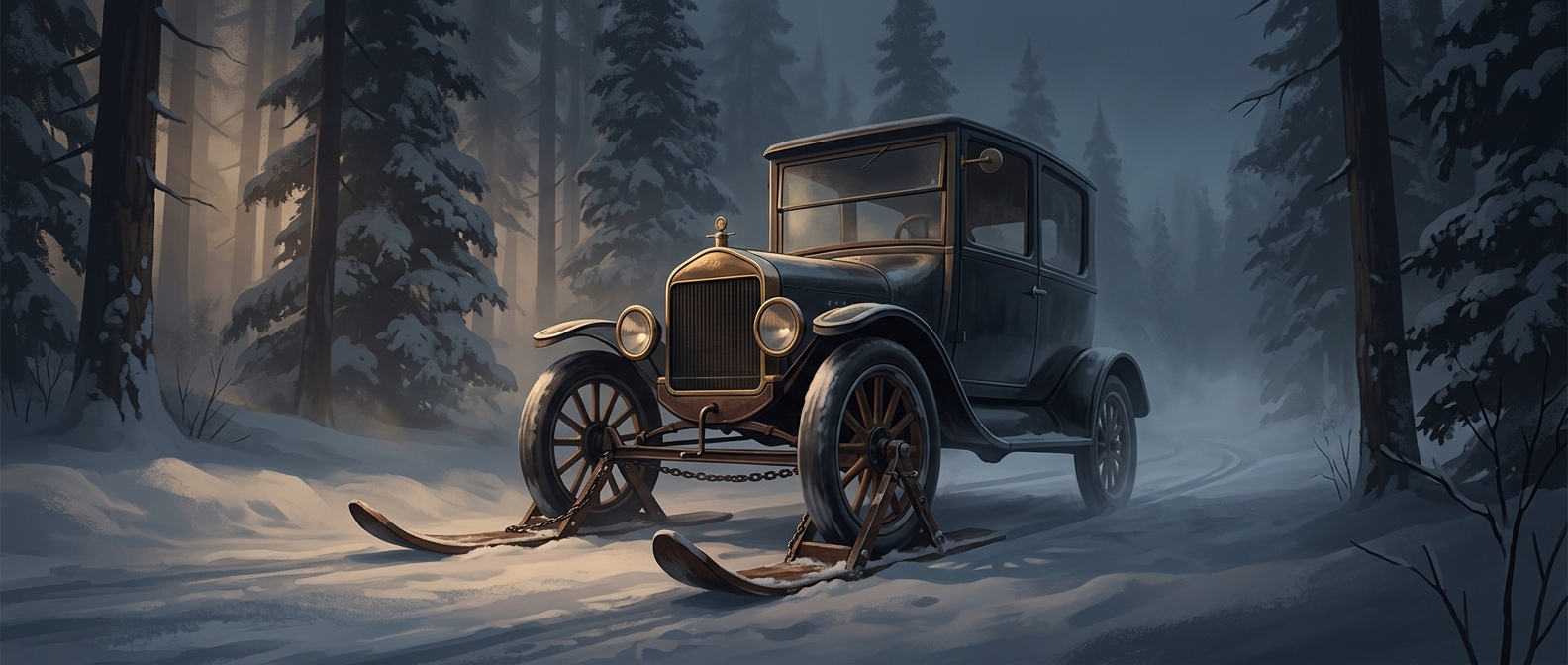
Turning a road car into a winter machine
The conversion worked by giving each end of the Model T a different job. The wooden skis at the front spread the car’s weight over a broader surface and slid across snow rather than cutting into it like narrow tires. They also let the driver guide the vehicle. At the rear, the tracks replaced the tires’ small contact patches with a longer strip of traction.
That mattered because a tire can spin on loose snow without moving the car forward. A track spreads the vehicle’s weight along more of the ground and grips across a larger area, helping the driven rear wheels push through drifts. The result was not a snowmobile in the modern recreational sense, but a way to keep a familiar automobile moving where ordinary wheels struggled.
A practical compromise for winter routes
For mail carriers, the value was functional: a vehicle that could continue along snowbound routes instead of stopping when roads became difficult. The conversion retained the Model T’s basic automotive power and controls while changing how it met the ground—an economical alternative to designing an entirely new winter vehicle.
It was still a compromise. Skis and tracks could help the car cross snow, but they did not make it a fast or effortless machine; steering and progress depended on the terrain beneath them. The cleverness lay in adapting the parts that touched the ground, so a road car could keep doing its job when the road disappeared under snow.