How bone runners moved across ice
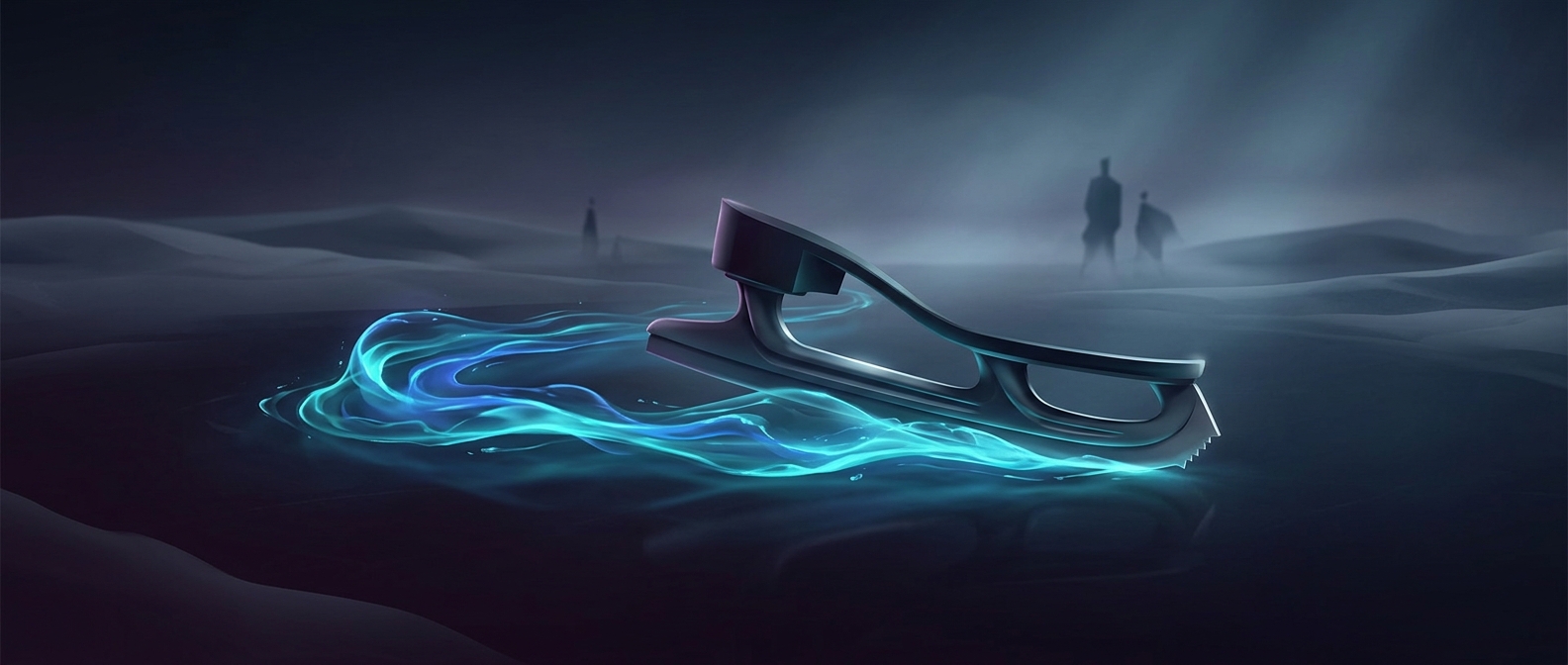
A bone skate worked by reducing friction, not by cutting into the ice. Its long, smooth underside spread the skater’s weight across a narrow contact area, allowing the foot to slide. Leather straps or cords held the bone beneath the shoe, but the runner itself offered little grip for pushing sideways.
That missing grip shaped the whole technique. Instead of driving off one blade as a modern skater does, a traveler planted a pole against the ice and pushed backward. The feet mostly glided while the arms supplied propulsion, making the motion closer to being pulled along by repeated pole strokes than to modern skating.
Why the material mattered
Animal bone was hard and could be polished smooth, turning a by-product of food into a durable sliding surface. Its rounded, blunt shape was very different from a steel blade’s thin edge. Steel blades can bite into ice for balance and powerful strokes; bone runners were better understood as low-friction supports than as cutting blades.
The result was a practical way to cross frozen ground, but one constrained by the need for poles and by the limited control the runners provided. The telling detail is that the skater’s feet were not doing all the work: on bone skates, the poles were the engine.