A blade makes a tiny contact zone
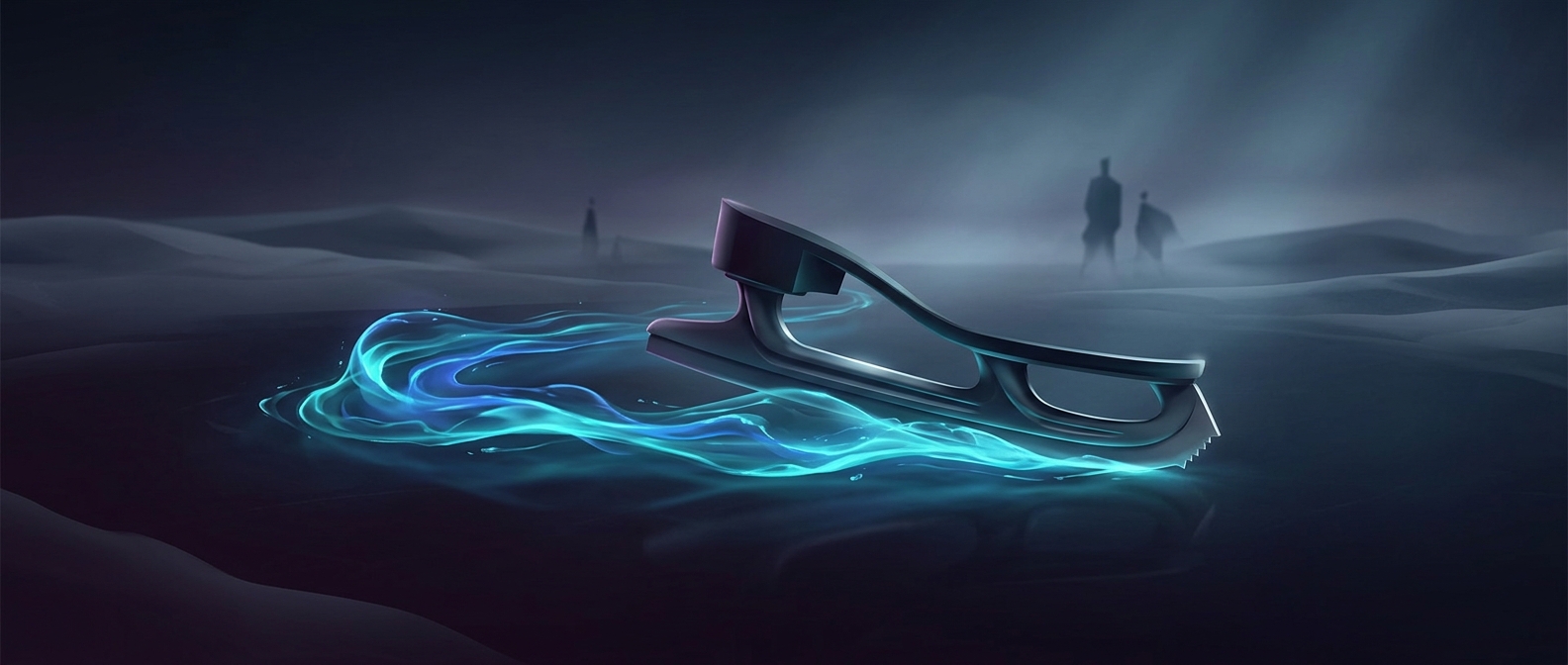
An ice skate does not rest on the ice like a flat shoe. Its narrow blade concentrates the skater’s weight along a thin line, while the blade’s motion produces friction at that contact. The pressure alone is not enough to explain the glide: frictional heating helps warm the surface, and ice also carries a naturally disordered, water-like layer at its topmost surface. Together, these effects let the blade move over a very thin, slippery boundary.
The film is not a puddle
The water-like layer is far too thin to see, and it is not a pool the skater rides on. As the blade passes, the contact and heating continually affect this boundary; behind the blade, the ice remains solid. That distinction matters because a visible puddle would make skating unstable and would not provide the firm surface needed to push off.
Grip and glide come from the same blade
A skate must do more than slide. Its sharp edges can bite into the ice when the skater leans or turns, giving a sideways push something to push against. When the blade travels forward, the thin lubricating boundary helps reduce resistance. The design balances those jobs: the blade glides along its length but can grip at its edges, so a skater can accelerate, steer, and stop on the same hard surface.