Why a Rubber Stop Can Send a Skater Upward
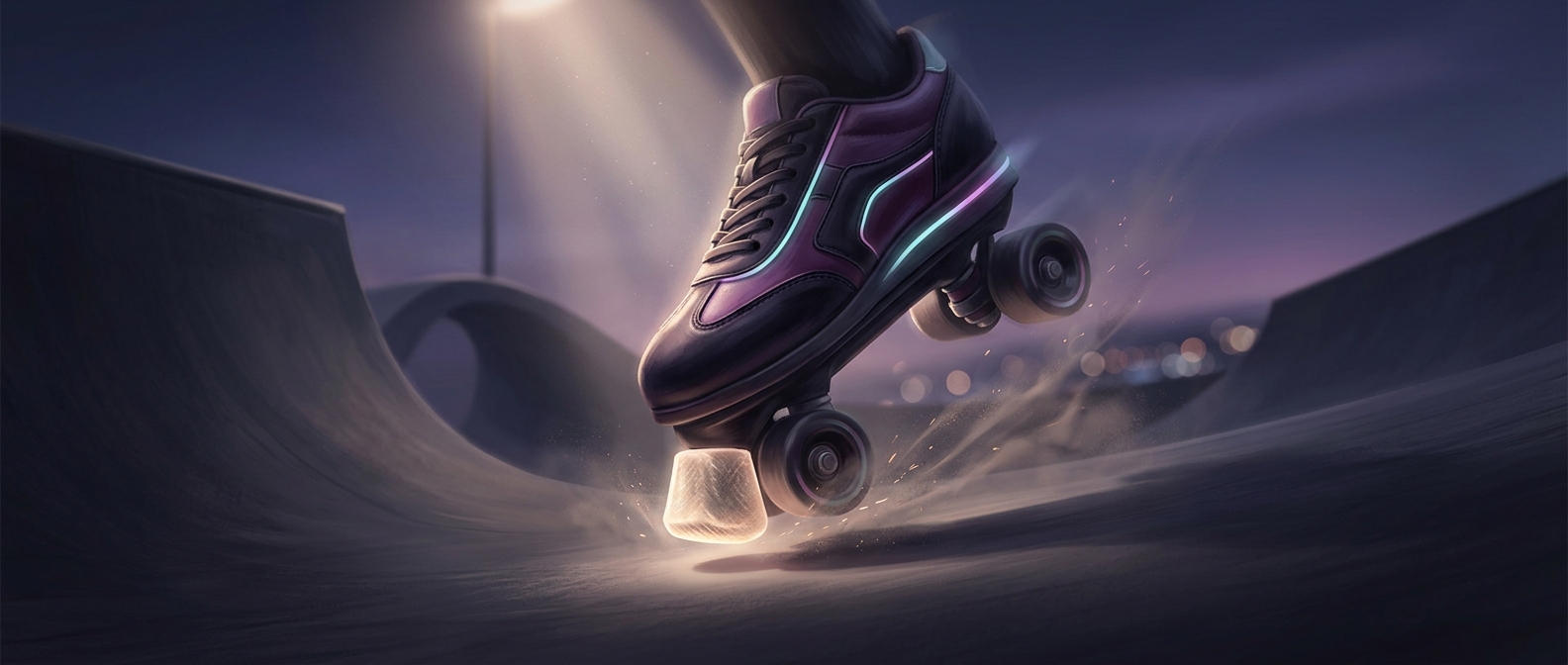
A jump needs a force against the floor. When a skater presses a toe stop down and back, its rubber surface resists sliding. The floor pushes back in the opposite direction, helping the skater drive upward and forward. This is the same basic push-and-recoil principle as jumping from solid ground—but wheels make the contact point especially important.
The Wheels Roll; the Stop Holds
Wheels are designed to turn, so pushing through them can send a skate rolling instead of giving the skater a firm point to push from. A toe stop creates a brief, grippy contact with the floor. As the skater bends, plants the front of the skate, and straightens the legs, that contact helps convert muscular effort into lift.
The stop does not lift the skater by itself. The legs provide the power; the rubber-floor grip helps keep the skate from slipping away before that power can be applied. How well it works depends on the surface and the stop’s condition, among other factors.
A Brake With Two Jobs
That dual role shapes skating technique: a part used to slow down can also help a skater control the takeoff for a jump. The useful detail is that the stop must grip when the skater wants to push, then release as the skate leaves the floor—turning a braking contact into a momentary launch point.