How the pedal holds—and releases—the shoe
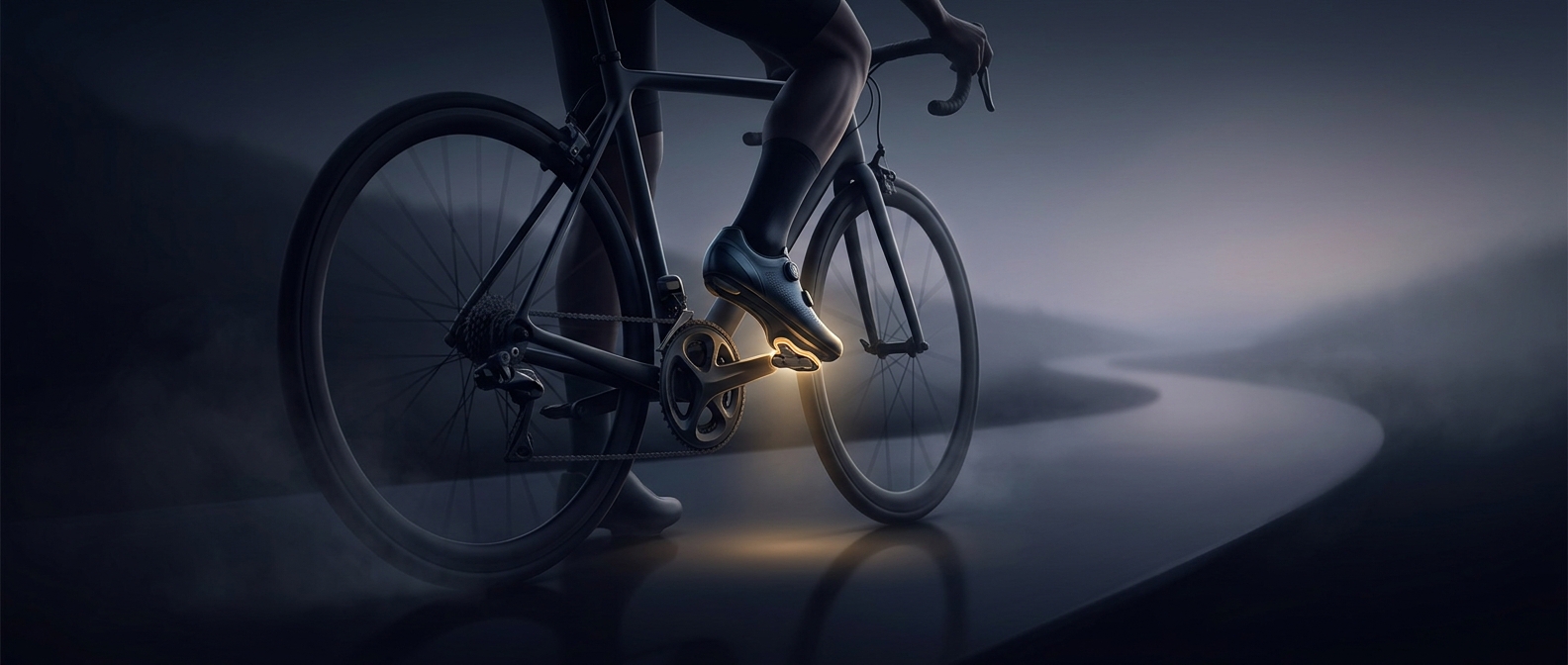
A clipless pedal is a small mechanical latch. A metal or plastic cleat bolted to the shoe’s sole engages a spring-loaded part of the pedal. Once the cleat is seated, the latch resists the forces that might otherwise make the foot slide off during hard pedaling or over rough ground.
To get out, the rider rotates the heel sideways. That movement turns the cleat against the latch until it clears. The release is deliberate rather than automatic: ordinary pressure down on the pedal keeps the connection engaged, while a distinct twist opens it.
A balance between security and control
The connection helps keep the foot in a consistent position and lets the rider guide the pedals through uneven terrain. But the shoe must still release when the rider stops or loses balance. Many pedal systems therefore allow the release force to be adjusted, and some cleats permit a little rotation while engaged. That small movement—often called float—can make the foot feel less locked into one angle.
The name can be confusing because the shoe really does attach to the pedal. “Clipless” distinguishes this latch system from older toe clips: the pedal has no cage or strap around the front of the shoe. The key design change was not eliminating the attachment, but replacing a foot-enclosing clip with a compact connection that releases with a heel turn.