The drag comes from the rider’s shape
A cyclist pushes air aside, and the air then swirls back together behind the rider. That disturbed region, called the wake, creates much of the aerodynamic drag. Loose fabric can billow into the airflow and enlarge or disrupt that wake, making the rider harder to move through the air.
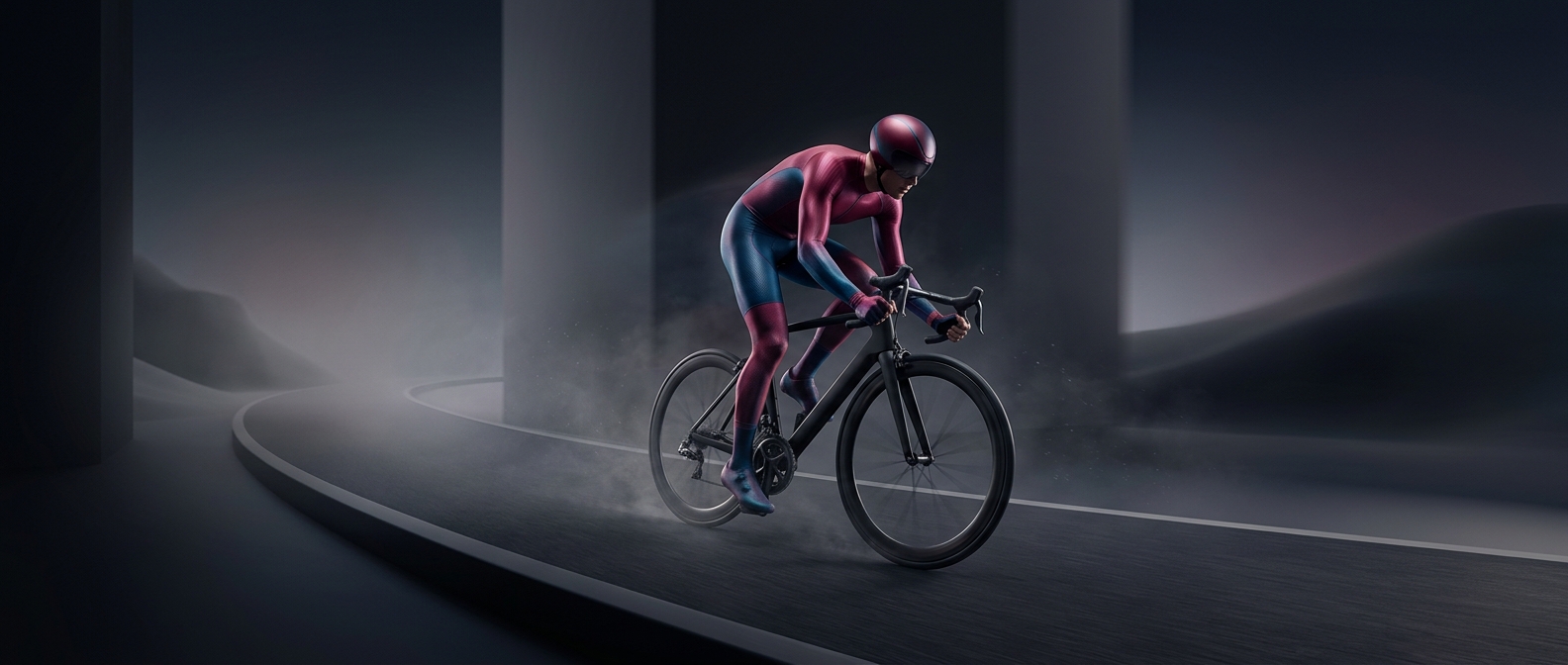
A close-fitting suit keeps the fabric from changing shape unpredictably. Its smooth surface helps the airflow follow the rider’s outline more consistently—but the suit cannot make a cyclist aerodynamic on its own. Body position, especially how low and narrow the rider holds the torso and arms, has a larger effect on the shape the air encounters.
Why small details matter more at speed
Air resistance grows sharply as speed increases, so the effort spent overcoming it becomes especially important in fast riding. That is why racing clothing is designed as part of a wider aerodynamic setup: fabric fit, seams, and how the suit sits in the riding position can all affect the airflow around the body.
The tradeoff is practical. A suit must stay close to the skin while a rider bends, reaches, and pedals; a garment that wrinkles or shifts in that posture can lose some of its advantage. The goal is not simply tight clothing, but clothing that holds a predictable shape when the cyclist is actually riding.