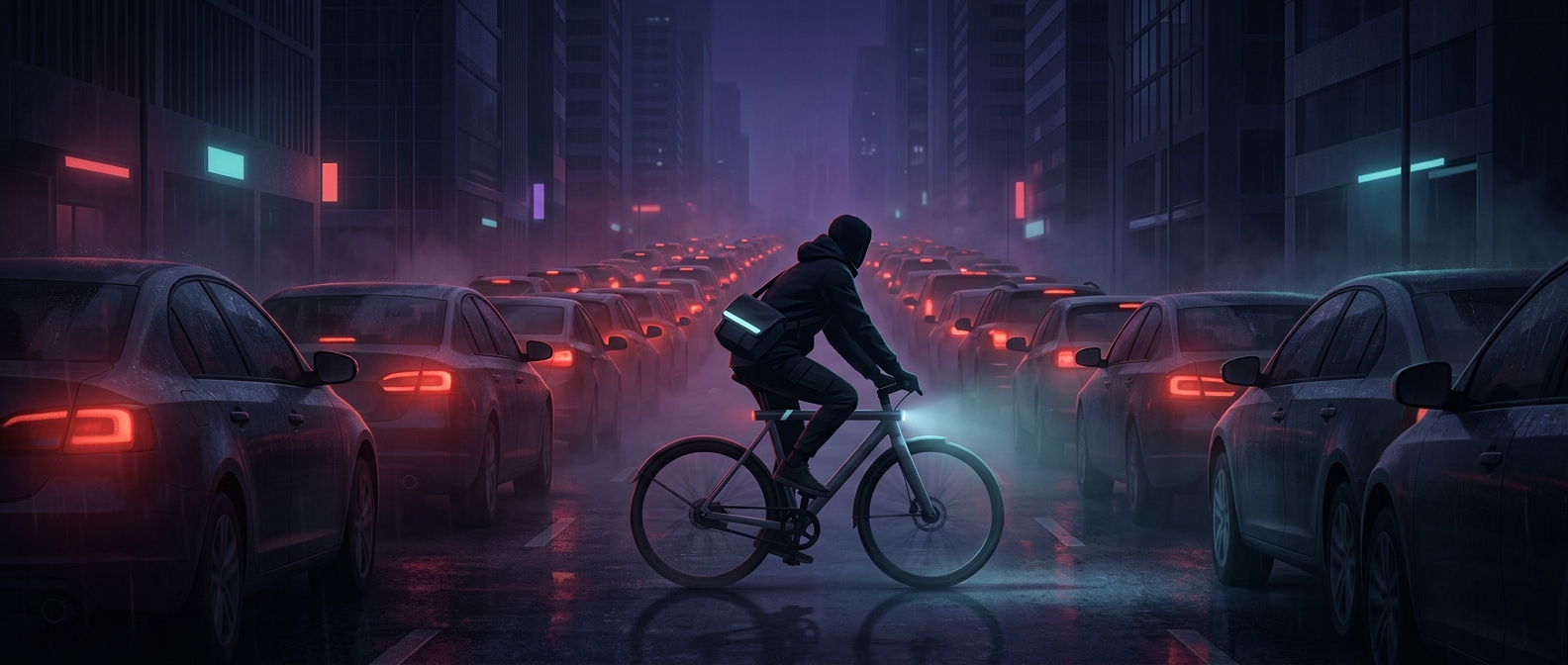
The city is a problem of space, not horsepower
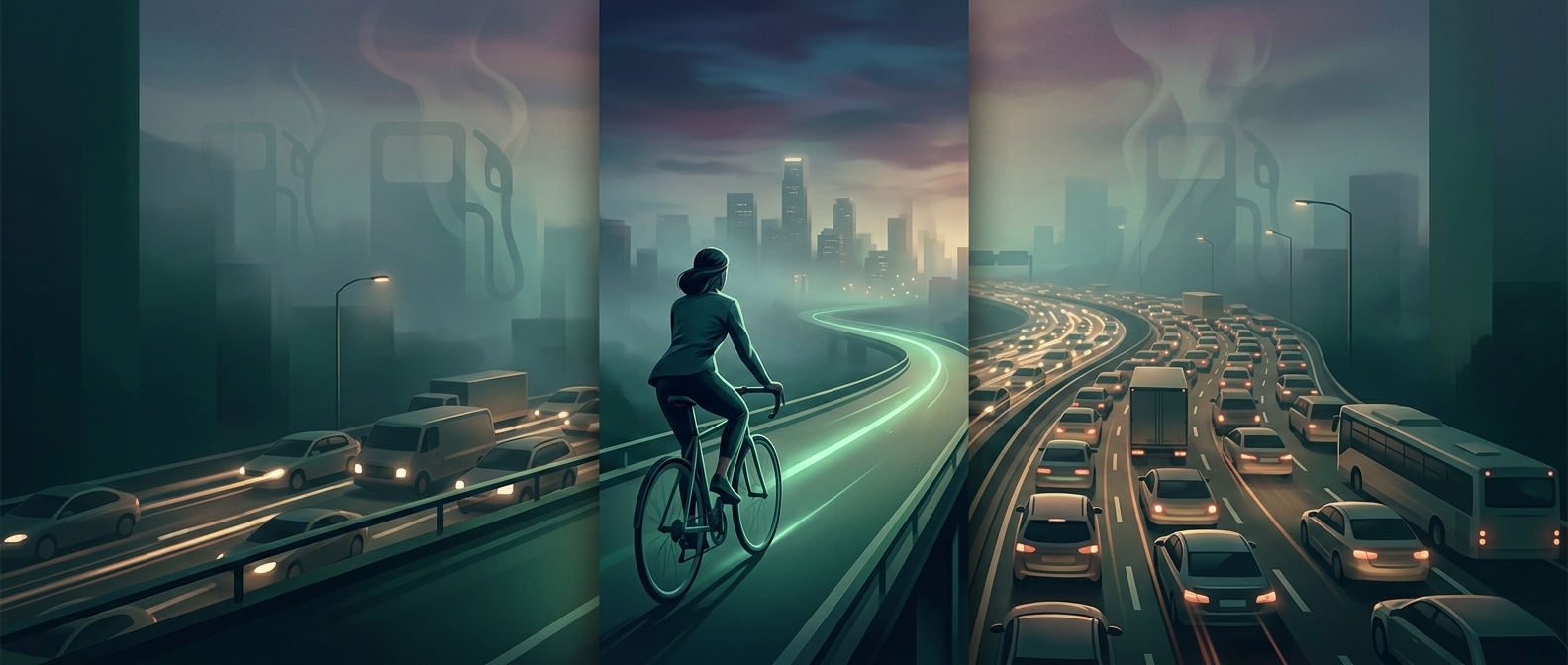
A car can move quickly once the road is clear, but in a crowded street it occupies a large share of the space needed to move people. When vehicles queue at a light or squeeze into a lane, each car takes room both for itself and for the gaps needed to brake and turn. Adding more cars can therefore slow the whole line, even if every engine has plenty of power.
A bicycle uses less road space and can often keep moving through places where cars must wait. It can also take routes that suit a short trip—such as a quiet side street or a path closed to through traffic—when local street design allows it. That advantage is strongest when destinations are close together and traffic repeatedly stops and starts.
The trip continues after the ride
Driving time is only part of a door-to-door journey. A driver may need to leave the main road, find a legal parking space, and walk from it to the destination. A bicycle can usually be brought closer and locked in a much smaller space, reducing that last stretch and the time spent searching for a place to leave it.
The tradeoff is that cyclists still face red lights, unsafe junctions, weather, and streets without useful bike routes. A car may be the faster or more practical choice for longer journeys, heavy loads, or trips outside a connected street network. But for a short city errand, the advantage often comes from spending less time trapped in the road-and-parking system, not from traveling faster at every moment.