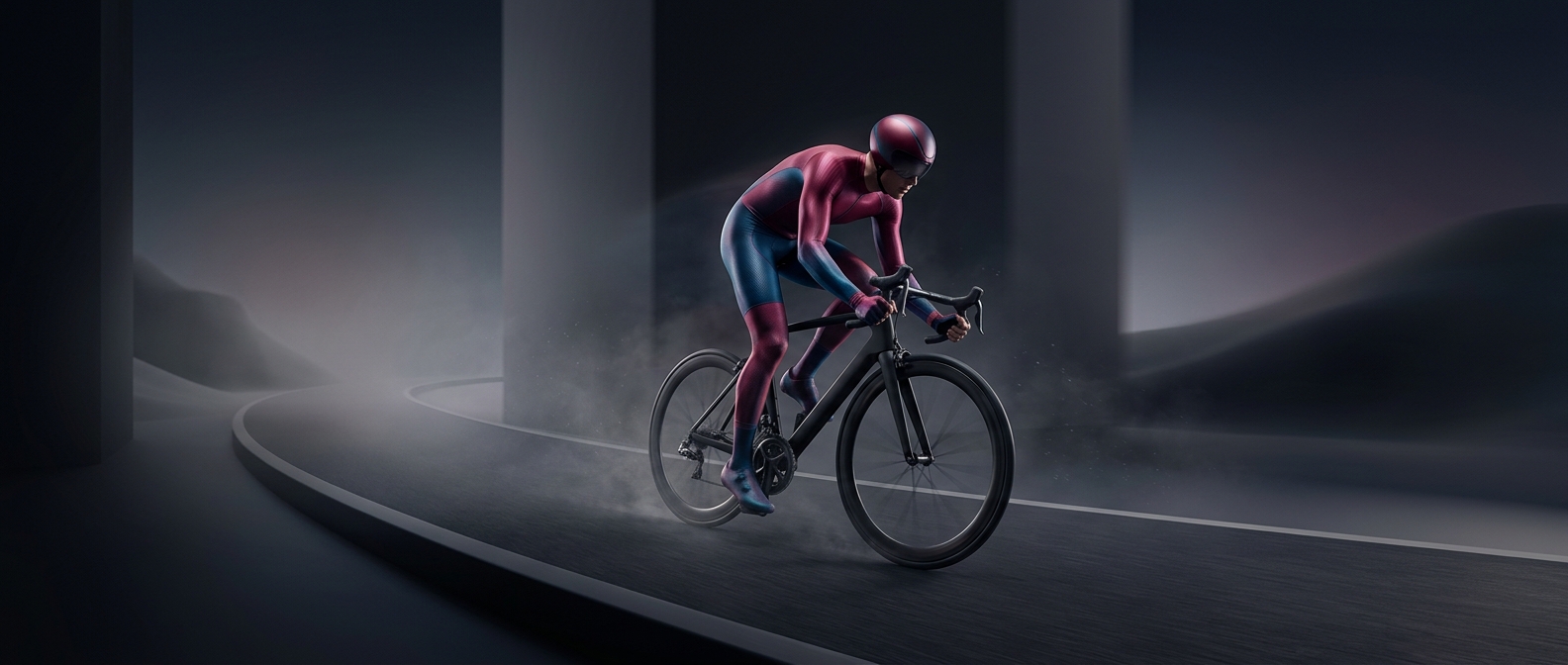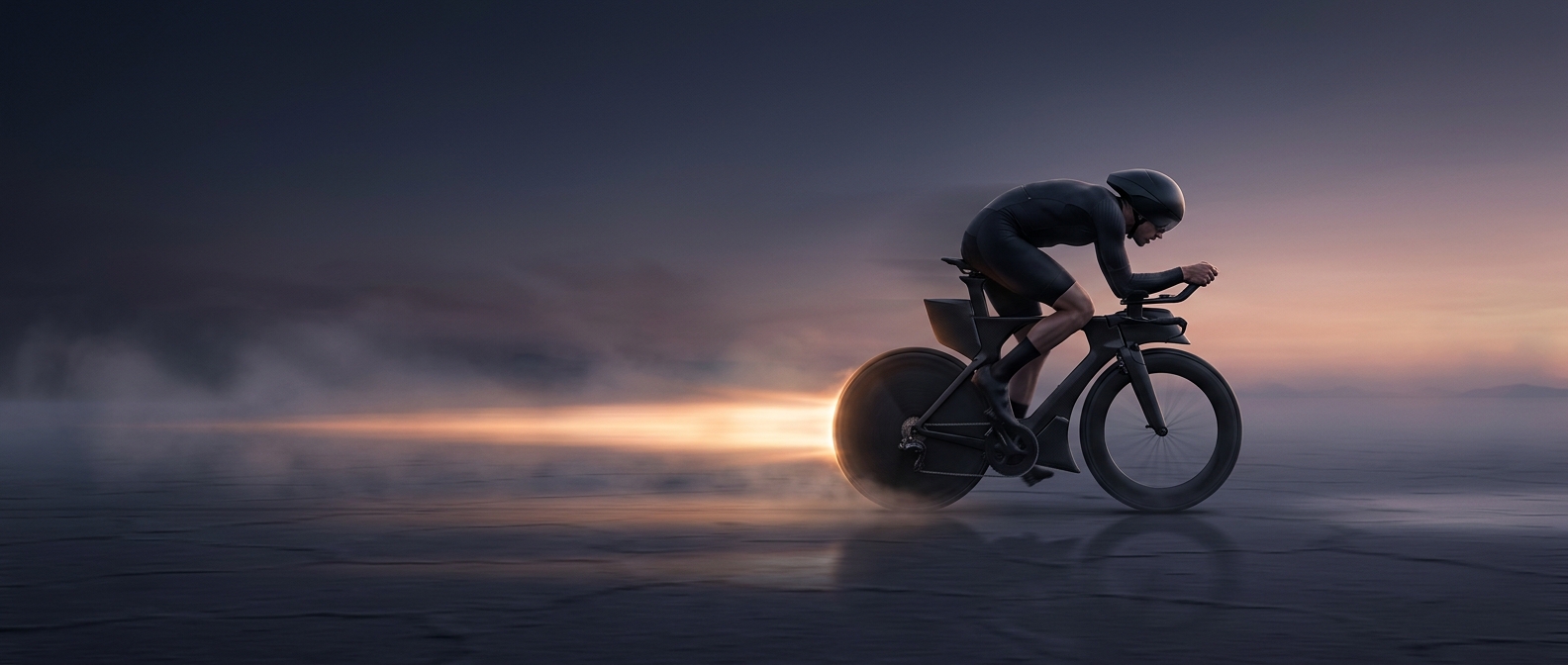
The pace car made the air less punishing
At 183.9 mph, the main obstacle was not simply turning the pedals faster. Air resistance rises steeply with speed: as a bicycle moves faster, it must push aside air more rapidly, and the power needed to overcome that drag climbs sharply. A cyclist trying to reach this pace alone would spend much of her effort fighting the air.
The pace car changed that calculation. It pushed air out of the way and left a wake of slower-moving, disturbed air behind it. Riding close in that pocket reduced the wind Denise Mueller-Korenek faced. This is drafting—the same principle that lets cyclists save energy behind one another in a race, applied here at extraordinary speed.
The bicycle had to match the car
The car did not tow the bicycle. Mueller-Korenek still had to pedal, while staying in the narrow zone where the wake helped rather than letting the gap grow or closing it dangerously. The vehicle provided a moving shelter from much of the airflow; it did not remove the need to keep the bike moving under pedal power.
That called for unusually tall gearing: each turn of the pedals had to drive the rear wheel through many rotations. A conventional bicycle gear setup is designed for hills, starts, and ordinary road speeds. At record pace, the gearing instead had to let the rider keep pedaling while the wheel spun fast enough to remain with the pace vehicle.
A record built around coordination
The achievement depended on the rider, bicycle, and support vehicle working as one system. The car’s speed set the pace, its wake reduced the aerodynamic burden, and the gearing translated Mueller-Korenek’s pedaling into the wheel speed needed to follow. The striking part is not that the air stopped mattering, but that the team found a way to make the air behind a vehicle temporarily less costly to push through.