How a Brake Pedal Becomes Clamping Force
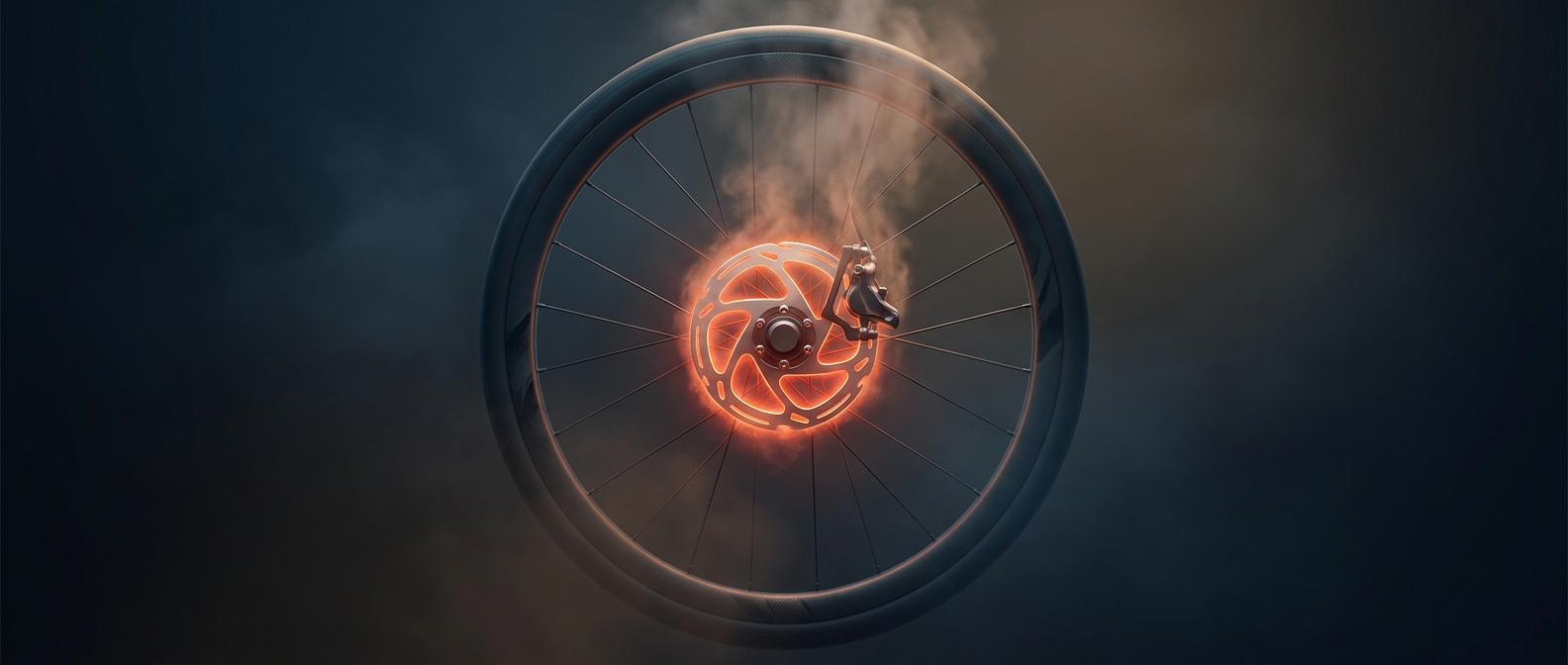
Pressing the brake pedal sends force through the vehicle’s braking system, often by means of pressurized fluid. At each disc brake, that force moves a caliper—the clamp around the rotor—so brake pads press against the rotor’s two faces. Because the rotor turns with the wheel, friction between the pads and rotor resists the wheel’s rotation and slows the vehicle.
The useful point is not simply that the parts rub. The force acts at a distance from the wheel’s center, creating a turning effect that opposes the wheel’s motion. More pedal force generally means a harder clamp, though the vehicle’s brake design and control systems shape how that force is applied.
Why Heat Management Matters
Friction does not make motion disappear; it changes much of the vehicle’s kinetic energy—the energy of its movement—into heat in the pads and rotor. The rotor’s exposed surfaces can release heat to the surrounding air, and rotation continually brings new portions of the rotor past the pads and into airflow.
That heat has to go somewhere. If brakes become too hot, their ability to produce friction can fall, a problem commonly called brake fade. Disc brakes’ exposed rotors help them shed heat, which is especially useful during repeated or hard braking. The same design also leaves the braking surfaces more exposed to water and debris, so performance depends on conditions as well as on the hardware.
The Tradeoff at Every Stop
A single stop may seem simple, but the brakes must absorb energy repeatedly without overheating or losing grip. Airflow helps carry heat away between and during stops; the rotor and pads must still withstand the temperature and friction of each one. That is why stopping is not just a matter of squeezing harder: it is a balance between generating enough friction to slow the wheel and keeping the braking parts within a range where that friction remains dependable.