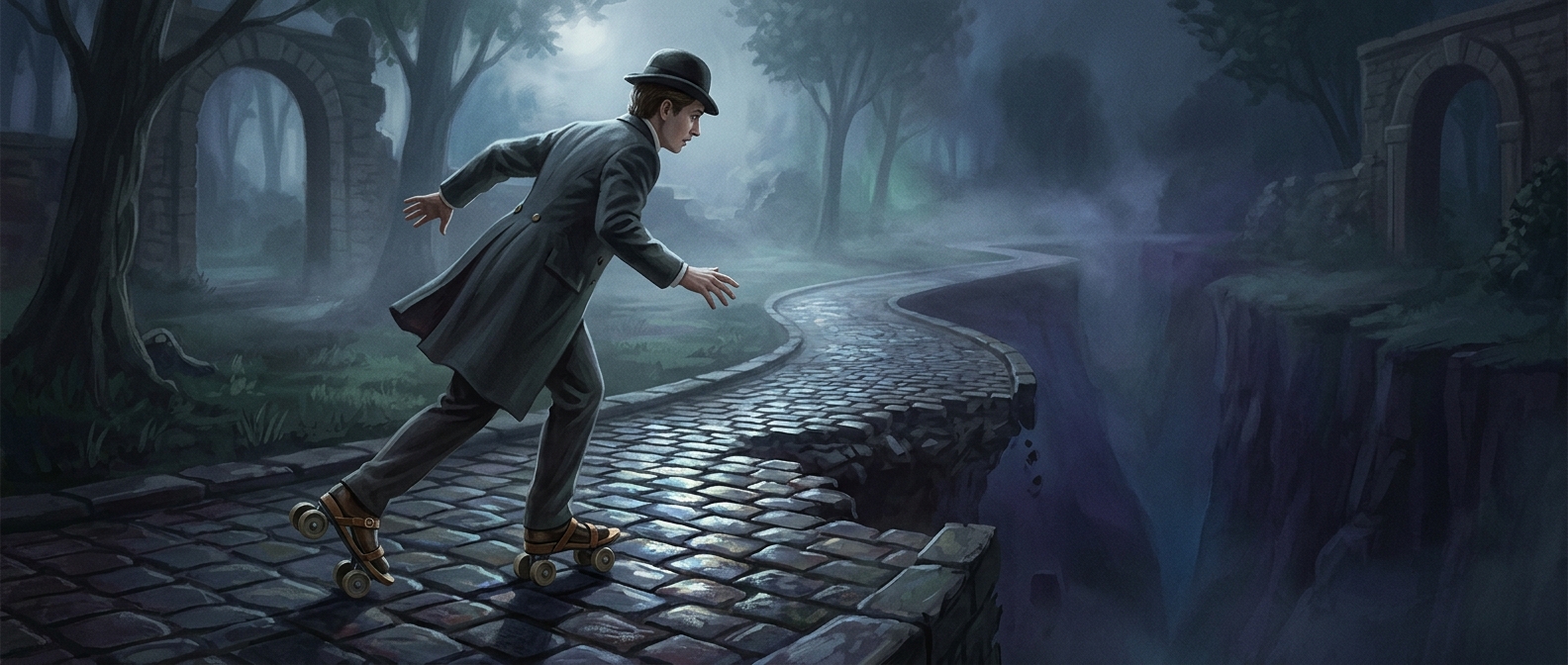
Why stopping was harder than rolling
A skate’s wheels solve one problem—letting a foot glide—but create another: they reduce the grip that would normally slow a step. Once a skater was moving, simply planting a foot could make it slide instead of hold. Without a built-in brake, the skater had to use the floor, their own balance, or an obstacle to shed speed.
A turn could help because it redirected motion rather than ending it at once. But turning sharply on wheels takes control: lean too far or catch an edge, and the skater may fall. A wide, deliberate curve was safer, yet it needed room. In a crowded space, the nearest wall or solid object could become an improvised stopping point—not a very forgiving one.
The design tradeoff
Early skates prioritized movement. Adding a dependable brake meant giving the skater a part that could press firmly against the ground without catching unexpectedly or destabilizing the foot. Until that problem was addressed, beginners had to learn not just how to roll, but how to manage speed with limited help from the equipment.
That changed the basic experience of skating: every stretch of smooth floor was also a commitment to keep moving until the skater could steer into a slower path or find somewhere safe to stop.