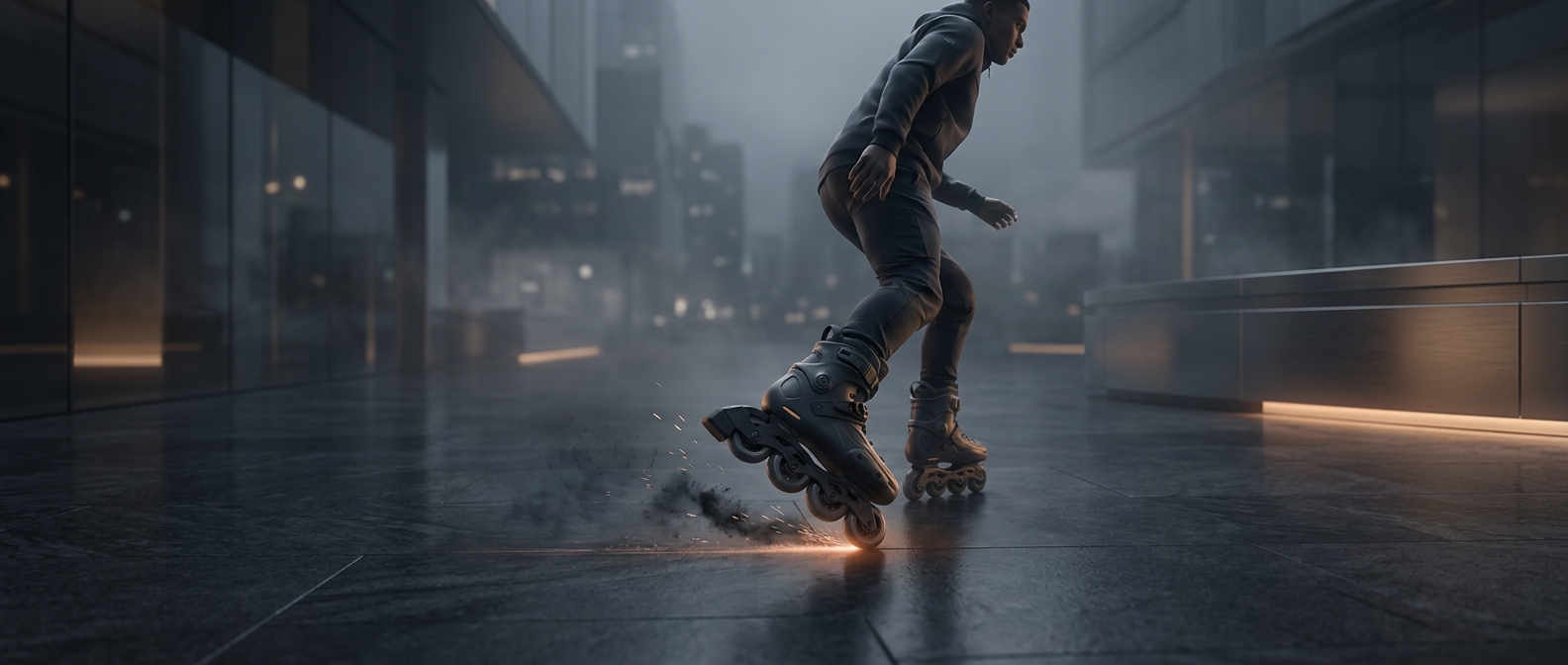
How a heel brake turns posture into friction
A heel brake gives an inline skate a contact point beyond its wheels. To use it, the skater rolls forward with the brake-equipped skate slightly ahead, raises that skate’s toe, and lowers the heel pad onto the pavement. The pad’s friction opposes the skate’s forward motion, converting some of its energy into heat and slowing the skater.
The movement works because the skate acts as a lever: raising the front lifts the wheels and brings the brake into contact. Pressing harder increases the force at the pad, but the stop still depends on traction. A wet, dusty, or otherwise slick surface can make the pad less effective, while more speed generally means more distance is needed to stop.
Why balance matters
The brake is only one part of the maneuver. As the braking skate slows, the skater must keep the rest of the body balanced over the rolling skate rather than letting the torso tip backward with the braking foot. A controlled stance and gradual pressure help make the stop smoother; abruptly dropping the pad can jerk the body off balance.
Unlike a sideways slide, a heel-brake stop keeps the skates pointed mostly forward and uses a pad rubbing against the ground. That makes the brake a practical tool for managing speed on ordinary pavement—but it also means the pad wears through use and its grip depends on the surface beneath it.