Two loops, one ride
An escalator’s steps and handrail appear to move as a single system, but they travel on separate loops. The steps are linked by a chain guided around the escalator’s frame. The handrail is a flexible band that slides over its own track and is pulled along by drive wheels and rollers.
Because the loops are mechanically separate, their speeds can differ slightly. The handrail’s drive is adjusted to keep it close to the steps’ pace, but matching them perfectly over every part of the ride is difficult.
Rubber changes the timing
The handrail bends around curves and passes over wheels under tension. Like other rubber products, it can stretch, compress, and wear. Friction between the rail and the drive wheels also affects how effectively the wheels pull it. Those small changes can make the rail creep ahead of the steps or fall behind them.
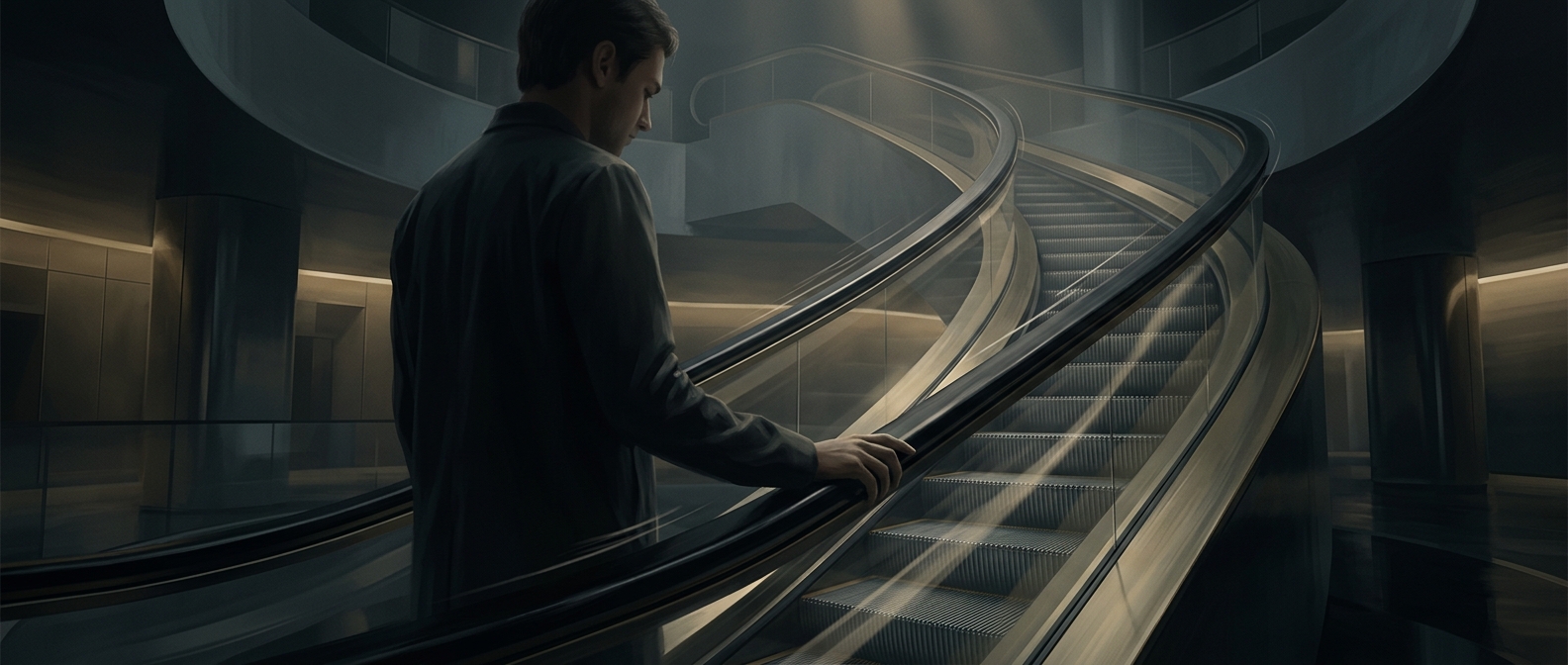
The mismatch is usually subtle, but a rider can feel it: keep a hand still on the rail and it may gradually slide forward or backward relative to your body as you rise. The apparent disagreement is a consequence of coordinating two moving systems whose materials and contact surfaces behave differently—not a second, separate pace chosen for passengers.
A small difference worth noticing
Escalator maintenance can adjust the handrail drive and tension to keep its motion close to the steps. But the rail is a flexible, wearing component, so its relationship to the steps can shift over time. That gentle drift is a reminder that an escalator’s smooth ride depends on separate mechanisms being kept in close, rather than exact, sync.