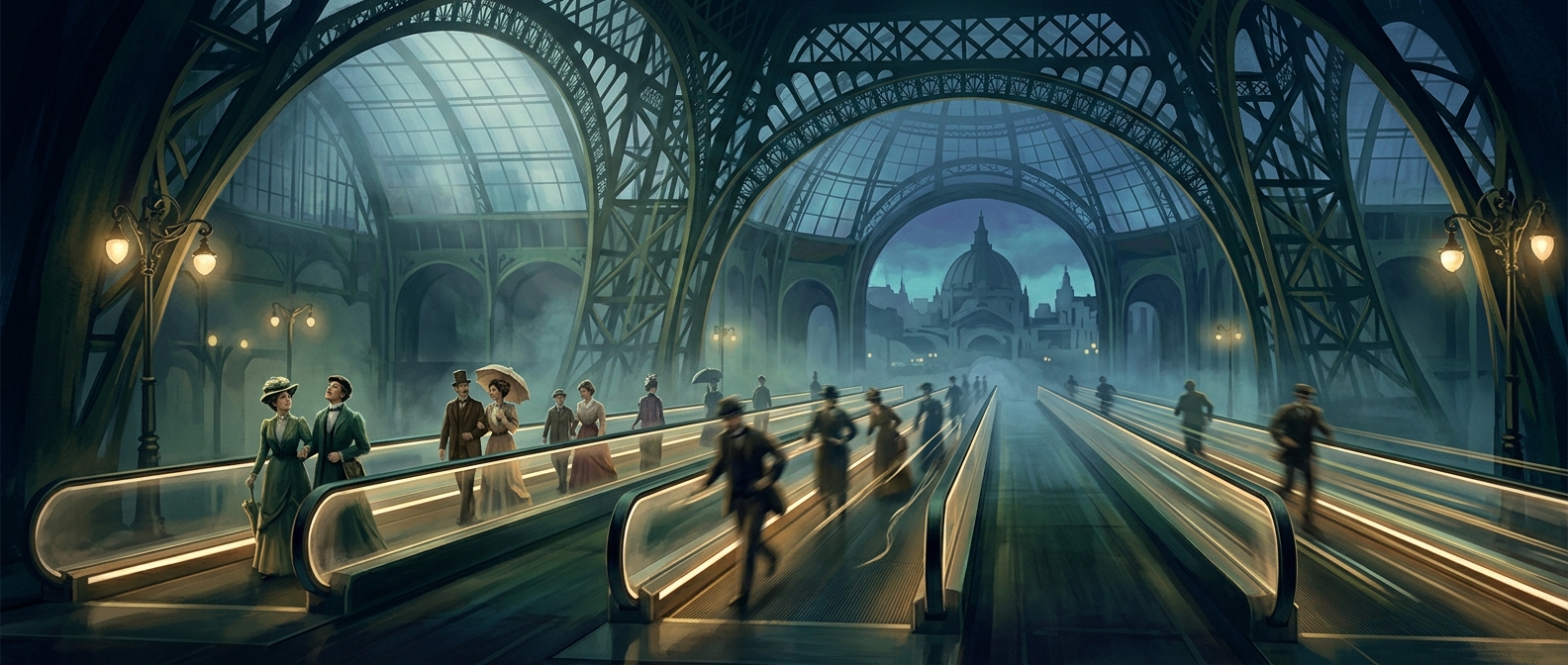
A walkway designed for a gradual start
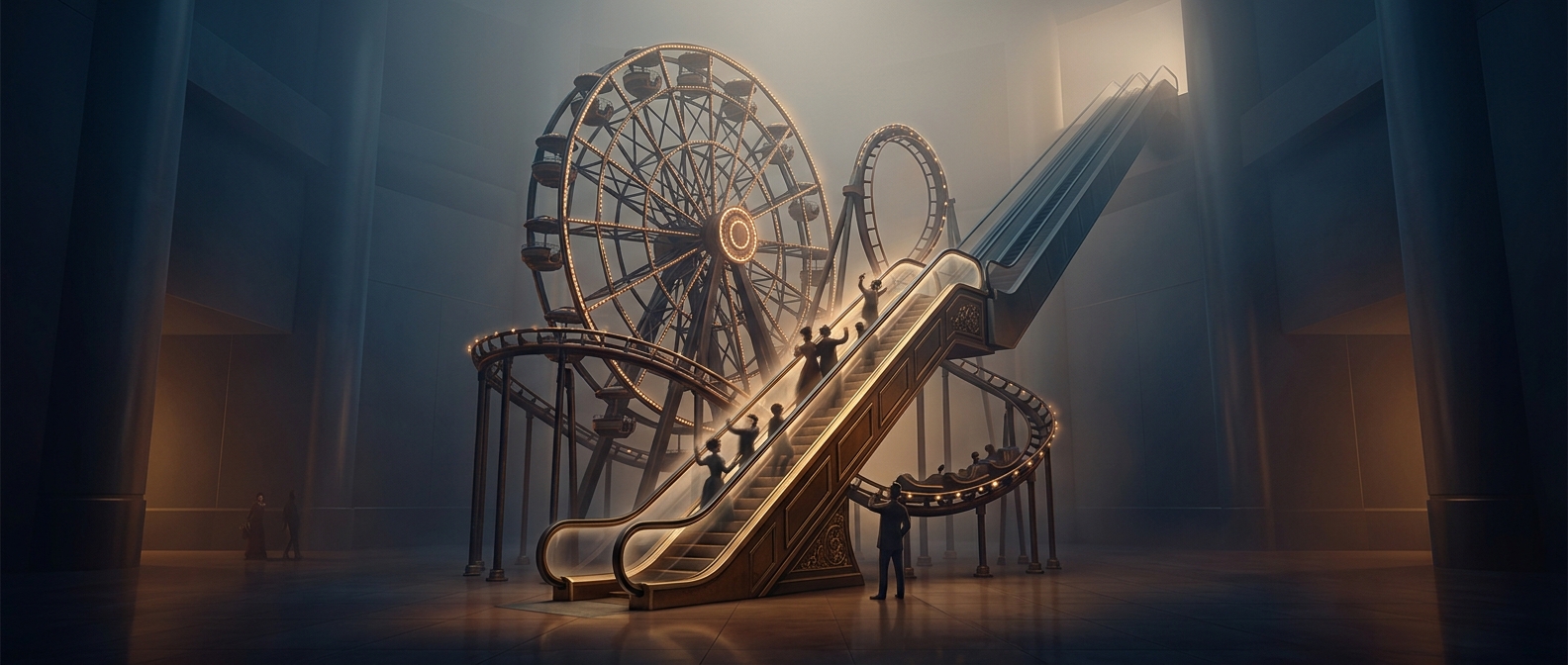
A moving walkway seems simple until a passenger has to step onto it. The belt is already moving, so the rider must match its motion quickly enough to stay balanced. The first walkway’s three speed lanes tackled that awkward moment by making the change gradual: passengers boarded a slow belt, then moved to a faster one for the ride.
The arrangement worked like a mechanical clutch. In a vehicle, a clutch helps transfer power without making the wheels jump abruptly to speed. Here, the slow lane gave a passenger time to find their footing before the faster lane carried them along. Rather than asking people to step directly from a stationary floor onto a rapidly moving surface, the design divided the acceleration into smaller changes.
The transition was part of the ride
That solution also reveals an early design challenge for moving walkways: the machinery had to accommodate people, not just move a belt. A faster surface could shorten the trip, but an abrupt speed change risked unsettling passengers. Adding a slower lane made the system more forgiving, though it also meant riders had to shift between moving surfaces.
The key idea was not simply to make walking easier. It was to manage the moment when a person and a machine began moving together. The three lanes turned boarding into a sequence—step on, adjust, then travel faster—so the walkway could offer speed without demanding it all at once.