A staircase that moved before it became practical
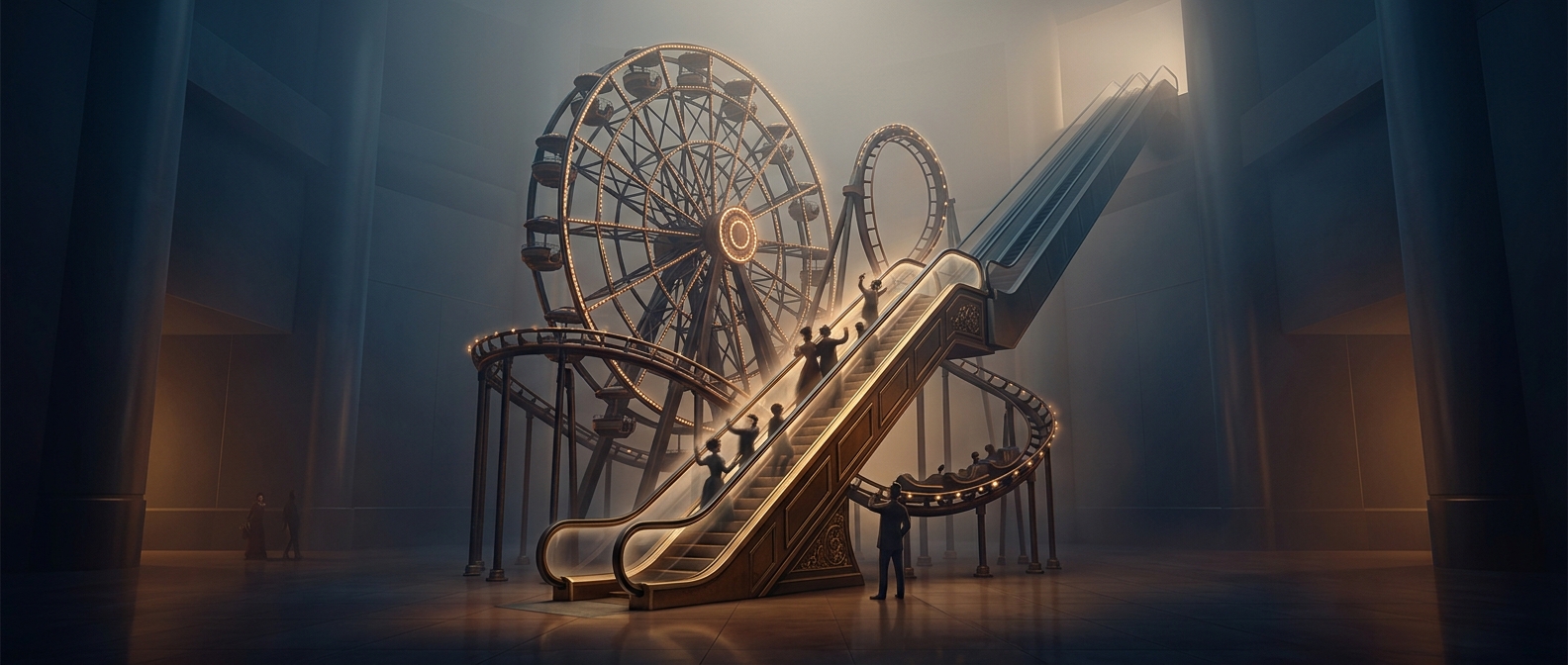
At Coney Island, Jesse Reno’s 1896 inclined elevator turned the effort of climbing a slope into part of the entertainment. Riders paid for a brief, unusual ascent—an ideal setting to test a machine that was still more spectacle than ordinary building equipment.
The early design was simpler than the escalators people know today. Instead of a sequence of rigid steps that stays level as it travels, it used a moving inclined surface with cleats—raised strips that helped keep riders from sliding. The basic challenge was already there: carry people upward continuously while giving them something secure to stand on.
From novelty to a way around the stairs
A ride could be short and thrilling; a public escalator had to be dependable and easy to use repeatedly. That change in purpose favored clearer footing, safer boarding and exiting, and a design that could fit into a building’s daily flow. The moving staircase became useful not because the underlying idea changed, but because the machine was refined for routine travel rather than a one-time amusement.
For shops, the payoff was more than saving customers a climb. An escalator could draw people to upper floors without making them seek out a stairwell, linking levels into one continuous shopping route. The device that first attracted riders as a novelty could therefore help businesses make more of the space they already had.