Tracks hold each step in place
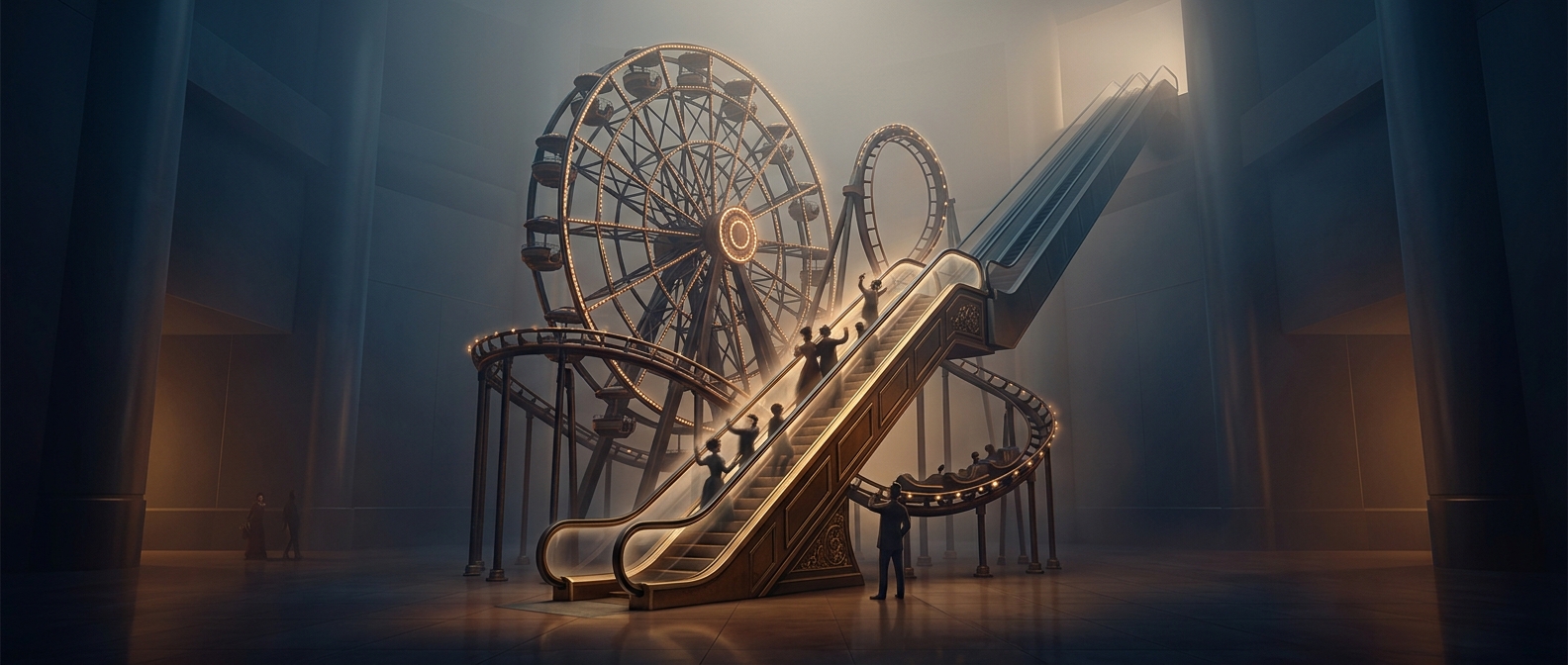
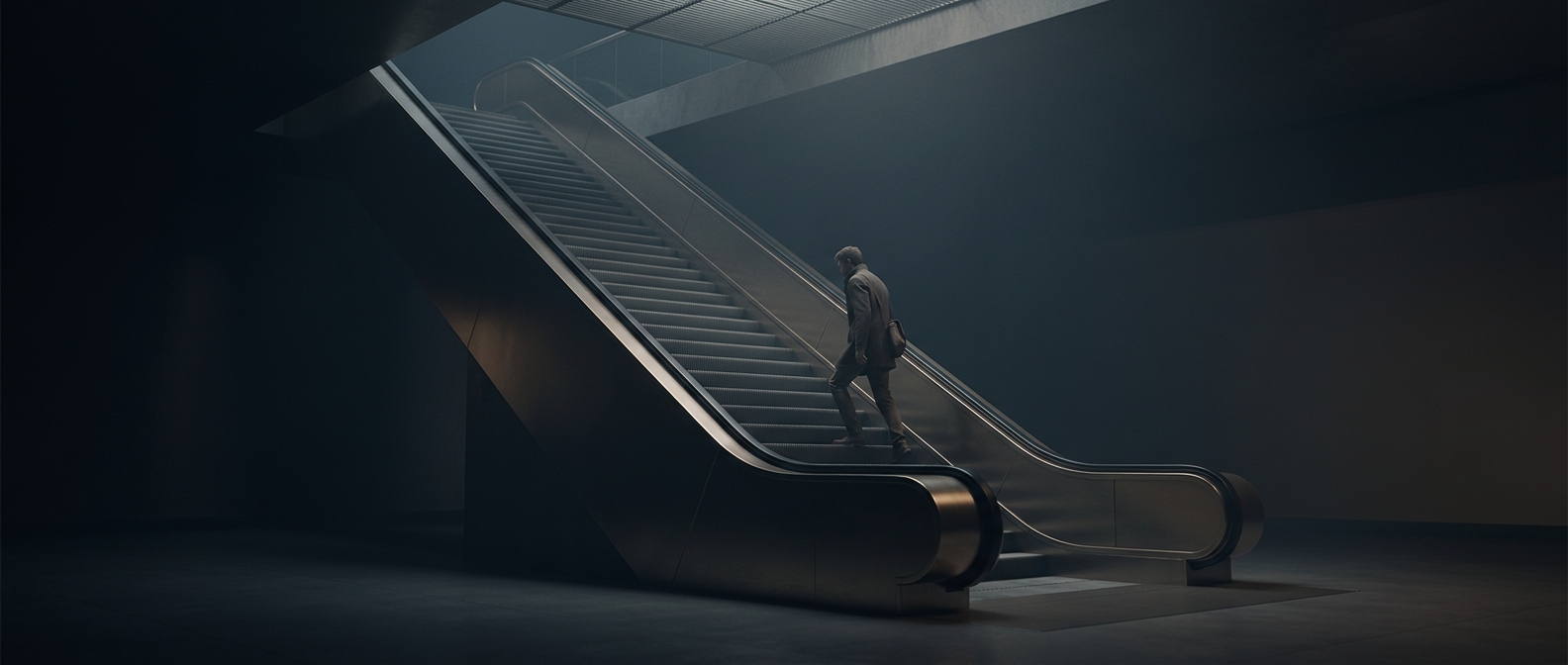
An escalator step is not a loose tread hanging from a moving belt. It is a small platform carried by a chain, with wheels that roll along fixed guide tracks inside the escalator. The tracks control where the step sits as the chain pulls it around the loop.
On the sloping run, the tracks keep each tread—the flat surface under your feet—horizontal while the steps rise or descend in a staircase pattern. The steps are close together, but each has its own support and position set by the track system. When the drive stops, the chain stops too; the steps do not suddenly fold or collapse into one another.
The same tracks create the landing
At the top and bottom, the guide tracks curve. That curve makes the steps gradually change from a staircase into a flat sequence that passes beneath the landing plate. The comb-shaped edge at the entrance meshes with grooves in each step, helping the transition happen without leaving a wide gap.
If the escalator stops while its steps are on the slope, the track geometry is still holding them in their stair-like positions. That is why a stationary escalator can resemble an ordinary staircase: the motor moves the steps, but the tracks give them their shape and support.