The trick was containing the air, not merely blowing it
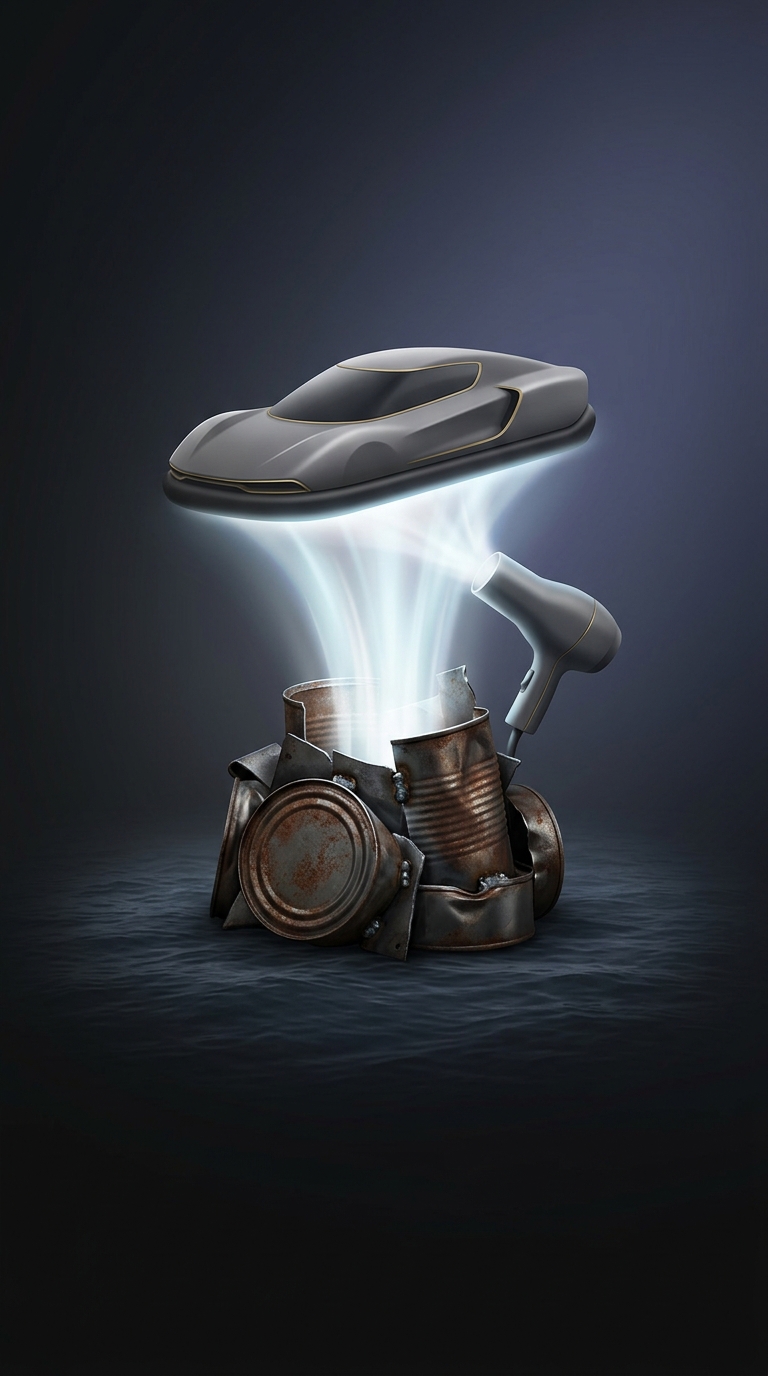
A fan can push air downward, but a bare blast mostly disperses into the surroundings. Cockerell’s model explored a more useful arrangement: feed air into the space beneath a vehicle, then let it escape through a narrow gap around the edge. The escaping air helps sustain pressure under the body, lifting it on a cushion.
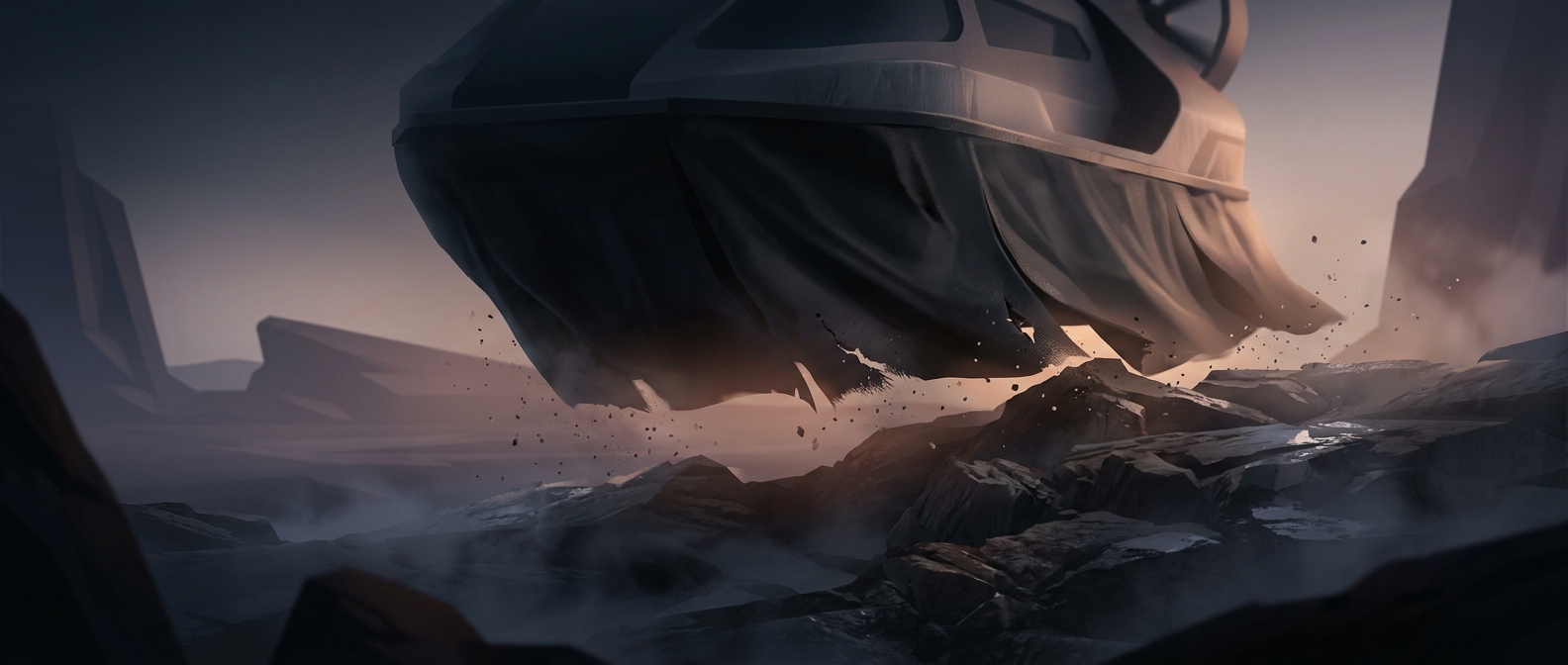
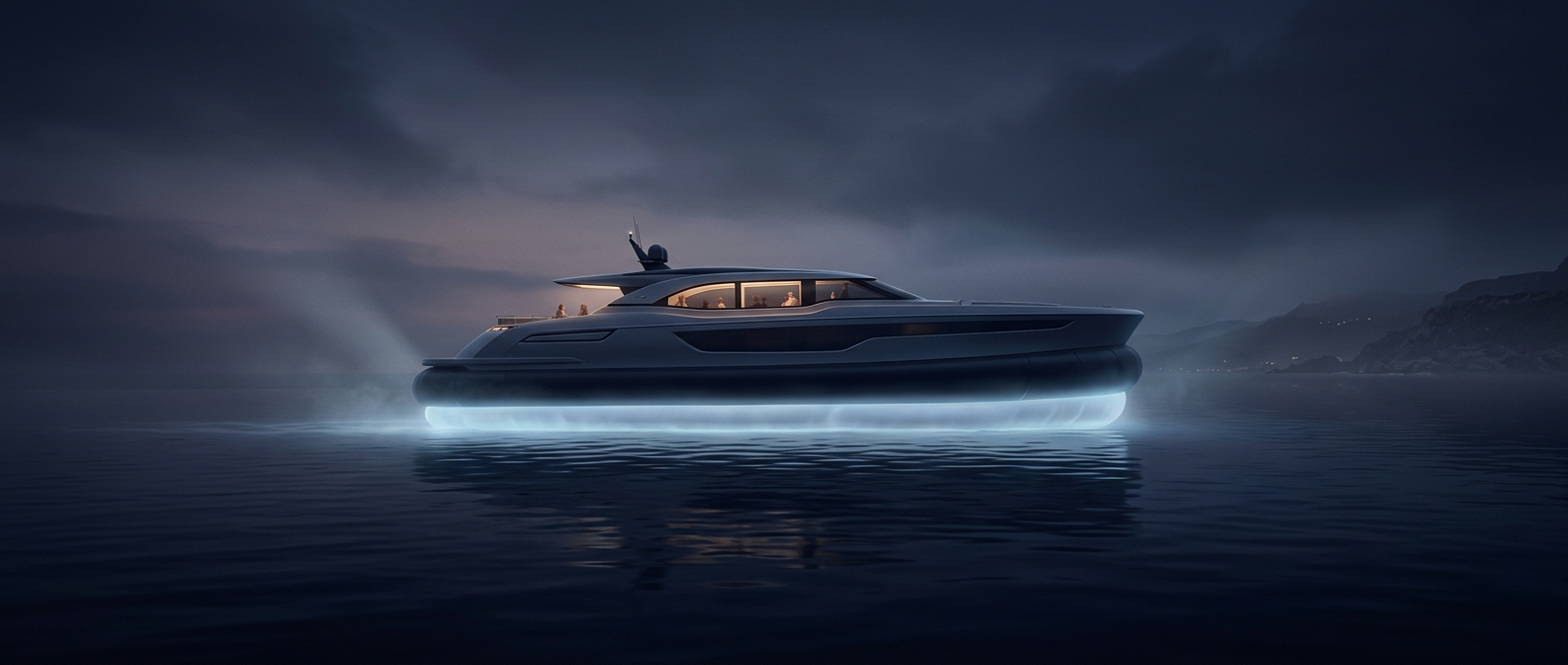
That cushion reduces the vehicle’s contact with the ground. Instead of carrying its weight on wheels or tracks, a hovercraft supports it with pressurized air. The distinction matters: the air is not trapped like a solid platform. It is continually replenished, and the vehicle must keep using power to maintain the lift.
A small model exposed a big engineering tradeoff
The tins and hairdryer made the invisible problem visible. Change how air entered and escaped, and the model’s lift changed. Too little air, or too much leakage, and the cushion could not support the load. The design therefore had to balance airflow, pressure, and the size of the gap beneath the craft.
This approach also separates lifting from moving forward. Air directed beneath the hull creates the cushion; a separate thrust system propels the craft. That arrangement can let a vehicle travel over surfaces that would stop ordinary wheeled transport, but it does not make the craft effortless or friction-free. It still needs energy to sustain the cushion, and its shallow ride leaves it sensitive to uneven ground and conditions such as wind.
Why the idea mattered
The model’s importance was not that household objects could make a practical vehicle. It showed a way to replace much of the friction between a vehicle and the surface with a controlled flow of air. Turning that principle into a useful craft meant solving the harder problems of maintaining lift and controlling movement at a much larger scale. The memorable tins were a miniature demonstration of that central bargain: less contact with the ground, in exchange for a steady supply of air.