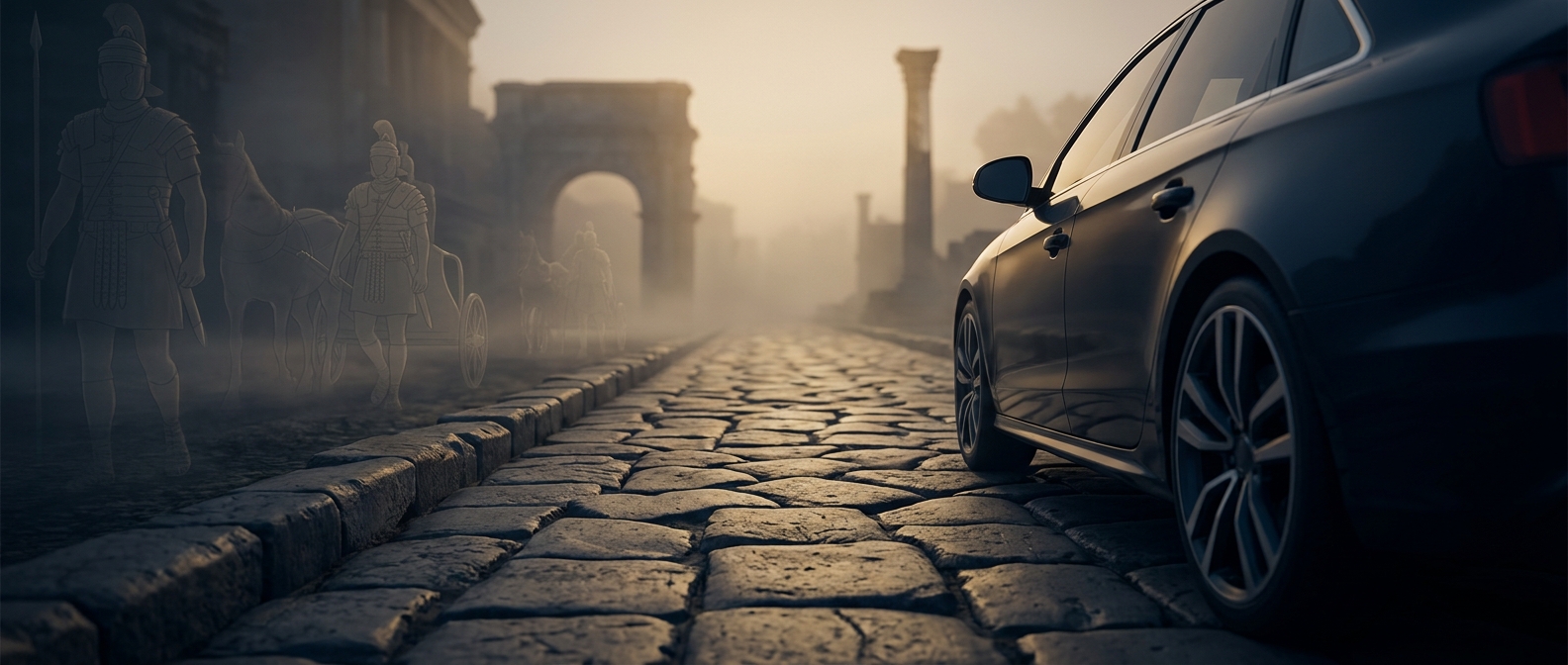
The route can outlast the road
When a modern road follows an ancient Roman line, it usually does not mean cars are driving over Roman paving stones. The durable inheritance is often the corridor: a useful way through a landscape that later builders had little reason to abandon.
A route has to solve the same constraints in every era. A ridge may offer a pass through a range; a river crossing may be possible at only a few places; and a town’s gates, markets, or bridges pull traffic toward particular approaches. Once a road connects those points, it becomes a practical choice for travelers and for the settlements that grow along it.
Why later builders kept the same course
Roman roads were planned to connect military centers, towns, and ports, with construction adapted to local terrain. Some stretches were notably straight, but a useful route was not simply a line drawn across a map. It had to negotiate slopes, waterways, and the ground beneath it. Those geographic limits remained after Roman rule ended.
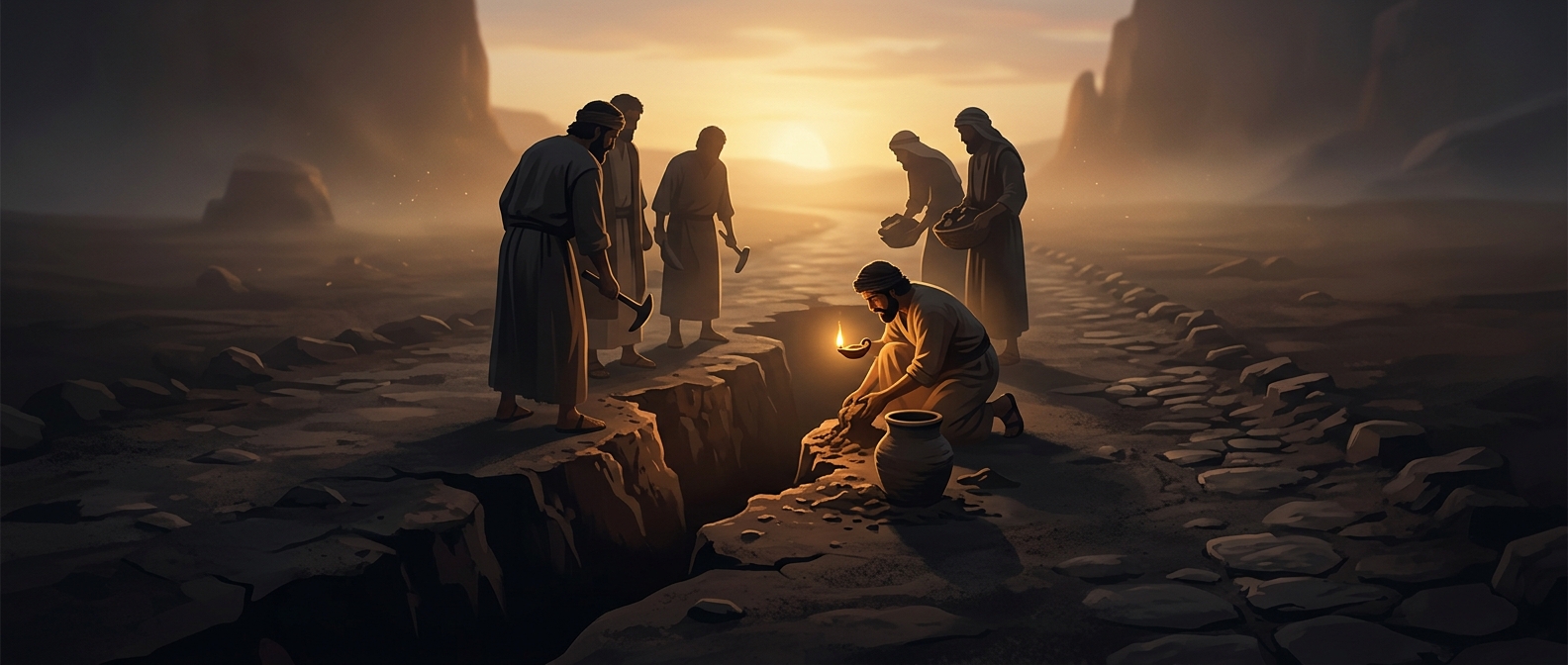
Later communities repaired, widened, or rerouted sections as vehicles and needs changed. In many places, a modern road therefore runs beside or over an older route rather than preserving its exact surface or alignment. The continuity is strongest where the old passage still offers the easiest connection between important places.
An ancient shortcut with a modern job
Following an established corridor can also preserve a chain of connections: a bridge approaches a town from the same direction, or a road continues toward a long-standing crossing. The result is less a road frozen in time than a route repeatedly renovated. A Roman-era choice about where to cross a valley can still shape the way drivers enter a town centuries later.